What Is a Brake Override System?
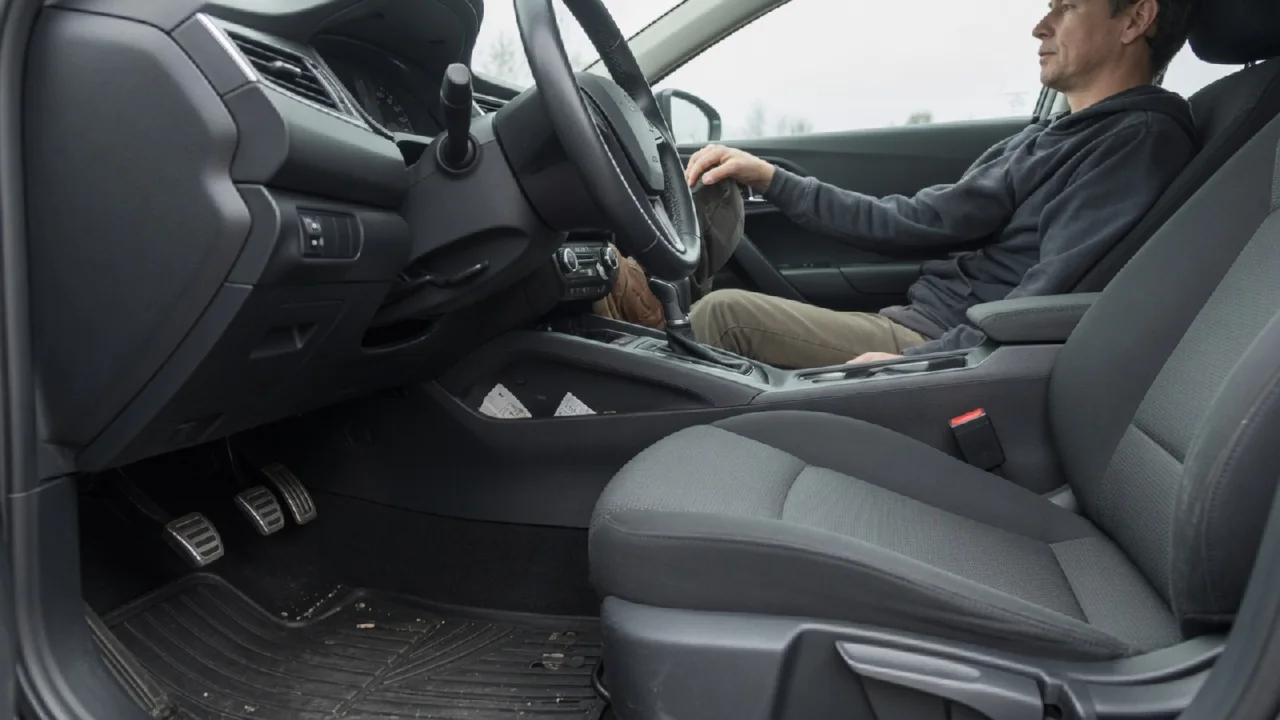
If you have ever wondered what is a brake override system, the short answer is that it is software logic that gives the brake pedal priority over the accelerator when both are pressed at once. Sometimes called brake-throttle override or a smart pedal, it reduces engine power so the vehicle can slow down even when the throttle signal is asking for more.
Conflicting inputs
A modern vehicle with electronic throttle control reads the accelerator pedal through position sensors rather than a cable, and it reads the brake pedal through a switch or a pressure sensor. Normally only one of those signals is active at a time. A conflict arises when the control module sees meaningful accelerator demand and firm brake application together, as can happen when a floor mat traps the pedal, a wide shoe overlaps both pedals, or a pedal is slow to return.
Not every overlap is treated as a problem. A brief brush of both pedals while the foot moves across, or light left-foot braking at parking-lot speeds, may fall below the thresholds the manufacturer has set. Those thresholds typically involve vehicle speed, pedal position, how long the overlap lasts, and sometimes which pedal was pressed first. Some designs permit throttle to be added while the brake is already held, which helps with hill starts. The exact rules differ by make and model year, so the owner's manual is the reliable reference.
Control logic
The engine or powertrain control module continuously compares the two pedal signals. When its conditions for a conflict are met, it stops honoring the accelerator request and commands reduced torque, usually by moving the electronic throttle toward idle and trimming fuel or ignition. In a hybrid or electric vehicle, the same idea applies to motor torque. The system does not apply the brakes itself. The hydraulic brakes work as they always do, but they no longer have to fight against full engine output.
Supporting this decision are plausibility checks. Accelerator pedals generally carry redundant sensors so the module can tell whether a reading makes sense, and the brake signal may be cross-checked against other inputs. Power is typically restored once the brake is released or the accelerator is lifted and reapplied. Some vehicles store a fault code when pedal signals disagree. Such a code is evidence to interpret, not proof that a part has failed, and manufacturer-specific definitions need to be confirmed for the exact vehicle.
Driver expectations
The basic expectation is simple: a firm press on the brake pedal should slow the car, regardless of what the accelerator is doing. When the override intervenes, it feels like the engine has gone flat or stopped responding, not like a sudden emergency stop. Deceleration still comes from the brakes, so stopping distance continues to depend on brake condition, tire grip, vehicle load, and the road surface. The override removes an opposing force, but it does not add stopping power.
Drivers who use both feet can be surprised by this behavior. Someone who rests a left foot on the brake while accelerating, or who holds the brake and throttle together to build revs before pulling away, may find the engine refusing to respond. Certain vehicles relax the logic at very low speeds or in specific drive modes, while others do not. It is also unwise to assume every vehicle has the feature, particularly older models, so confirmation for the specific car matters.
Everyday Use and Observations
In ordinary driving the system is invisible. There is usually no dedicated button or indicator, and a driver who uses one foot for both pedals may never trigger it. The most common everyday encounter is a moment of hesitation or sluggish acceleration caused by unintentionally riding the brake pedal. Some vehicles display a message or chime when both pedals are pressed, while others simply cut power quietly and restore it once the overlap ends.
When power drops unexpectedly, the surrounding details are worth noting: road speed, where each foot was, whether any warning lamps appeared, and whether the event repeats. Simple physical checks help too. A floor mat should be the correct one for the vehicle, secured on its retention hooks, and never stacked on another mat. Brake lights that stay lit with the pedal released can hint that the brake signal is being reported incorrectly, which could make the control logic respond when the driver did not intend it.
Limits and Next Steps
A brake override system has clear boundaries. It is separate from brake assist and automatic emergency braking, and it cannot compensate for worn pads, overheated brakes, or low fluid. It acts only within its programmed conditions and only on torque the module controls electronically. Drivers still need to know the basic response to unwanted acceleration, which is to brake firmly and steadily without pumping, shift to neutral, and steer to a safe place before switching the vehicle off.
For anyone unsure whether their vehicle has this feature or how it behaves, the owner's manual and the manufacturer's dealer network are the right starting points. A dealer can also check the vehicle identification number for open recalls or software updates related to pedal or throttle control. Repeated hesitation, stored codes, or warning messages deserve diagnosis by a qualified technician with a scan tool who can view live pedal data. Attempting to disable or bypass the logic is not advisable, since it exists as a safeguard.