What Is a Battery Multimeter Check?
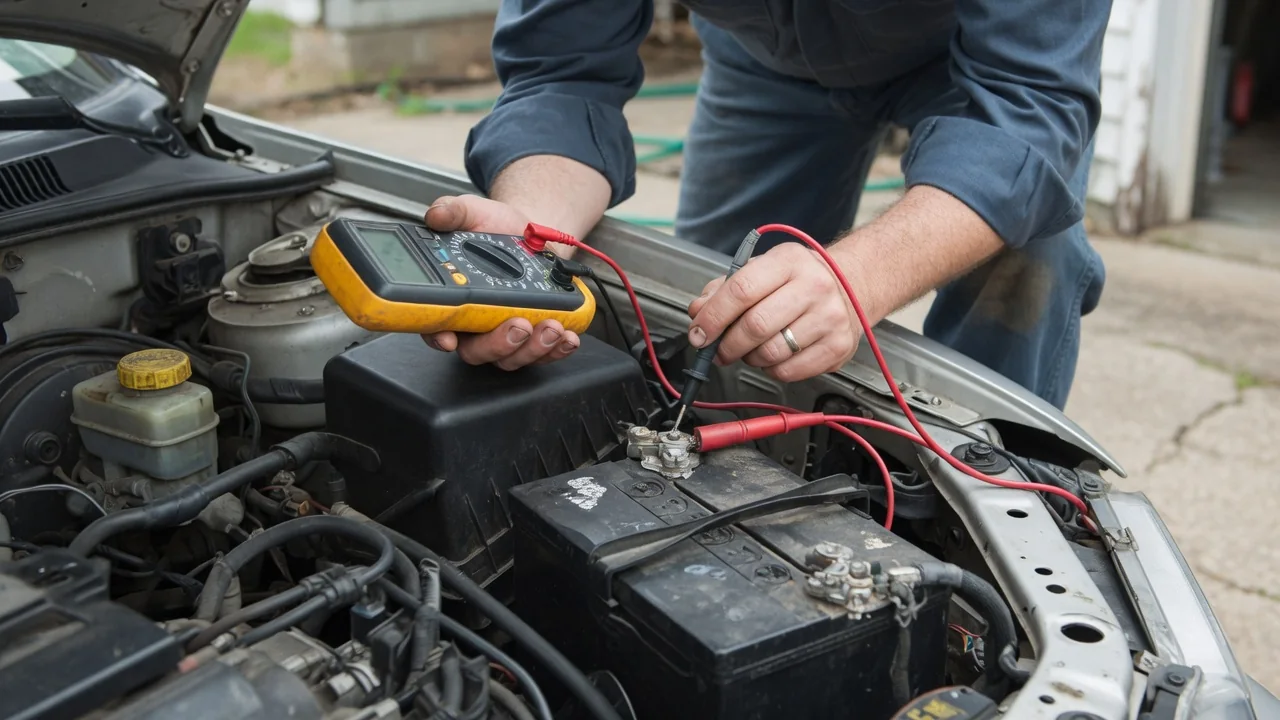
What is a battery multimeter check? It is a quick voltage measurement taken across a vehicle's battery terminals with a handheld digital meter. The reading shows the electrical pressure available at that moment, which hints at state of charge and charging system activity. It does not prove the battery is healthy, so the number is best treated as one clue among several.
Meter setting
A battery multimeter check starts with choosing the right function on the dial. Car batteries supply direct current, so the meter belongs on DC volts, often marked with a V beside a straight line rather than a wavy one. On a manual-ranging meter, the range selected needs to sit above the expected reading, and a twenty-volt scale is common for a twelve-volt system. Auto-ranging meters pick the scale themselves, which removes one opportunity for a misleading display.
The setting matters because the wrong one produces numbers that look meaningful but are not. An AC volts setting may show almost nothing on a healthy battery, and a resistance or current setting is not intended for this measurement at all. The red lead goes to the positive terminal and the black to the negative; reversing them on a digital meter usually just adds a minus sign. Some vehicles hide the battery under a seat or in the trunk and provide remote posts under the hood instead.
Engine off/on context
With the engine off, the meter shows resting voltage, a rough indicator of state of charge. A fully charged twelve-volt lead-acid battery commonly rests somewhere around twelve and a half volts or slightly higher, while a noticeably lower figure suggests partial discharge. Timing shapes the result, because a battery that was just driven or charged carries surface charge that inflates the reading for a while. Letting the vehicle sit, or briefly switching on the headlights beforehand, gives a more honest number.
With the engine running, the same connection tells a different story, because the meter now reads charging system output rather than the battery alone. Many vehicles show a figure in the range of roughly thirteen and a half to fourteen and a half volts, yet that is not universal. Smart charging strategies, start-stop systems and temperature compensation can lower or raise the voltage deliberately, so a reading that seems odd on one car may be normal on another. Manufacturer information for the specific vehicle settles the question.
Test limits
Voltage describes electrical pressure, not the capacity behind it. A battery with worn or sulfated plates can rest at a respectable voltage and still collapse the moment the starter demands heavy current, much as a narrow pipe can show good pressure until a tap opens. That is why a normal reading on the meter does not rule out a weak battery, and why a no-start complaint can persist after the numbers looked fine in the driveway.
The opposite mistake is just as easy. A low reading shows that the battery is discharged at that moment, not that it has failed, since a dome light left on, repeated short trips or a parasitic draw can drain a perfectly sound unit. Temperature also shifts both the reading and the battery's real ability to deliver current. A simple meter cannot measure cold cranking performance, internal resistance or reserve capacity, which are the qualities that dedicated load testers and conductance testers are built to evaluate.
Everyday Use and Observations
In everyday use, the check earns its place as a fast first look. Slow cranking on a cold morning, dim interior lights, or a car that has sat unused for several weeks are all good reasons to take a reading before assuming anything. Comparing the number against earlier readings from the same vehicle is more informative than a single snapshot, because a battery that settles lower each week is telling a story that one measurement cannot.
Watching the display while someone else cranks the engine adds another observation. Voltage always dips during starting, but a deep or lingering drop hints that the battery struggles under load, though a basic meter may update too slowly to catch the lowest point. Readings taken at the posts versus the cable clamps can also differ when corrosion or a loose connection is present. Vehicles with absorbed glass mat batteries or battery monitoring sensors may behave slightly differently, so the owner's manual is worth consulting.
Limits and Next Steps
When the reading is low, the sensible next step is usually to recharge the battery fully with a suitable charger and then measure again after it has rested. A battery that holds its voltage over the following days points attention toward how the vehicle is used or toward something drawing current while parked. One that sinks again quickly, despite a proper charge, deserves a load or conductance test at a parts store or repair shop before any purchase is made.
When the engine-running figure looks unusual, the meter has flagged the charging system for a closer look rather than condemned the alternator. Belt condition, cable connections, ground straps and the vehicle's own charging control logic all influence that number, and any stored fault codes should be read as supporting evidence, not as a verdict on a single part. A qualified technician with vehicle-specific data can separate a failing battery from a wiring fault or control issue, and sparking near a battery is always worth avoiding.