What Is a Battery Hold-Down? Purpose, Vibration, and Inspection
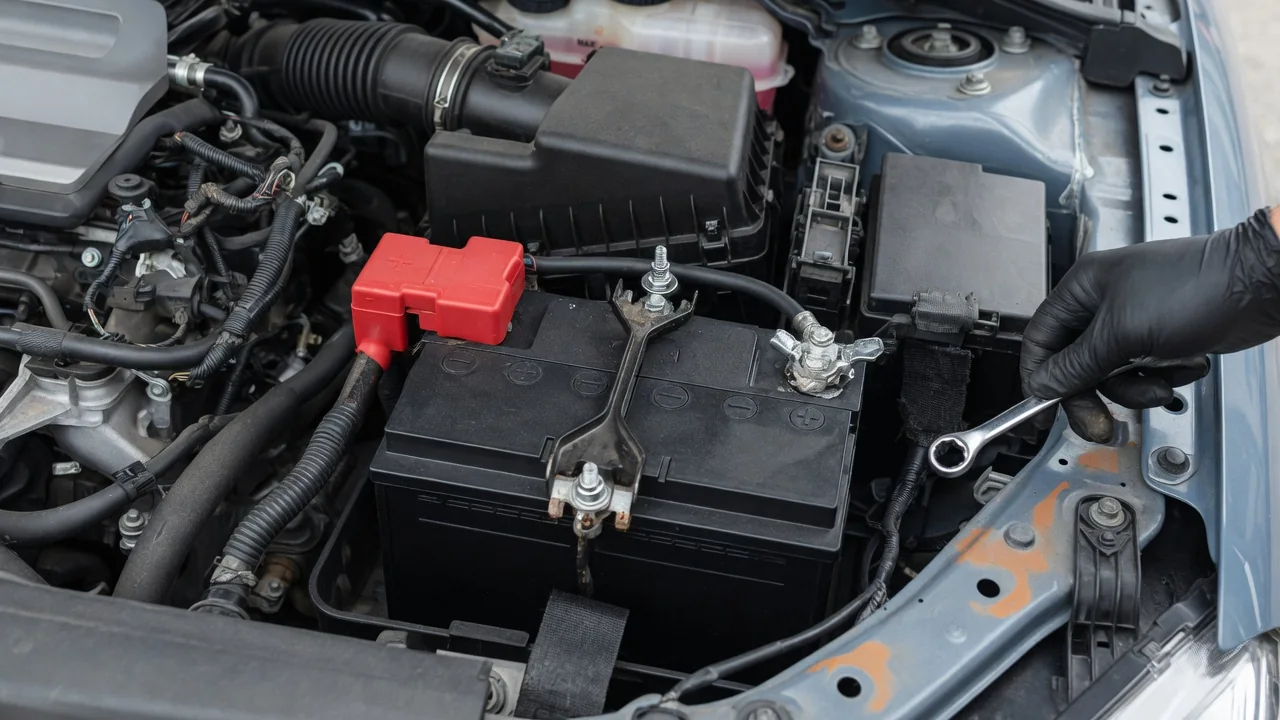
A battery hold-down is the bracket, clamp, or strap that locks a car battery into its tray so it cannot slide, tip, or bounce while the vehicle is moving. It is small and easy to overlook, but its purpose goes beyond keeping things tidy. It protects the battery's internal structure, the cables and terminals, and the components around the battery. This guide explains how a hold-down secures the battery, why vibration matters, and what to check during an inspection.
Secure mounting
Most vehicles carry the 12-volt battery in a tray or on a platform. Depending on the design, it may sit in the engine bay, in the trunk, or under a seat or floor panel. The tray supports the battery's weight, but it does not stop the battery from moving. The hold-down supplies the clamping force. One common design is a top-mount frame or bar that spans the top of the case and is pulled down by threaded rods or J-hooks anchored to the tray or body. Another is a bottom-mount clamp or wedge that bolts down onto a ledge molded along the base of the battery case. Some vehicles use a strap or band instead. The vehicle manufacturer decides which style is used, and the parts are not always interchangeable.
Secure mounting matters because a lead-acid battery is heavy for its size. Under braking, cornering, or over bumps, a loose battery builds up momentum. It can slide into the hood, body panels, or nearby components. If the positive terminal touches grounded metal, the result can be a short circuit, with sparks, rapid heating, and a risk of fire. Even smaller movements strain the cables, loosen terminal clamps, and can cause intermittent electrical connections that are hard to diagnose. In a collision, an unsecured battery can be thrown out of place and may crack and leak electrolyte.
A hold-down only works when the battery fits the tray and the hardware it was designed for. Bottom clamps depend on a matching base ledge, and top bars depend on the correct case height and footprint. The hardware should be tight enough that the battery cannot shift. It should not be so tight that it distorts or cracks the plastic case. For specific tightening values, the vehicle's service information is the correct reference.
Vibration
Even when a battery is not visibly sliding around, it is exposed to constant vibration from the engine and the road surface. Inside a typical lead-acid battery are plates built on lead-alloy grids and coated with active material. Thin separators sit between the plates, and internal straps connect the plates to the terminals. These parts are built to tolerate normal vibration when the case is held firmly. A loose battery, however, can bounce in its tray, turning ordinary vibration into repeated sharp impacts.
Repeated shocks can loosen active material so that it sheds from the plates and collects at the bottom of the case, which reduces usable capacity. Grids and internal connections can fatigue or crack. Separators can be damaged, allowing plates to touch and short internally. The symptoms include reduced capacity, slower or harder starting, shorter service life, and sometimes sudden failure. Vibration damage is one of several common contributors to battery wear, alongside heat, chronic undercharging, and age. It is usually impossible to confirm from the outside of the case.
The hold-down makes the battery move with the vehicle's structure instead of independently, so it does not hammer against the tray. It does not eliminate vibration, but it keeps the forces within the range the battery is designed to handle. Some battery types, such as absorbent glass mat designs, are often promoted as more vibration resistant because of their tightly packed internal construction. Every battery type still depends on secure mounting.
Inspection
The most direct check is simple. With the engine off, grasp the battery and try to rock or push it in different directions. A properly secured battery should not shift in its tray. If it moves, find the cause before driving further. Common causes are a loose nut, a missing rod or J-hook, stripped threads, a broken clamp, or a battery that is the wrong size for the tray and hold-down.
Next, look closely at the hardware and its surroundings. Acid vapor and small leaks can corrode metal brackets, rods, and fasteners, and heavy rust can weaken them until they no longer hold. Check the tray for cracks, corrosion, or deformation, since a damaged tray can let the battery move even when the hold-down is tight. If a top bar has an insulating sleeve or cover, make sure it is intact so bare metal cannot contact a terminal. While you are there, note any bulging, cracks, or leaks on the battery case, which can point to problems beyond the mounting.
Good times to inspect are during a battery replacement, after any work where the battery was moved or removed, and during routine under-hood checks. Battery replacement deserves particular attention because hold-down hardware is easy to misplace or leave loose. Wear eye protection when working near a battery. Keep metal tools from bridging the terminals or touching the positive terminal and grounded metal at the same time. Disconnecting the negative cable first before working on hardware near the terminals is common practice, but follow the procedure in the vehicle's owner or service manual.
Practical implications and limits
A secure hold-down is inexpensive protection, but it cannot repair anything. It will not restore capacity that a battery has already lost, and it will not correct charging-system faults, parasitic drains, or heat-related aging. If a vehicle shows weak starting or warning lights, the battery and charging system still need proper testing, whatever the condition of the mounting.
Battery location, hold-down style, and the exact parts used vary by make, model, year, and sometimes trim level. Batteries mounted in a trunk or under a seat may have vent tubes, covers, or enclosures that must be reinstalled correctly along with the hold-down. Replacement parts should match the original design. Universal kits exist, but any substitute must fit the tray and battery securely and keep metal away from the terminals. Improvised fixes such as elastic cords or plastic ties are a poor choice because they can stretch or degrade under heat and allow the battery to move.
A missing or loose hold-down often goes unnoticed because the car may start and run normally for some time, and the damage builds up gradually. When choosing a replacement battery, pick one that matches the size and base style the vehicle's tray and hold-down were designed for. A battery that only fits after the hold-down is left off is not a correct fit.