What Happens When Valve Timing Is Incorrect? Effects, Symptoms and Repair
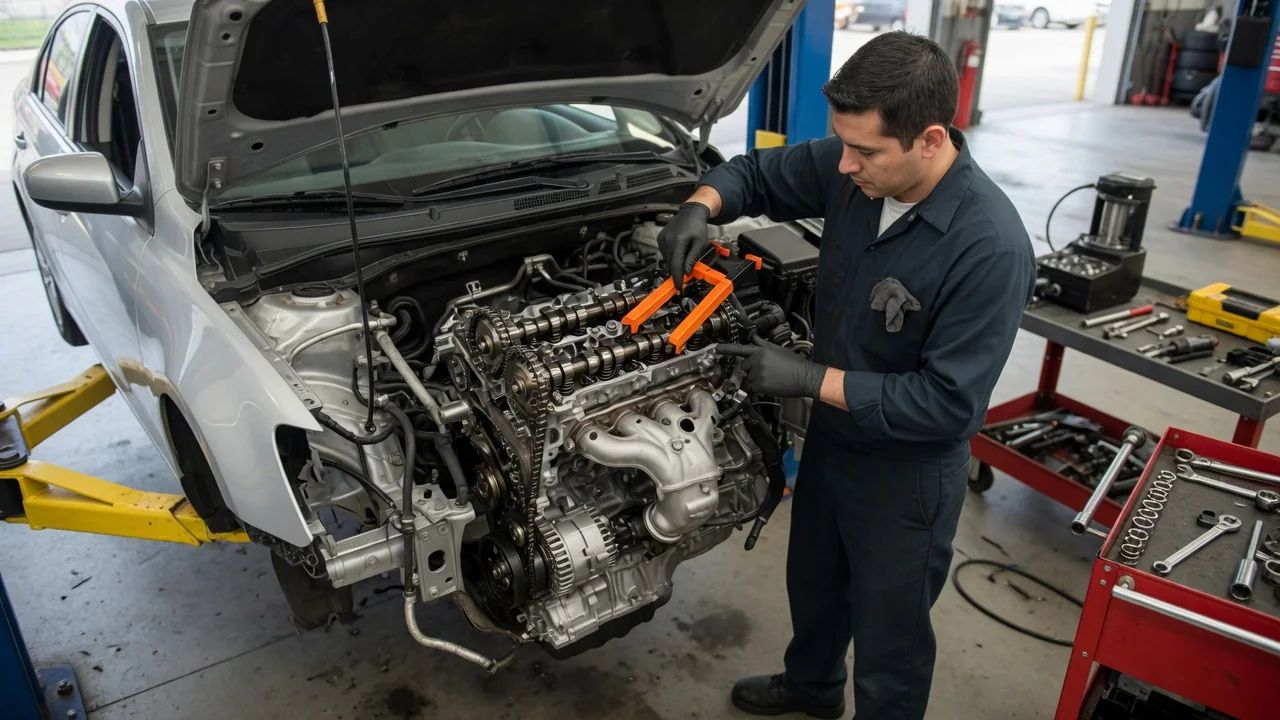
Valve timing determines when an engine's intake and exhaust valves open and close relative to piston position. When that relationship is off, even by a small amount, the engine breathes poorly, burns fuel less efficiently, and may run rough or refuse to start. In engines with tight internal clearances, severe errors can lead to valves contacting pistons. This guide explains what happens when valve timing is incorrect, the most common incorrect valve timing symptoms, and how the problem is typically diagnosed and repaired.
How Incorrect Valve Timing Affects Airflow and Combustion
In a four-stroke engine, the camshaft opens the intake valve to let air or air-fuel mixture into the cylinder and opens the exhaust valve to release burned gases. The crankshaft and camshaft are linked by a timing belt, chain, or gears so that each valve event happens at a precise point in the piston's travel. Engineers also build in deliberate overlap, a brief window when both valves are slightly open, so the momentum of outgoing exhaust helps draw in a fresh charge. When the camshaft is out of phase with the crankshaft, all of these events shift together.
If the valves open and close too late, known as retarded timing, the intake valve may remain open as the piston rises on the compression stroke, pushing part of the charge back into the intake. Effective compression drops, and low-speed torque usually suffers. If timing is too early, or advanced, the valves open before the piston is in the intended position, altering overlap and allowing exhaust gases to linger or mix with the incoming charge. Either way, the cylinder fills less completely than designed, and the air the engine computer measures no longer matches what each cylinder actually traps.
Combustion then degrades. Lower cylinder pressure makes the mixture burn more slowly and less completely, which reduces power and can increase unburned fuel in the exhaust. Excess residual exhaust in the cylinder can cause misfires, particularly at idle. On engines with variable valve timing, the computer adjusts cam phasing on purpose, but those adjustments assume the base mechanical timing is correct. If it is not, the system may reach its adjustment limits and record fault codes.
Warning Signs of Incorrect Valve Timing
The most common incorrect valve timing symptoms are a rough or unstable idle, hesitation, and a noticeable loss of power, especially when accelerating from low speeds. Fuel economy may drop because the engine needs more throttle to do the same work. Some engines crank longer than normal before starting, and a badly mistimed engine may crank without starting at all. Backfiring or popping through the intake or exhaust can also appear when valve events no longer line up with spark and fuel delivery.
On most modern vehicles, the check engine light is an early clue. The engine computer compares signals from the crankshaft and camshaft position sensors, and when their relationship drifts outside an expected range, it can store a camshaft and crankshaft correlation code. Misfire codes, lean or rich mixture codes, and variable valve timing performance codes may accompany it. These codes point toward a timing problem but do not prove one, because a faulty sensor, damaged reluctor ring, or wiring fault can produce similar readings.
Sounds can also be telling. A rattling or slapping noise from the front of the engine, often most noticeable at cold start, can indicate a stretched timing chain or a worn tensioner that allows timing to drift. An engine that suddenly stops running and then spins over unusually easily while cranking may have a broken belt or a belt or chain that has jumped teeth. If valve-to-piston contact has already occurred, low compression in one or more cylinders is a likely finding.
Repairing Incorrect Valve Timing
Diagnosis usually begins with a scan tool to read stored codes and, where supported, live data such as cam and crank position or commanded versus actual variable valve timing angle. A technician then verifies mechanical timing directly by bringing the engine to its reference position and checking that the crankshaft and camshaft timing marks align as the service information specifies. Some engines rely on dedicated locking tools rather than marks. A compression or leak-down test helps determine whether any valves have been bent.
The repair depends on the cause. If a belt or chain has jumped a tooth, the parts are normally replaced rather than simply reset, since the event usually signals wear, a failed tensioner, or a damaged guide. A typical job includes the belt or chain, tensioner, and guides or idlers, and often the water pump when the timing belt drives it. Variable valve timing faults may call for a new cam phaser or oil control solenoid, or sometimes just correct oil level and grade, since many phasers depend on oil pressure. Sensor and wiring faults are corrected at their source.
Precision is essential. Timing procedures, torque values, and tool requirements vary widely between engines, so the manufacturer's service information should guide the work. After reassembly, the crankshaft is usually turned by hand through several full revolutions to confirm the marks realign and nothing binds before the engine is started. If valves were damaged, cylinder head repair becomes part of the job, which considerably expands its scope.
Practical Implications and Limits
For drivers, a key question is whether the engine is an interference design, meaning the valves and pistons use overlapping space at different moments in the cycle. In such engines, a major timing failure can cause internal damage almost immediately, while in non-interference engines the same failure usually just stops the engine. Owner's manuals and service literature generally list a replacement interval for timing belts; chains are often designed to last longer but still wear, particularly when oil changes are neglected. Following the recommended maintenance schedule is the most practical way to reduce risk.
Symptoms alone have limits. A rough idle or correlation code can stem from many sources, and small timing deviations may cause only subtle changes that are hard to notice in everyday driving. Continuing to drive with a suspected timing problem risks further wear or sudden failure, so towing the vehicle is often the safer choice when noise or running quality changes abruptly. Because procedures and tolerances are engine-specific, a general explanation helps frame a conversation with a technician but cannot replace inspection of the actual vehicle.