What Happens to a Car's Battery When Parked in Extreme Heat?
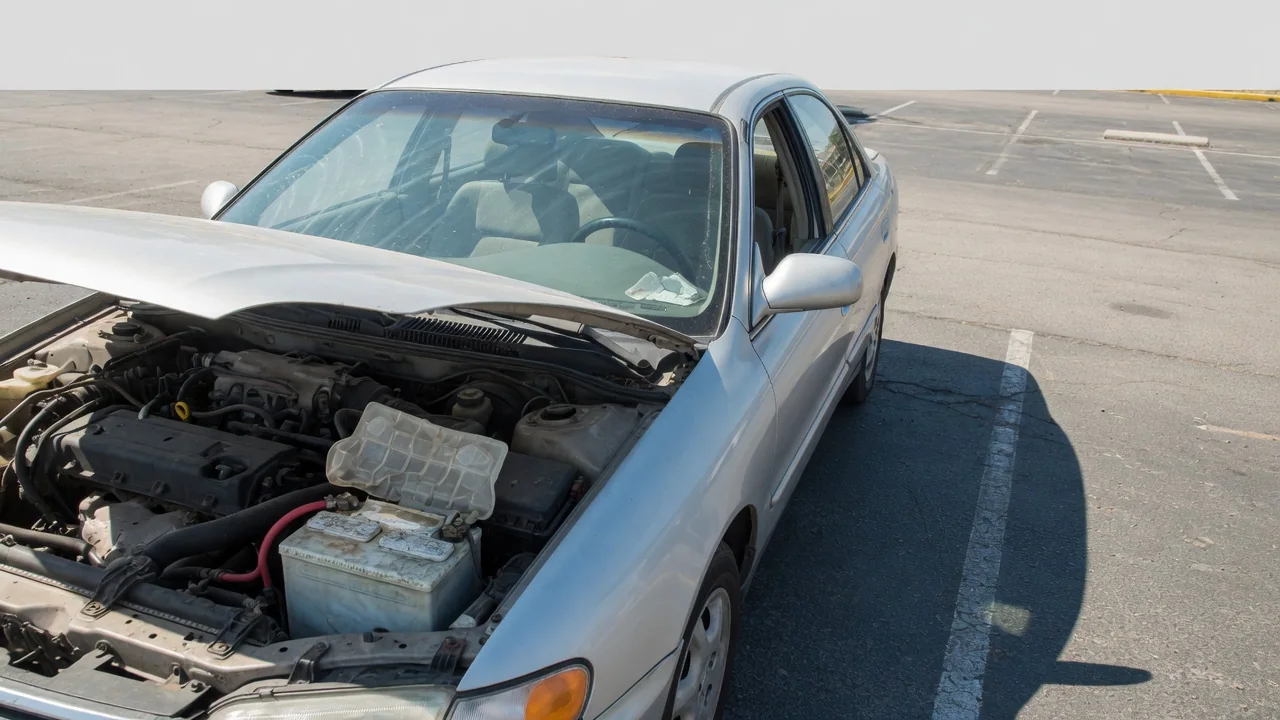
A car left in a sun-baked lot looks idle, but its battery is still working. Understanding what happens to a car's battery when parked in extreme heat means looking at two things at once: the chemistry aging faster inside the case and the small electrical loads that keep drawing power while the vehicle sits. Together they explain why summer damage often shows up months later.
Heat exposure
Under a closed hood on hot pavement, temperatures around the battery can climb well above the surrounding air, especially right after a drive when the engine and exhaust are still radiating warmth. A conventional lead-acid battery responds by speeding up its internal chemical reactions. That sounds helpful, and a warm battery does crank eagerly, but the same acceleration applies to the unwanted reactions that corrode the positive plate grids and consume the active material that stores energy.
Heat also drives water out of the electrolyte in flooded designs, lowering the fluid level and concentrating the acid that remains. Sealed absorbed glass mat batteries lose less moisture but can still dry out or vent if they get hot enough. Where the battery sits matters: some vehicles mount it beside the engine, others place it in the trunk, under a seat, or behind a heat shield, so the same parking spot can stress two cars very differently.
Battery health
Battery health declines through gradual, mostly irreversible changes, and high temperature accelerates nearly all of them. Grid corrosion thins the internal conductors, raising resistance so less current reaches the starter. Self-discharge also speeds up in heat, meaning a parked battery loses charge faster on its own than it would in mild weather. If the state of charge stays low for long, hard sulfate crystals form on the plates and reduce the capacity that a later recharge can restore.
Standby demand adds to that natural loss. Modern vehicles keep modules awake for keyless entry, alarm systems, telematics, and memory functions, drawing a small current whenever the car is parked. On a healthy battery this draw is easily tolerated for a good while, but combined with faster self-discharge in a hot garage or airport lot, the reserve shrinks sooner. How much current a parked vehicle uses depends on its equipment and software, so the owner's documentation is the right reference.
Testing
Testing separates a battery that is simply discharged from one that has aged. A resting voltage reading taken after the car has sat for several hours gives a rough picture of state of charge, yet it says little about remaining capacity. Conductance testers and load tests go further by estimating how well the battery delivers current compared with its rating. A heat-worn battery can show acceptable voltage and still fail these checks, which is why shops rely on more than a multimeter.
If the battery keeps running down while parked, a technician can measure parasitic draw once the vehicle's modules have gone to sleep, then compare the result with the manufacturer's guidance. Charging system output deserves a look as well, since an overcharging or undercharging alternator compounds heat damage. Any stored fault codes for low system voltage are clues to interpret alongside these measurements, not proof that a particular component has failed, and their meaning should be confirmed for the specific vehicle.
Everyday Use and Observations
In daily driving, heat damage rarely announces itself during summer. The engine turns over easily in warm weather because the oil is thin and the chemistry is lively, masking lost capacity. The weakness tends to surface with the first cold mornings, when a slower crank or a single click reveals what the hot months took away. Many drivers blame winter for a failure that actually began in a July parking lot.
Some signs are visible sooner. A swollen or bulging case, a sulfur smell, moisture or crusty deposits around the terminals, and low fluid in batteries with removable caps all suggest heat or overcharging stress. Electrical hints include dimming interior lights at startup, a hesitant stop-start system, or battery warnings after the car has sat for a week. Short trips make things worse because the alternator has little time to replace what standby loads and self-discharge removed.
Limits and Next Steps
There are limits to what an owner can control. Shade, a garage, or a parking structure lowers the heat load, and driving long enough to recharge fully helps keep sulfation in check. For a vehicle stored through summer, a maintainer matched to the battery type can offset standby drain, provided the manufacturer permits it and the connection points are used as directed. None of these habits reverses corrosion or water loss that has already occurred.
When symptoms appear, a professional test is the sensible next step rather than guessing at a replacement. Batteries contain acid and can release flammable gas, so a swollen, leaking, or hot unit should be left alone and inspected by a qualified shop. Replacement type also matters, because vehicles with stop-start or battery monitoring systems may need a specific technology and a registration step. Expected service life varies with climate, design, and use, so regular checks before each season are worthwhile.