What Happens to a Car Cover in Strong Wind?
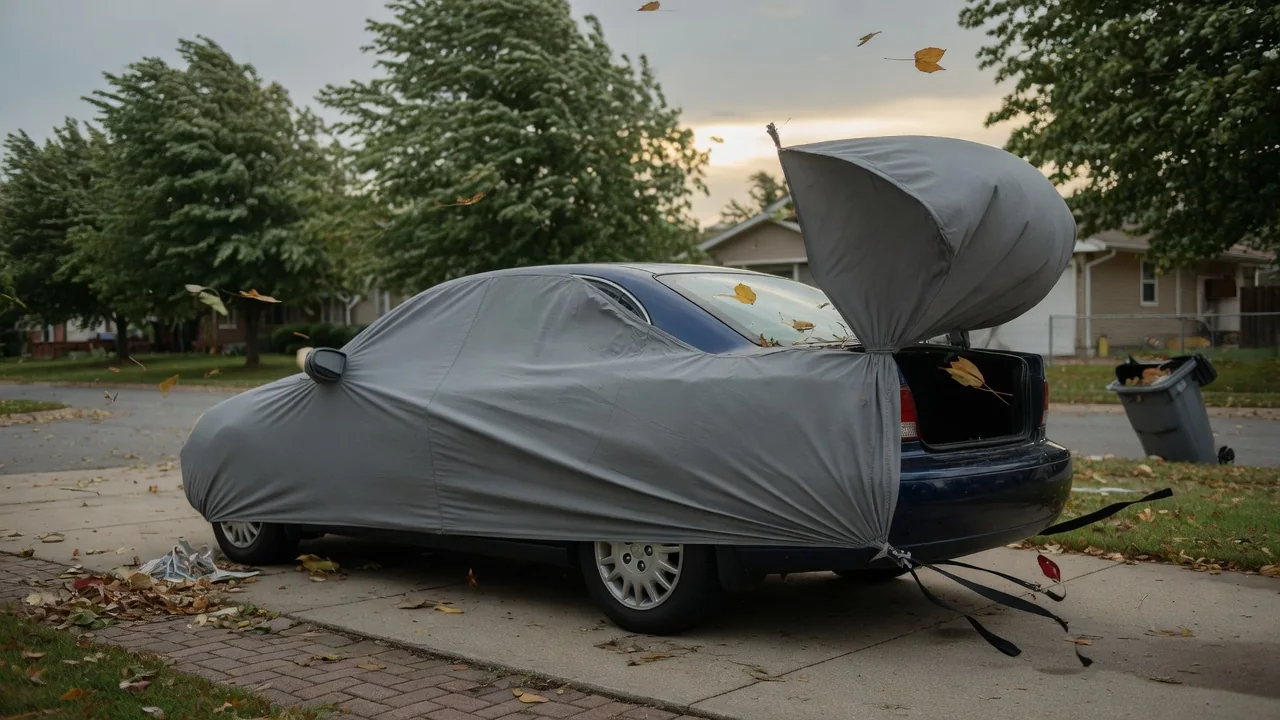
A car cover is meant to shield paint from dust, sun, sap, and debris, but strong wind changes how it behaves. Air can get underneath the fabric, inflate it like a sail, and make it flap or shift against the body. Whether that leads to a lost cover, a torn strap, or wind car cover abrasion on the paint depends mostly on how well the cover fits, what is trapped between fabric and finish, and how soon problems are spotted.
Secure fit: why loose fabric catches the wind
What happens to a car cover in strong wind starts with airflow. Wind moving over and around a parked car creates pressure differences, and any gap at the hem lets air push into the space between fabric and body. Once air is inside, the cover balloons, pulls against its edges, and tries to lift from the windward side. A loose or oversized cover gives the air more volume to fill and more slack to whip around, so it billows and snaps back repeatedly. A cover that is too small has the opposite problem: it sits under constant tension, which concentrates load on seams, elastic hems, and grommets, and those points can tear when gusts add sudden force.
The features that keep a cover in place work together. An elastic hem that tucks under the bumpers closes the main entry point for air. Underbody straps, usually buckled across the middle of the car, resist lift along the length of the vehicle. Grommets allow a cable or cord to run beneath the car, which adds hold and also deters theft. Mirror pockets and a correctly positioned antenna opening reduce shifting, because the cover has fixed reference points rather than sliding freely. Fit depends on vehicle shape, so a cover made for the body style in question generally holds better than a universal one stretched to close gaps. Straps should be snug but not drum-tight, and buckles should sit where they cannot swing against the paint.
Paint contact: how flapping turns into abrasion
Most wind-related paint damage under a cover comes from movement rather than from the fabric itself. When the cover flaps or shifts, its inner surface slides across the clear coat again and again over a windy night. On a clean surface with a soft lining, that friction is usually minor. The problem is what gets caught between the layers. Dust, sand, pollen, and grit that were on the car before it was covered, or that blow in under a loose hem, act like a fine abrasive. Repeated rubbing can leave light haze, swirl-like marks, or dull patches, and these tend to show more clearly on dark colors and high-gloss finishes.
Contact is not even across the car. The fabric presses and rubs hardest at high points and edges: mirror housings, fender peaks, roof edges, the leading edge of the hood, spoilers, and bumper corners. These spots carry the cover's tension and also take the brunt of flapping. Hardware is another source of marks. A metal buckle, a loose strap end, or a cable lock that swings in the wind can tap or drag against panels and glass. Moisture matters as well, since a cover that stays damp against the finish can hold grime in place, so a breathable fabric and a dry car before covering both help. Covering a clean, dry vehicle is the most effective single step to limit abrasion, because it removes most of the material that would do the scratching.
Inspection after a windy period
A quick check after strong wind tells you whether the cover held and whether it caused any harm. Start from the outside: see whether the cover has shifted, whether the hem is still tucked under both bumpers, and whether straps, buckles, and any cable are intact and still tensioned. Look along seams, around grommets, and at mirror pockets for tears or stretched stitching, since these are common failure points. Note any leaves or twigs pressed against the fabric, and any areas where the material looks worn thin or shiny, which suggests it has been rubbing in one place.
Then remove the cover carefully, lifting it rather than dragging it across the body, and fold it so the inner side stays clean. Examine the paint at the high-contact points under good light, ideally at a low angle, because fine marring is easier to see that way. Touch suspect areas only after checking for grit, so you do not create new marks yourself. Check the inside of the cover too: a lining that carries sand or dirt will transfer it the next time it goes on, so shake it out or clean it according to its care instructions. Light haze is often a surface-level defect, but the right correction depends on the specific finish and its condition.
Practical implications and limits
In everyday use, wind risk is managed more by preparation than by the cover alone. A fitted cover, fully strapped, on a clean car will usually behave far better than a loose one thrown over a dusty finish. Parking position can help too, since a spot shielded by a wall, fence, or building reduces the force of gusts reaching the car, while open lots and exposed parking decks increase it. Lighter covers are easier to handle but tend to resist lift less, while heavier multilayer fabrics hold their shape better yet put more load on straps when wind does get underneath. Checking the cover after each significant wind event, rather than leaving it for weeks, catches small problems such as a slipped hem before they turn into wear.
There are also limits that no cover can overcome. In severe storms, a cover may tear or blow away regardless of fit, and once loose it can strike the vehicle or nearby property. When very high winds are forecast, moving the car into a garage, or removing the cover and storing it indoors, may be the safer choice. Covers also cannot protect against falling branches or heavy debris, as they are not designed to absorb impact. Finally, how a particular cover performs depends on its materials, design, and the maker's instructions, so those instructions and the actual condition of the paint underneath should guide decisions more than general expectations.