What Does Understeer Mean? Causes, Signs and Driver Response
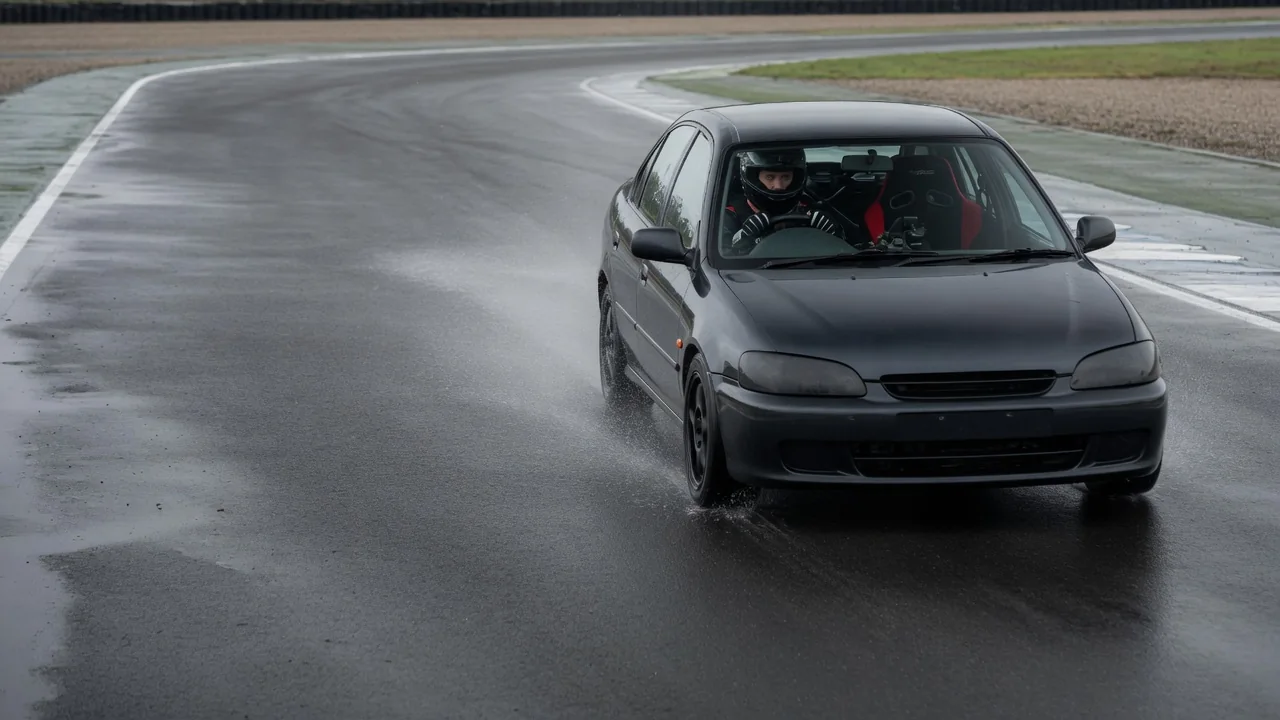
Understeer is a handling condition in which a car turns less sharply than the driver's steering input asks for. Instead of following the intended line through a corner, the vehicle drifts toward the outside of the curve because the front tires have reached the limit of their grip. A short car understeer definition is that the front end pushes wide. Below is what understeer means, why it happens, and how drivers can recognize it.
Turning response: when the front tires reach their limit
Every tire generates cornering force by rolling at a small slip angle, the difference between the direction the wheel is pointed and the direction it is actually traveling. As cornering demands rise, slip angles increase until the tire approaches its peak grip. Understeer occurs when the front axle reaches that limit before the rear. At that point, turning the steering wheel further produces little or no extra turning, and sometimes less, because the front tires are already sliding. The car rotates less than intended and follows a wider arc, a behavior drivers often describe as plowing or pushing.
It helps to compare understeer with the other two balance states. In oversteer, the rear tires lose grip first and the tail tends to swing outward, so the car turns more than the driver intended. Neutral steer describes a car whose front and rear axles approach their limits at roughly the same time. Engineers also use understeer in a broader sense: in steady cornering, a car with an understeer tendency needs progressively more steering angle as cornering force increases. That mild, predictable tendency at everyday speeds is different from limit understeer, where the front tires are genuinely sliding and the car cannot follow the requested path.
Causes of understeer
The most common cause is carrying too much speed into a corner for the available grip. The tighter the curve and the higher the speed, the more lateral force the tires must produce. When that demand exceeds what the front tires can deliver, the nose runs wide no matter how much the wheel is turned. Low-grip surfaces such as rain, standing water, snow, ice, gravel, wet leaves or painted road markings lower the threshold, so understeer can appear at speeds that would feel comfortable on dry pavement.
Driver inputs and weight transfer matter as well. Braking hard while turning asks the front tires to handle braking and cornering at once, and each tire has only a finite amount of combined grip to share between those tasks. Accelerating out of a corner moves weight rearward and unloads the front, which can reduce steering response; in front-wheel-drive cars the front tires must also put down power, adding to their workload. Turning the wheel too quickly or too far can push the front tires past their most effective slip angle, so extra steering lock actually reduces grip.
Vehicle setup and condition shape how readily a car understeers. A front-heavy weight distribution, relatively stiff front suspension or anti-roll bar compared with the rear, and tire choices all influence the balance between axles. Many production cars are commonly tuned with a mild understeer tendency because it is generally considered more predictable for typical drivers, although the exact behavior varies by vehicle. Maintenance issues can increase it too: worn or underinflated front tires, mismatched tires, incorrect wheel alignment or worn suspension components can all reduce front grip relative to the rear.
Driver awareness: recognizing and responding to understeer
Understeer usually announces itself through several signals. The steering may feel lighter or less connected, as if turning the wheel further no longer has much effect. The car continues on a wider line than expected, and the front tires may make a scrubbing or squealing sound. In vehicles with electronic stability control, a flashing warning light on the dashboard can indicate that the system is braking individual wheels or reducing engine power to help the car rotate. Noticing these signs early gives the driver more room to respond calmly.
The common instinct is to add more steering, but when the front tires are already sliding, more lock often makes the situation worse. General driving guidance instead emphasizes smooth inputs: easing off the accelerator gently to let weight settle onto the front, unwinding the steering slightly so the front tires can regain grip, and looking toward where the car should go. Abrupt reactions carry their own risk, since a sudden lift or stab of the brakes mid-corner can unsettle the rear in some vehicles. The most effective habit is preventive: slow down before the corner while the car is traveling straight, then turn in smoothly. The owner's manual describes how a particular vehicle's stability and traction systems operate.
Practical implications and limits
For everyday drivers, understeer is mainly a matter of matching speed to conditions and keeping the car in good order. Correct tire pressures as listed on the vehicle's placard, adequate tread depth, matched tires on each axle and proper alignment help the car keep its intended balance. Modifications deserve care: changing tire sizes, anti-roll bars, springs or ride height at one end of the car alters the balance between front and rear, sometimes reducing understeer at the expense of making oversteer more likely. Any such change is best evaluated against the vehicle manufacturer's guidance.
Understeer also has clear limits as a label. It describes a tendency under particular conditions rather than a fixed property, so the same car may understeer in one situation and oversteer in another depending on speed, surface, load and driver inputs. Drivetrain layout influences handling but does not by itself determine it, and a specification sheet cannot reliably predict how a car will behave at its limit. Electronic aids can reduce the severity of a slide, yet they cannot create grip that the tires do not have. Exploring limit handling deliberately is a task for closed courses and supervised instruction, not public roads.