What Does Transmission Fluid Do?
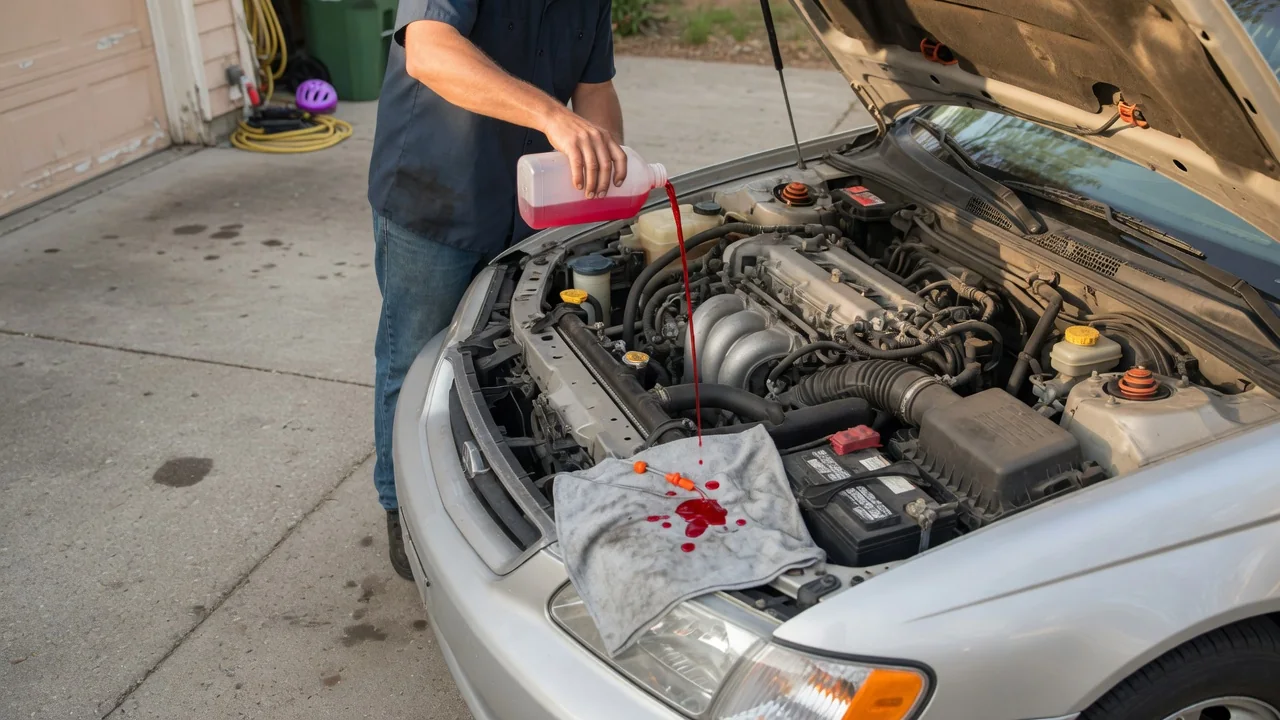
Many drivers ask what does transmission fluid do, and the answer depends on the gearbox. In every design it lubricates moving parts and carries heat away, but in automatics, continuously variable units, and dual-clutch transmissions it also transmits force and helps control shifts. Understanding those roles makes it easier to interpret what you feel, see, and smell while driving and maintaining a vehicle.
Gears and clutches
Inside any transmission, gear teeth mesh under heavy load, and bearings and shafts spin at high speed. Transmission fluid forms a thin film between those metal surfaces so they slide and roll without welding, scuffing, or pitting. In a manual gearbox, the fluid is often a gear oil or a specific manual transmission fluid, and its friction characteristics also affect how smoothly the synchronizers match shaft speeds, which a driver feels as easy or notchy engagement at the shift lever.
Automatic transmissions add a second job, because multi-plate clutch packs and bands sit bathed in the fluid. Here the fluid must allow controlled friction rather than simply reduce it, letting the clutches grip progressively without shuddering or slipping. Friction modifiers in the formulation are tuned to the clutch material, which is why manufacturers specify particular fluid types. Wet dual-clutch units and continuously variable transmissions have their own requirements, so the correct specification should always be confirmed in the owner's manual for the vehicle.
Hydraulic control
In a conventional automatic, the fluid is also a hydraulic working medium. An engine-driven or electric pump pressurizes it, and a valve body with solenoids directs that pressure to pistons that apply the clutches for each gear. The transmission control module times those events, but the fluid delivers the force. If the level is low or the fluid is aerated, pressure can fall, and shifts may become delayed, harsh, or flared, with engine speed rising briefly between gears.
The torque converter relies on the same fluid to couple the engine to the transmission. Fluid thrown from the impeller drives the turbine, which lets the vehicle idle in gear and multiplies torque when pulling away. A lockup clutch then engages at cruise to reduce slip. Continuously variable transmissions use hydraulic pressure to clamp the belt or chain between pulleys, while a traditional manual has no hydraulic control inside the gearbox at all, so the fluid there only lubricates and cools.
Condition checks
Checking condition starts with knowing how the vehicle is designed. Some automatics have a dipstick, and the manual describes whether to check with the engine running, the fluid warm, and the selector in a particular position. Many newer transmissions are sealed with no dipstick and require a fill-plug check at a specified temperature, which is usually a job for a workshop. Manual gearboxes are generally checked at a fill plug on the case with the vehicle level.
Fresh automatic transmission fluid is commonly dyed red, though some fluids are other colors, so color alone is not a verdict. Darkening happens with age and heat, while a sharp burnt smell, gritty debris, or a milky appearance suggesting coolant contamination deserves closer investigation. Spots under the vehicle near the middle or front can point to a leak from a pan gasket, cooler line, or seal. A low level always has a cause, since transmissions do not consume fluid in normal operation.
Everyday Use and Observations
Heat is the fluid's constant adversary in daily driving. Towing, mountain grades, stop-and-go traffic, and repeated hard acceleration all raise fluid temperature, and many vehicles route the fluid through a cooler in or near the radiator to shed that heat. Over time, high temperatures oxidize the fluid and deplete its additives, weakening both lubrication and friction control. That is why manufacturer maintenance schedules often list different service recommendations for severe use than for light commuting.
Drivers usually notice fluid-related trouble through behavior rather than a gauge. A pause before the vehicle moves after selecting drive or reverse, a shudder during light acceleration, whining that changes with road speed, or shifts that feel different once everything warms up are all worth noting. In a manual, grinding or a stiff lever when cold can relate to fluid type or condition. Recording when the symptom appears, and whether temperature or load changes it, gives a technician much better information.
Limits and Next Steps
Fluid has limits as a remedy. New fluid cannot rebuild worn clutch material, repair a damaged seal, or correct a failing solenoid, so a service that improves nothing may indicate mechanical or electronic wear. A warning light with a transmission fault code is likewise evidence to interpret, not proof that a specific part has failed. Codes relating to gear ratio, pressure, or solenoid performance can stem from fluid level, wiring, software, or internal wear, and manufacturer-specific codes need vehicle-specific confirmation.
Sensible next steps begin with the owner's manual, which identifies the required fluid specification and the maker's service guidance. Using a fluid that does not meet that specification can change shift quality or harm components, so universal claims on a bottle deserve scrutiny. If a leak, burnt smell, slipping, or a warning light appears, having the vehicle inspected promptly is wiser than continuing to drive hard. Sealed units and temperature-dependent level checks are generally best left to a shop with the proper equipment and data.