What Does pH Mean for Car Wash Soap?
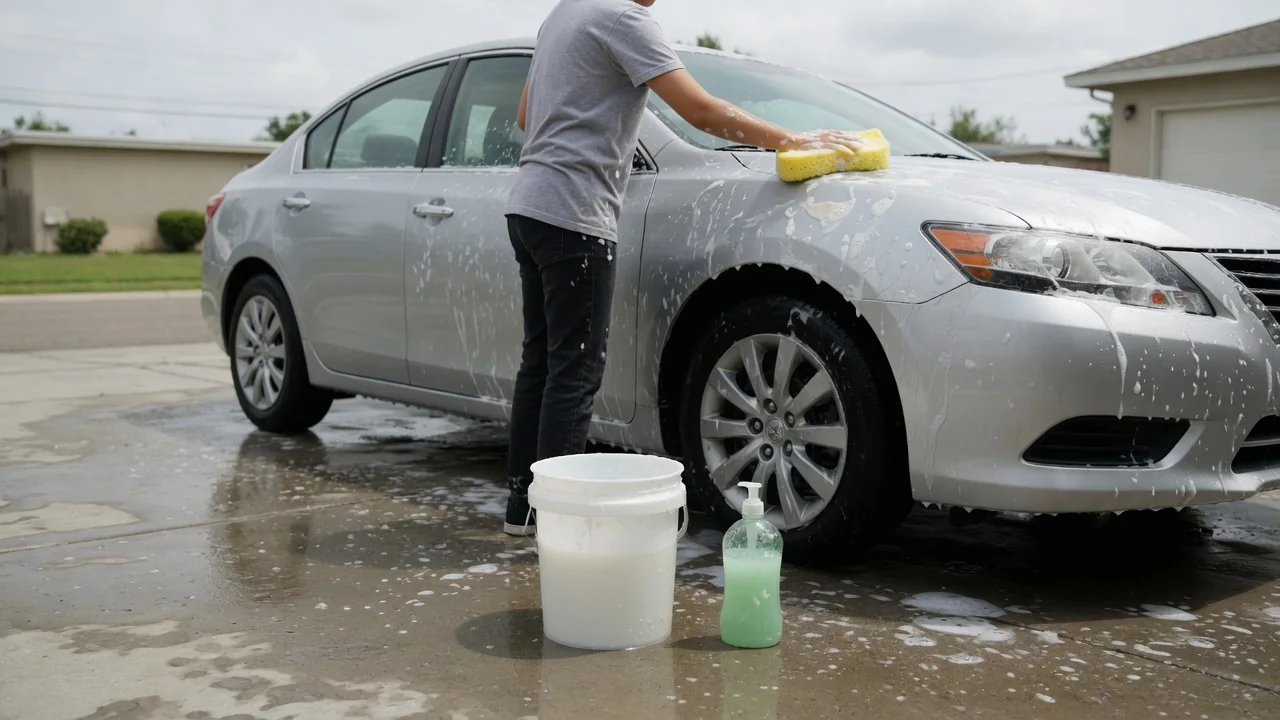
When a bottle of car wash soap says "pH neutral" or "pH balanced," it is describing how acidic or alkaline the cleaning solution is. That number affects what kinds of dirt the soap can loosen and how it treats wax, sealants, trim and metal finishes. It also affects how much care rinsing requires. Knowing what car shampoo pH means helps you choose between a routine wash and heavy cleaning, and read labels with realistic expectations.
Acid and alkaline
pH measures hydrogen ion activity in a water-based solution, usually on a scale from 0 to 14. A value of 7 is neutral, the reference point for pure water at room temperature. Values below 7 are acidic, and values above 7 are alkaline, also called basic. The scale is logarithmic, so each whole step is roughly a tenfold change. A solution at pH 10 is about ten times more alkaline than one at pH 9 and about a hundred times more alkaline than one at pH 8. A difference that looks small on a label can therefore matter in practice.
Acidic and alkaline chemistry work on different kinds of contamination. Alkaline chemistry is effective against organic and oily soils such as road film, grease, insect residue and exhaust grime. It can break down some fats and loosen soil so surfactants can carry it away. This is why many prewash products and traffic film removers lean alkaline. Acidic chemistry works on inorganic deposits: mineral scale from hard water, some water spotting, and certain metal-based contamination found on wheels. Neither side is stronger in every case, because each suits a particular type of soil.
A typical maintenance car wash soap sits near the middle of the scale. It relies mainly on surfactants for cleaning and lubrication rather than on an aggressive pH. That makes it gentler, but also less effective on heavy, bonded grime. This trade-off is the core answer to what pH means for car wash soap. pH sets the soap's chemical character, and the closer it is to neutral, the more the cleaning depends on surfactants, dwell time and gentle agitation.
Surface compatibility
A car's exterior is not a single material. Clear coat, wax, synthetic sealant, coatings, glass, rubber seals, plastic trim, chrome, painted and bare aluminum, and wheel finishes all respond differently to cleaning chemistry. Cured automotive clear coat is generally durable against a properly diluted wash, but the protection applied on top of it is often more sensitive. Natural waxes and many sealants can be softened or stripped faster by repeated exposure to strongly alkaline or strongly acidic solutions. Detailers sometimes use this on purpose, choosing a stronger cleaner to remove old protection before polishing or reapplying. For routine washes, a near-neutral soap is the usual choice because it cleans without speeding up that wear.
Metals and trim need separate attention. Acids can etch or dull bare, polished or uncoated metals, and some wheel finishes are more vulnerable than others. That is why wheel cleaner labels often list surfaces to avoid. Strong alkaline solutions can leave whitish staining on some unpainted plastic and rubber trim, or dull anodized and raw aluminum if they dry on the surface. Glass tolerates most wash chemistry, but leftover residue can cause streaking. Finishes vary by vehicle and by aftermarket product. The safest reference is the soap's label, read alongside the care instructions in the owner's manual or from the installer of any coating or film.
Ceramic-type coatings and paint protection film add another variable. Their chemical resistance depends on the specific formulation, and their manufacturers typically publish their own maintenance guidance. Some recommend only pH-neutral shampoos, while others allow occasional stronger cleaning. Treat those instructions as specific to the product rather than assuming one rule applies to every coating.
Rinsing
Rinsing is where pH stops being a number on a label and starts acting on the surface. As soon as clean water flows over a panel, it dilutes the remaining solution and moves its pH toward that of the rinse water. Thorough rinsing therefore limits how long acidic or alkaline chemistry stays in contact with paint, trim and metal. Incomplete rinsing does the opposite. Product left in panel gaps, around emblems, under mirror housings or in wheel barrels keeps acting after the wash seems finished.
Evaporation is the main risk. When soapy water dries on a warm panel, the water leaves but the dissolved cleaners, salts and minerals stay behind in concentrated form. A solution that was mild when mixed can become much more concentrated in a drying droplet. The residue can leave spots or, with stronger products, stains. This is why product directions commonly advise washing out of direct sun, working on cool surfaces, cleaning one section at a time and not letting the product dry. With alkaline prewashes and acidic wheel or mineral cleaners, keeping surfaces wet and rinsing within the stated dwell time matters even more than with a neutral shampoo.
The rinse water also plays a role. Hard water carries dissolved minerals that can leave spots after drying, whichever soap you use. Softened, filtered or deionized rinse water reduces those deposits. Drying the car promptly with a clean towel or an air blower keeps minerals from setting. Acidic water-spot removers exist because these mineral deposits dissolve in acid, which links rinsing practice back to the pH scale.
Practical implications and limits
pH tells you a cleaner's character, not its overall strength. Two products with similar pH can behave very differently because of other factors in the formula and in how you use it: • surfactant type and concentration; • solvents; • chelating agents that bind minerals; • buffering that resists pH change; • the dilution ratio you actually use; A concentrate's pH can also differ from the pH of the diluted mix in the bucket, and labels do not always say which one they describe. "pH neutral" is a useful description, but it does not guarantee that a product is safe on every surface or effective on every type of dirt.
In practice, the scale suggests which product to use for which job. A near-neutral shampoo suits regular washing of a protected finish. Alkaline products are tools for heavy road film, bugs or stripping old protection. Acidic products target mineral deposits and some wheel contamination. Using a stronger product more often than needed mainly shortens the life of wax or sealant. Using too mild a product on heavy contamination tends to require more scrubbing, which carries its own risk of marring the paint.
General chemistry also has limits here. Surface finishes, trim materials and factory or aftermarket protection differ between vehicles, so no single pH rule fits every car. Temperature, dwell time and the condition of the paint change the outcome. Testing at home with pH strips gives only an approximate reading. Read the full label, and try any stronger product on an inconspicuous area first. Where the instructions for your vehicle or an applied coating are more specific than general guidance, follow them.