What Does Park Do in an Automatic Transmission?
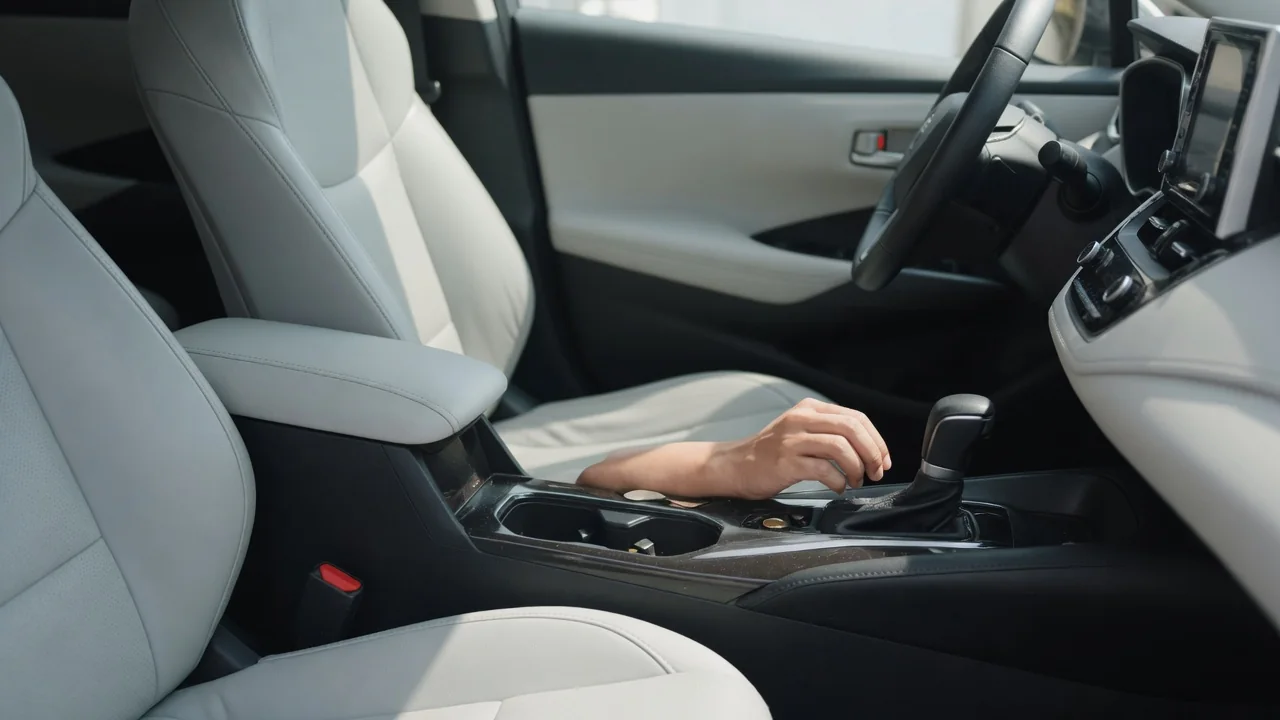
Shifting into Park feels like a simple final step, yet it triggers a specific mechanical event inside the gearbox. Understanding what Park does in an automatic transmission helps explain why the vehicle stays put, why it sometimes rolls slightly before stopping, and why the parking brake still matters. The answer centers on a small locking component called the parking pawl.
Gear mechanism
Inside most automatic transmissions, a toothed ring is attached to the output shaft, the part that ultimately sends rotation toward the drive wheels. When the selector moves to Park, a linkage, cable, or electric actuator pushes a hinged metal lever, the parking pawl, toward that ring. Once the pawl drops into a gap between the teeth, the output shaft can no longer turn. The engine can keep idling because the transmission's internal clutches are released, so no drive is being delivered while the shaft is held.
The pawl is typically spring-loaded, which explains a familiar observation. If the pawl lands on top of a tooth rather than in a notch, the spring holds it there until the vehicle creeps a small distance and the pawl snaps into place. That is the brief roll and soft clunk many drivers notice after releasing the brake pedal. Design details vary: some vehicles use a mechanical lever and cable, others a button or rotary dial with shift-by-wire, and many electric vehicles lock a reduction gear using a comparable pawl arrangement.
Parking on a slope
On level ground the pawl carries almost no load, but a slope changes the picture. Gravity tries to turn the wheels, that force travels back through the axles and differential, and it ends at one small piece of metal wedged against a tooth. The pawl is built to hold a stationary vehicle, yet resting the full weight on it puts the mechanism under constant stress. Drivers often feel the result as a stiff selector and a sharp thunk when shifting out of Park on a hill.
It also matters which wheels are being held. The pawl locks the transmission output, not the wheels themselves, so the holding force reaches only the driven axle and passes through the differential. If one drive wheel sits on ice or loose gravel, an open differential can allow the two wheels to turn in opposite directions and the vehicle may shift. Angling the front wheels so the vehicle would roll into the curb adds a separate physical backstop, and the parking brake holds wheels directly, independent of the transmission.
Brake sequence
The order in which the controls are used decides which component carries the vehicle's weight. A commonly recommended sequence is to stop fully with the foot brake, apply the parking brake while still holding the pedal, and then select Park. Some drivers briefly ease off the pedal in Neutral so the parking brake visibly takes the load before choosing Park, keeping a foot ready over the brake. Either way, the pawl engages against a shaft that is already at rest and unloaded.
Leaving follows the reverse logic: press the brake pedal, start the vehicle, shift out of Park, and then release the parking brake. Most modern automatics include a shift interlock that requires the brake pedal before the selector will leave Park, and vehicles with electronic parking brakes may apply or release them automatically. Those behaviors differ by manufacturer, so the owner's manual is the right reference for how a particular model sequences its parking brake, hold functions, and Park engagement.
Everyday Use and Observations
In daily driving, Park does several jobs at once. Like Neutral, it leaves the engine disconnected from the wheels, but only Park adds the mechanical lock. Most vehicles allow the engine to start in Park, and many will not release the key or power down fully until Park is confirmed. The instrument cluster or selector display shows a P when the position is recognized, which is worth a glance on shift-by-wire vehicles where the lever or button gives little physical feedback.
Selecting Park while the vehicle is still moving is a different matter. At speed, the pawl's shape usually makes it skip across the teeth with a harsh ratcheting noise rather than engage, and many electronically controlled transmissions simply ignore the request above a low speed threshold. At a slow roll, though, the pawl can catch and stop the shaft abruptly, shocking the pawl, ring, and driveline mounts. Waiting for a complete stop before shifting avoids that jolt, and a small settling movement afterward is normal.
Limits and Next Steps
Park is a lock, not a brake, and its limits follow from that. A single pawl is not intended to resist a heavy impact, a steep grade under a loaded trailer, or the forces involved when a vehicle is lifted or towed with drive wheels on the ground. Towing requirements vary considerably by drivetrain, so the manufacturer's instructions should be checked first. Anyone working around a raised or inclined vehicle should rely on wheel chocks and the parking brake rather than the transmission alone.
Certain symptoms suggest the system deserves a professional look. A vehicle that rolls more than a short distance in Park, a grinding or clicking noise as Park is selected, a selector that sticks or will not leave Park, or an indicator that disagrees with the lever position can point to linkage adjustment, cable, actuator, interlock, or internal wear. Those signs narrow the possibilities without identifying a failed part, so a technician's inspection is the sensible step, with the parking brake used consistently in the meantime.