What Does Oversteer Mean? Rear Slip, Causes and Driver Awareness
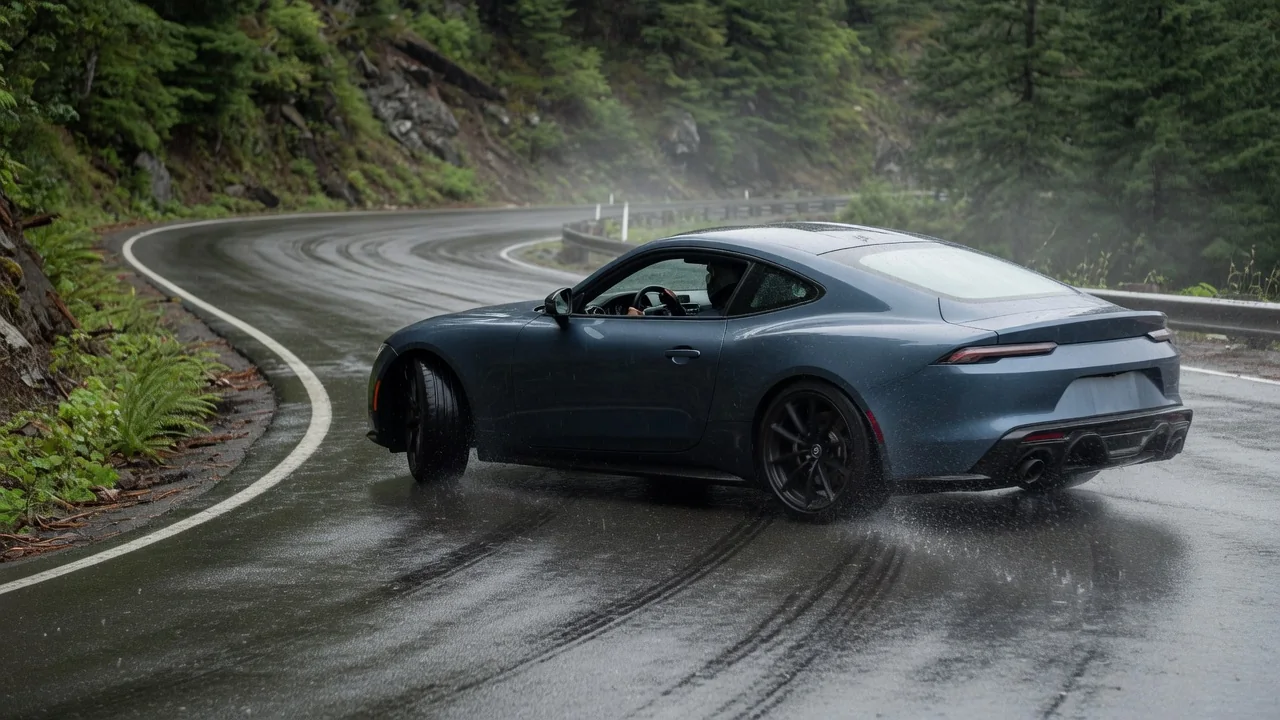
Oversteer is one of the most common terms in driving and car culture. It describes a specific handling behavior: the rear of the car loses grip before the front, so the vehicle turns more sharply than the driver intended. Knowing what oversteer means helps you recognize it, understand why it happens, and respond calmly if it ever occurs on the road.
Rear slip
A simple definition of car oversteer is that the rear tires slide outward relative to the front tires during a turn. Every tire that is cornering operates at a small slip angle, which is the difference between the direction the wheel is pointed and the direction the tire is actually traveling. Some slip angle is normal and is how tires generate cornering force. Oversteer occurs when the rear tires reach and exceed the limit of their grip before the front tires do, so the rear axle's slip angle grows larger than the front's. The tail of the car swings toward the outside of the corner, and the nose points further toward the inside than the steering input alone would produce.
Engineers often describe this in terms of yaw, the rotation of the car around a vertical axis through its body. In an oversteering car, the rate of yaw increases beyond what the steering angle and speed call for. A mild case may feel like the car is simply turning in eagerly or tightening its line. A larger case becomes a slide in which the car rotates noticeably, and if nothing changes, it can continue into a spin.
It helps to compare oversteer with its opposite. Understeer happens when the front tires lose grip first, so the car pushes wide and turns less than intended. Many everyday passenger cars are generally set up to lean toward mild understeer at the limit, because it tends to be more intuitive for most drivers to manage. That is a general design tendency, not a rule; the actual balance depends on each vehicle, its tires and its condition.
Causes
At its core, oversteer is caused by the rear tires being asked for more grip than they can provide. That can happen because the demand on them goes up, because their available grip goes down, or both. Weight transfer is one of the biggest factors. When a car brakes or the driver lifts off the throttle abruptly, load shifts toward the front axle. The front tires gain grip while the rear tires lose some, and in a corner this can let the rear step out. This is commonly called lift-off oversteer, and braking hard while turning can create a similar effect.
Power oversteer is another familiar type, most often associated with rear-wheel-drive and some all-wheel-drive vehicles. A tire has a finite amount of grip to share between cornering and acceleration. If the driver applies too much throttle in a turn, the driven rear tires spend more of that grip on putting power down and have less left for cornering, so they begin to slide. Front-wheel-drive cars are less prone to power oversteer because their driven wheels are at the front, although they can still oversteer from weight transfer, especially when the driver lifts off mid-corner.
Conditions and vehicle setup matter as well. Wet, icy, snowy or loose surfaces reduce grip at every tire, so any imbalance appears sooner and at lower speeds. Worn, mismatched or incorrectly inflated rear tires can leave the rear axle with less grip than the front. Suspension tuning also changes the balance; for example, relatively high rear roll stiffness tends to shift a car toward oversteer. Entering a corner too fast, sudden steering inputs, and bumps or dips mid-corner can all add to the load the rear tires must handle.
Driver awareness
Recognizing oversteer early makes it easier to manage. Common signs include a sensation that the rear of the car feels light or is moving sideways, the nose turning into the corner faster than expected, and the view through the windshield rotating more than the steering would suggest. In some cars the steering wheel may also feel lighter or begin to turn toward the direction of the slide on its own as the front wheels follow the car's motion.
The widely taught general response is to look and steer where you want the car to go. This usually means turning the steering wheel in the same direction the rear is sliding, often called countersteering or steering into the skid. Inputs should be smooth and proportional; too much correction, or holding it too long, can cause the car to snap back the other way. Abrupt braking or a sudden throttle lift can make a slide worse by shifting more weight off the rear. In a power-induced slide, gently easing back on the throttle is usually more effective than lifting off completely.
Modern electronic stability control systems are designed to detect when a car is rotating more than the driver's steering suggests. They can respond by braking individual wheels and reducing engine power to help bring the car back into line. These systems can be a significant aid, but their exact behavior, intervention thresholds and settings vary by vehicle, so the owner's manual is the right reference for how a specific car's system works and when it may be switched off.
Practical implications and limits
For everyday drivers, the most practical way to deal with oversteer is to reduce the chance of it happening. Keeping tires in good condition, maintaining correct inflation pressures and replacing tires as matched sets where recommended all help preserve a predictable balance between the front and rear axles. Adjusting speed to conditions, completing most braking before turning, and applying throttle progressively on corner exit leave more grip in reserve for unexpected changes in road surface.
In enthusiast circles, oversteer is not always a problem. Drifting is a deliberate, sustained form of it, and some drivers on a racetrack use controlled rotation to help a car turn into a corner. These techniques depend on vehicle setup, experience and a safe, closed environment. Public roads leave little margin for error, and practicing slides around other traffic puts everyone at risk.
General advice also has limits. How a car behaves when the rear loses grip depends on its drivetrain, weight distribution, suspension, tires and electronic aids, so no single description fits every vehicle. Stability control cannot create grip that is not there, and correcting a slide is a skill that improves only with proper practice. Drivers who want to understand their own car's limits are best served by professional instruction in a controlled setting, such as a car control or skid pad course.