What Does NVH Mean in Car Design? Noise, Vibration, and Harshness Explained
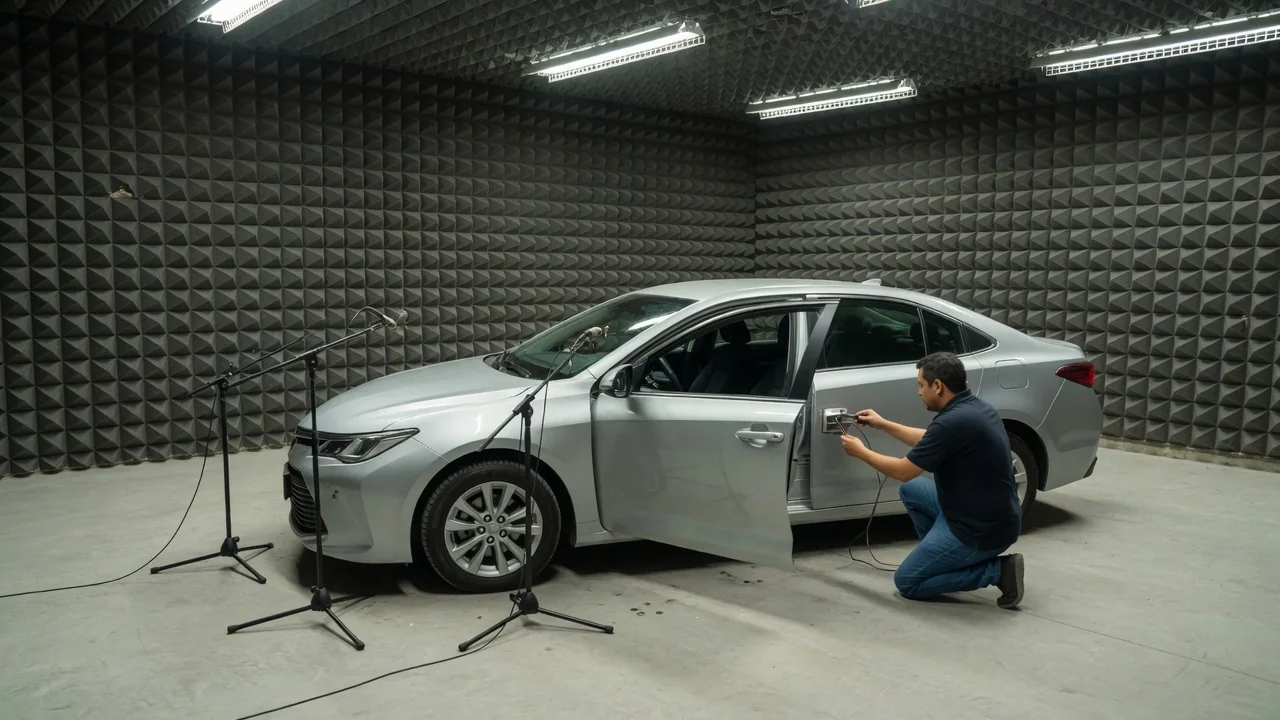
NVH stands for noise, vibration, and harshness. In car design, it names the engineering discipline that studies how sound and motion are generated, transmitted, and perceived in a vehicle, and how to control them. A practical automotive NVH definition goes beyond quietness. NVH describes how refined, solid, and comfortable a car feels to the people inside it. Each of the three words points to a different side of the same problem, and engineers address all three together because they are closely linked.
Noise
In NVH work, noise means the sound occupants hear, especially sound they would rather not hear. The main sources fall into a few broad groups. Powertrain noise includes combustion, intake and exhaust sound, gear whine, and, in electrified vehicles, the high-pitched tones that electric motors and power electronics can produce. Road noise comes from tires rolling over the pavement and from the tread pattern interacting with the surface. Wind noise develops as air flows around mirrors, pillars, door gaps, and seals. Smaller contributors include cooling fans, pumps, and the climate control system.
Engineers separate noise by the path it takes. Airborne noise travels through the air and enters the cabin through gaps, seals, glass, and thin panels. Structure-borne noise begins as vibration that moves through the chassis and body, then radiates as sound from interior surfaces such as the floor or roof. The two paths call for different treatments. Sealing, absorptive materials, and acoustic or laminated glass mainly address airborne noise. Damping material on panels and isolation at mounting points mainly address structure-borne noise. Designers also care about sound quality, not just loudness. A steady tone at one pitch can be more irritating than a louder but broadband rumble. When a quiet powertrain removes the masking effect of engine sound, other noises such as tire roar or wind rustle tend to become more noticeable.
Vibration
Vibration is mechanical oscillation that occupants feel rather than hear, typically through the steering wheel, seats, floor, and pedals. Common sources include the engine's firing pulses and the inherent imbalances of its rotating and reciprocating parts, the driveline with its shafts and joints, wheels and tires that are out of balance or not perfectly uniform, brake components, and the road surface itself. Some vibration is present in every vehicle. The design goal is to keep it at levels and in forms that occupants do not find intrusive.
A central idea in vibration control is resonance. Every structure, from a body panel to an entire vehicle body, has natural frequencies at which it responds most strongly. If an excitation, such as engine speed or wheel rotation, lines up with one of those frequencies, the vibration can grow noticeably. Engineers therefore try to keep major excitation frequencies away from important structural modes. They also stiffen the body and use isolation and cancellation measures. Typical tools include rubber or hydraulic engine mounts, suspension and subframe bushings, tuned dampers, and, in some engine designs, balance shafts or dual-mass flywheels. These measures involve trade-offs. Softer mounts block more vibration but allow more component movement, which can reduce steering precision or make the drivetrain feel less direct.
Harshness
Harshness is the most subjective of the three terms. It describes how abruptly or roughly a vehicle responds to sharp, short inputs such as potholes, expansion joints, broken pavement, and road seams. A harsh impact usually combines a jolt that occupants feel with a thump or slap that they hear, which is why harshness sits between noise and vibration rather than belonging to either one. It differs from general ride comfort, which also covers slower motions such as body float, pitch, and roll over larger undulations.
Many design choices influence harshness. Tire construction and sidewall height determine how much of an edge the tire absorbs before passing it to the wheel. Suspension bushings, damper tuning for quick wheel movements, the weight of the wheels and other unsprung parts, and the stiffness of the body all shape how a sharp input reaches the cabin. Instruments can measure the forces and accelerations involved, but people's perception of roughness does not always track those numbers neatly. For that reason, NVH development generally pairs objective measurement with structured subjective evaluation. A closely related area is often called buzz, squeak, and rattle. It covers small noises from trim, panels, and fasteners that move against each other, often triggered by the same rough inputs that create harshness.
Practical implications and limits
For owners, the NVH character of a car is largely set during design and development, but it does not stay fixed for the life of the vehicle. Tire choice and wear, wheel balance, aging engine mounts and suspension bushings, hardened door seals, and loosened interior trim can all change what reaches the cabin. A new noise or vibration is often a symptom rather than just an annoyance. It may point to a mechanical issue that deserves inspection. When describing such a problem to a technician, it helps to note whether it changes with road speed, engine speed, load, braking, steering, or road surface. That pattern narrows down which system is the likely source.
NVH is always a balance against other goals. Insulation and damping add weight, which can affect efficiency and performance. Low-profile tires and firm bushings may sharpen handling while letting more harshness through. Soft isolation can improve refinement at the cost of precision. Packaging space and cost also limit what can be added. No single component solves NVH, and how acceptable a given level feels depends on the occupant, the vehicle type, and expectations. NVH behavior is also vehicle-specific. How one design handles noise or vibration does not reliably predict another's, and aftermarket changes to tires, wheels, exhaust, or suspension can shift the balance the original engineers chose.