What Does Numbers-Matching Mean for a Classic Car?
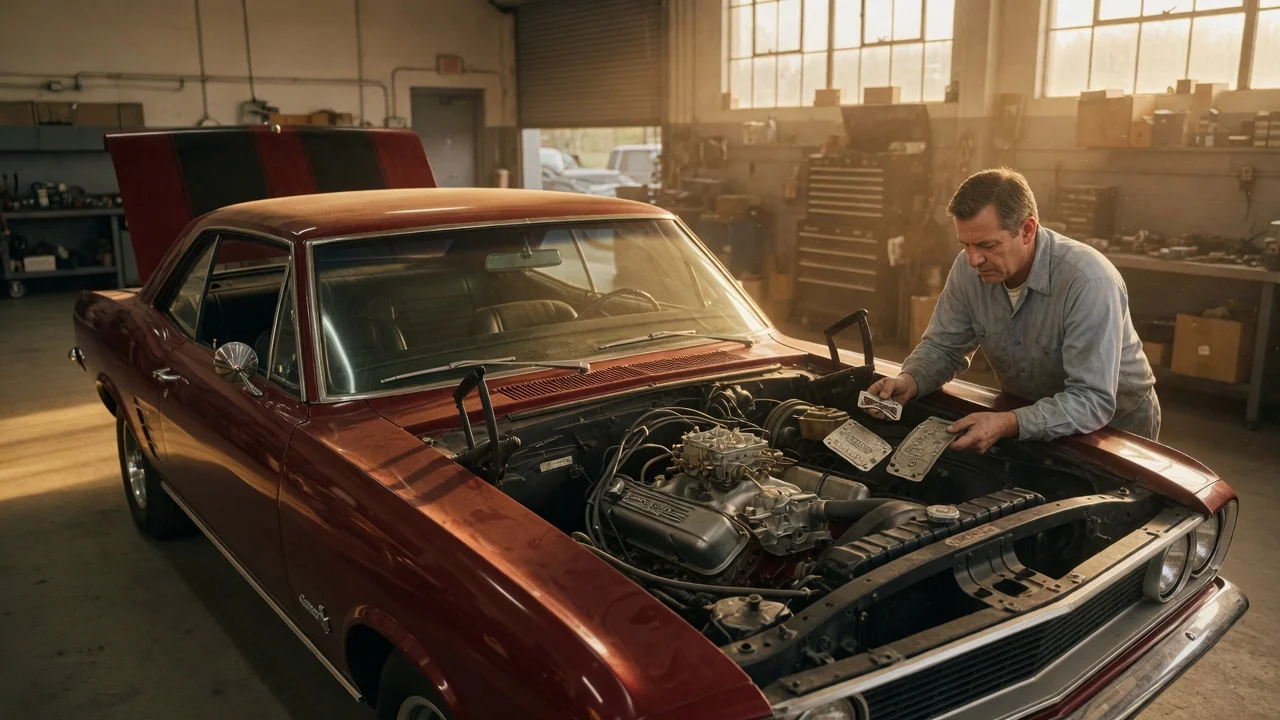
Numbers-matching is one of the most common phrases in classic car listings, and one of the most loosely used. At its core, it describes a car that still has the major mechanical components it left the factory with, shown by identifying numbers that tie those parts to that specific vehicle. Answering what numbers-matching means for a classic car requires looking at which components are involved, what documentation supports the claim, and where the term stops being useful.
Component identity: which parts carry the numbers
The numbers-matching idea starts with the vehicle identification number, or with a manufacturer's serial number on older vehicles built before standardized VINs. Many manufacturers stamped all or part of that number onto major components during production, most commonly the engine block and often the transmission. On some vehicles, other drivetrain parts such as the rear axle also carried identifying codes. When the number on a component corresponds to the car's own identification number, that component can be linked to that individual car rather than simply to the model line.
Several kinds of markings are often confused. A stamped identification number or partial VIN ties a part to one car. A casting number, formed into the metal when the part was cast, identifies a part design and may have been used across many vehicles and years. Date codes indicate when a component was cast or assembled. Assembly or suffix codes, where a manufacturer used them, can indicate the intended application, such as a particular engine and transmission combination. A component can therefore be the correct type and period for a car without being the unit originally installed in it.
Which components count, and where their numbers appear, differs by manufacturer, era and sometimes by assembly plant. Some makers did not stamp the car's serial number on drivetrain parts at all, relying instead on separate engine serial numbers recorded in factory paperwork. For that reason, the meaning of a numbers-matching car depends on what its manufacturer actually marked and recorded, not on a universal checklist.
Documentation: how a numbers-matching claim is supported
Stamped numbers show that parts appear to agree with each other, but documentation is what connects them to factory history. Depending on the manufacturer and period, useful records can include a build sheet or broadcast sheet, an original window sticker, a dealer invoice, a body or trim tag, warranty records, and production records held by the manufacturer, an archive or an enthusiast registry. Some of these documents list the engine serial number or the drivetrain the car was built with, which allows the stamped numbers to be checked against an independent source.
Ownership and service history add context. Titles and registration documents confirm the VIN, while receipts for engine rebuilds or machine work can show whether a block was retained, repaired or replaced. Photographs taken before restoration are especially valuable because they record the condition of stamping pads and tags before any cleaning, machining or refinishing. Gaps in history are common with older cars and do not by themselves disprove originality, but they limit what can be confirmed.
Buyers and owners also rely on inspection by people familiar with a specific make. Marque clubs, registries and independent specialists often know the expected font, location, sequence and finish of factory stampings for the cars they cover. Their findings are interpretations based on known factory practice, and their value depends on the inspector's knowledge of that exact model and period.
Limits: what numbers-matching does and does not prove
Numbers-matching is a claim about identity, not about condition or correctness elsewhere on the car. A car can retain its original engine block while the cylinder heads, intake, carburetor, ignition parts and many other components have been changed. The term says nothing on its own about the quality of a rebuild, the soundness of the body, or whether paint and trim are factory-correct. Sellers also apply it with different scopes: in one listing it may cover only the block, in another the block and transmission, and in another the full drivetrain.
Stamped numbers can be altered. Stamping pads can be ground down and restamped, and replacement blocks can be stamped to imitate a car's original numbers. Factory stampings were not always perfectly consistent, which makes authentication harder in both directions: a genuine stamping can look irregular, and a careful forgery can look convincing. Restamping a replacement part to pass it off as original is widely regarded as misrepresentation, and rules on altering identification numbers vary by jurisdiction.
A related description, often called date-code correct or period-correct, refers to a replacement part of the right type and production period that was not originally installed in that car. Many owners find such parts acceptable or even desirable, but they are not the same as numbers-matching. Because words like original, matching and correct are used inconsistently, each claim needs to be read for exactly what it states.
Practical implications and limits for owners and buyers
For a buyer, the most useful step is to ask exactly which components the seller means and what supports the claim. A clear answer names the parts, identifies where each number is located, and points to the paperwork or inspection that ties those numbers to the car. Clear photographs of the stamping areas and tags, plus an examination by someone experienced with that make, can reveal inconsistencies before purchase. When a car's value depends heavily on originality, a written description of what was verified is worth more than the phrase alone.
For owners, the practical question is often whether to keep an original component in service. Rebuilding a damaged original block, when feasible, preserves its identity, while swapping in a different unit permanently changes the car's numbers-matching status. Some owners who install a replacement engine for regular driving keep the original stored with the car. Recording machine work, keeping removed parts, and avoiding unnecessary resurfacing of stamping pads all help preserve evidence for future owners.
How much numbers-matching matters also varies. For collector-grade, historically significant or limited-production cars, and at judged shows, it can carry substantial weight, while for a car built mainly for driving or modification it may matter little. Its effect on any individual vehicle's value depends on the make, model, rarity and buyer expectations, and cannot be stated as a general rule. Treating numbers-matching as one piece of evidence rather than a final verdict keeps it in proportion.