What Does NOS Mean in Classic Car Parts?
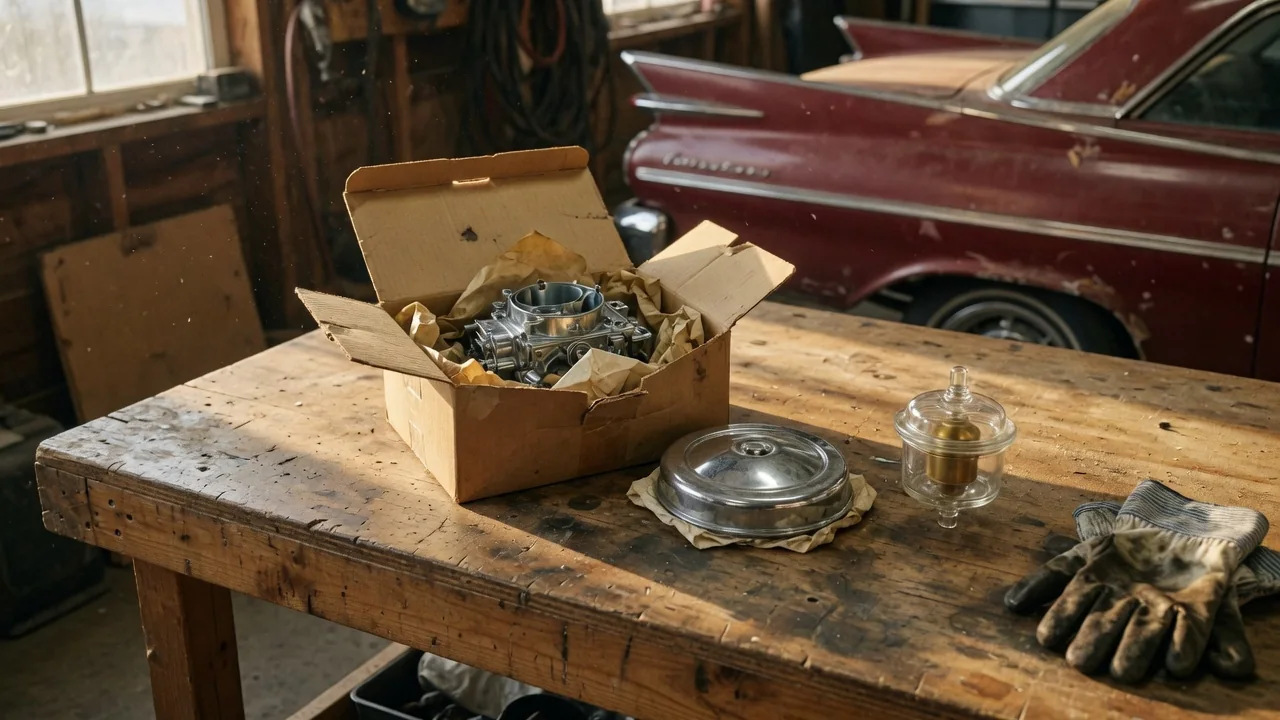
In classic car parts listings, NOS stands for New Old Stock. It describes a part that was manufactured years or even decades ago, never installed on a vehicle, and held in storage until it was sold. Knowing the NOS car parts meaning helps you judge how a part is described, what condition it may actually be in, and how much evidence a seller should provide. This guide covers old stock, condition, and verification.
Old Stock: What the Term Describes
Each word in New Old Stock has a specific meaning. New means the part is unused. It has not been fitted to a car and has not worn in service. Old refers to when it was made, typically during or around the production years of the vehicles it was intended for. Stock refers to inventory. The part was produced to be sold as a replacement or service item and then sat on a shelf. In the strictest usage, NOS describes parts made by or for the original vehicle manufacturer and distributed through its dealer and service parts network. Such parts commonly surface when old dealership inventories, warehouse distributors, independent parts stores, or private collections are cleared out.
NOS is easier to understand next to the terms it is often confused with. A reproduction part is newly manufactured to copy an original design. A used or take-off part was removed from a vehicle. A rebuilt or remanufactured part is a used core restored to working order. Many collectors also use NORS, for New Old Replacement Stock, to describe unused parts from the same era made by aftermarket suppliers rather than the original manufacturer. Outside the parts world, NOS is also widely associated with nitrous oxide systems in performance tuning. In a classic parts listing, however, the abbreviation almost always means New Old Stock.
Condition: Unused Is Not the Same as Unaged
The most important point about NOS parts is that time affects materials whether or not a part has been used. Rubber and other elastomers can harden, shrink, crack, or lose elasticity in storage. Gaskets and seals may take a set or become brittle. Plastics can discolor and become fragile, adhesives can dry out, and greases inside sealed assemblies can thicken. Metal surfaces can corrode if storage was damp, plated finishes can pit or haze, and electrical contacts can oxidize. How a part was stored usually matters as much as how old it is. A part kept in a dry, stable environment may be in far better shape than one stored in a humid building with wide temperature swings.
Packaging and handling add another layer. Original boxes may show water stains, fading, crushing, or general shelf wear. Some parts were opened, inspected, or test-fitted and then returned to stock. Sellers often use phrases such as NOS in original box, NOS without box, or shelf wear. There is no single industry-wide grading standard, though, so the same words can mean different things from one seller to another. Read descriptions carefully and judge the actual part shown rather than the label attached to it.
Condition also has a functional side. On decorative trim or badges, age-related flaws are mostly cosmetic. On components tied to braking, fuel delivery, cooling, or steering, deterioration of rubber, seals, or friction material can affect safety and reliability even if the part has never been installed.
Verification: How to Check a NOS Claim
Verification starts with the part itself. Look for manufacturer markings, part numbers, and casting or stamping details, and compare them with the factory parts catalog or service documentation for the vehicle. Inspect closely for signs of prior installation: wrench marks on fasteners or fittings, scuffed mounting surfaces, paint overspray, dirt or residue in threads and crevices, and wear where the part would contact other components. Packaging is useful supporting evidence, especially when its labels and numbers match the part inside. A box alone proves little, however, because packaging can be reused, mismatched, or reproduced.
Part numbers deserve particular attention. Manufacturers often superseded part numbers over time. A genuine NOS service part may therefore carry a different number from the component installed at the factory, or differ from it in small details. That does not make it fake, but it matters if exact factory originality is your goal. Before buying, ask the seller for clear photos of every side, close-ups of markings and labels, and any information about where the part came from. Marque clubs, owner registries, and established specialist vendors can often help confirm whether markings and packaging are consistent with genuine parts of that period.
Certain warning signs call for extra caution. These include a box and part that do not match, packaging that looks newer than the era it claims, and unusually large quantities of a part described as rare. Vague or evasive answers about origin are another warning sign. So is wording such as NOS style or NOS quality, which typically signals a reproduction rather than genuine old stock.
Practical Implications and Limits
Whether a NOS part is the right choice depends on the goal of the project. For an originality-focused restoration or a car that will be judged, a genuine NOS part can be attractive because it reflects factory appearance and markings. For a car that is driven regularly, a well-made modern replacement may sometimes be the more sensible option for age-sensitive wear items, since it was manufactured recently. Neither choice is automatically better. The decision balances authenticity, function, availability, and cost for the specific application.
Treat a NOS part like any other component of unknown history. Inspect it before installation. For assemblies with internal seals or lubricants, many owners clean, relubricate, or replace the soft parts before putting them into service. Keep the original packaging and any paperwork that came with the part, since they can support the car's documentation later. It also helps to know the seller's return policy before buying, because some problems only become apparent during fitting.
Finally, remember the limits of the label. NOS is a seller's description, not a certification. On its own, it guarantees nothing about fitment, function, or authenticity. Correct part numbers, finishes, and markings vary by manufacturer and model, so the vehicle's own factory documentation remains the authoritative reference for any specific car.