What Does Kilowatt-Hour Mean for an Electric Car?
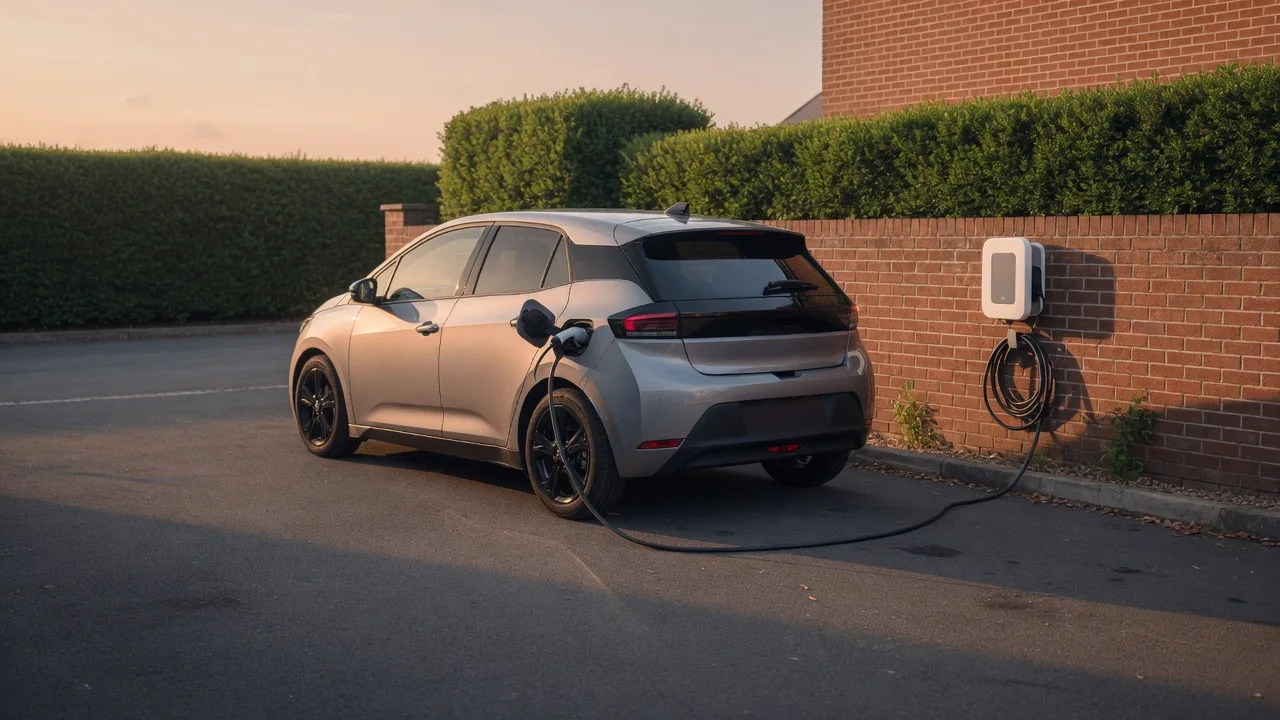
Anyone asking what does kilowatt hour mean for an electric car is really asking how electricity is measured as a quantity. A kilowatt-hour, written kWh, is a unit of energy: the amount used when one kilowatt of power flows for one hour. It describes how much a battery pack can store, how much a charging session adds, and how much a trip consumes.
Energy versus power
Power and energy are easy to confuse because their names look alike. A kilowatt, or kW, measures power, which is the rate at which energy moves at a given instant. A kilowatt-hour measures energy, which is the total amount moved over time. In gasoline terms, kilowatt-hours resemble the gallons sitting in the tank, while kilowatts resemble how fast the pump nozzle flows or how hard the engine is working. Motor output and charger speed are therefore quoted in kW, and battery capacity in kWh.
The two units are linked by time. A home charger supplying 7 kW for two hours delivers about 14 kWh before losses, and a DC fast charger running at much higher power can deliver the same energy in a fraction of that time. Drivers can see this split on the equipment itself: the station is labeled by its kW rating, while the receipt totals kWh. How much power a car can actually accept depends on its onboard charger and battery design, so the limit varies by vehicle.
Battery use
Battery capacity in kWh tells you the size of the car's energy reserve. Manufacturers often distinguish gross capacity, the total the cells can hold, from usable capacity, the portion the car lets you draw on after protective buffers at the top and bottom. Range comes from combining usable energy with efficiency. As a purely illustrative calculation, a pack with 60 usable kWh in a car averaging 3.5 miles per kWh would cover roughly 210 miles under those same conditions.
The rate at which those kilowatt-hours are spent changes constantly. Highway speeds, steep grades, cabin heating or air conditioning, and cold weather all raise consumption, while regenerative braking returns some energy to the pack when slowing down. The state-of-charge percentage on the dash is simply the share of usable capacity remaining. Over years of service a pack gradually holds fewer kilowatt-hours, so the same percentage represents slightly less energy, though the pace of that change differs between vehicles and usage patterns.
Reading a charging display
A public charging screen usually shows several figures at once, and knowing the units keeps them straight. The kW value is the current charging rate, the kWh value is the running total of energy delivered so far, and the percentage is the battery's state of charge. The kW figure rarely stays constant. It typically climbs early in the session, then tapers as the battery fills, and it can sit lower than expected when the pack is very cold or very hot.
The kWh total on the station may not match what the car reports as added to the battery. Some energy is lost as heat in the cables, the charging electronics, and the pack itself, and some may run battery conditioning or cabin systems during the session. Billing also differs by network and location, with some charging per kilowatt-hour and others by time connected. Home sessions often show similar numbers in the vehicle's app or the wall unit's display, with layouts that vary by brand.
Everyday Use and Observations
The kilowatt-hour is the same unit a household utility bill uses, which makes home charging costs straightforward to estimate. Multiplying the kilowatt-hours added during a session by the electricity rate per kilowatt-hour gives an approximate cost, with a little extra for charging losses. The trip computer complements this by reporting consumption, shown as miles per kWh or kWh per 100 miles depending on the vehicle. Watching that figure across seasons reveals how winter heating or summer cooling shifts energy use.
Efficiency figures also help when comparing vehicles. On a window label, a lower kWh per 100 miles number means the car needs less energy to cover the same distance, much as a higher miles per gallon rating does for a gasoline model. In daily driving, smoother acceleration, moderate speeds, and warming or cooling the cabin while still plugged in tend to stretch each kilowatt-hour further. Two drivers in identical cars can see noticeably different results from the same battery.
Limits and Next Steps
A kilowatt-hour figure has limits as a guide. Battery capacity alone does not reveal how quickly a car charges, how efficiently it drives, or how healthy the pack is. A larger battery in a heavy, less efficient vehicle may travel no farther than a smaller one in a lighter car. The range estimate on the dash is a prediction built from recent consumption and conditions, not a fixed promise, so it can rise or fall after a change in route, weather, or driving style.
The practical next step is to look up the details for a specific vehicle. The owner's manual or manufacturer documentation lists usable capacity and the maximum AC and DC charging rates, which determine whether a faster station will actually save time. Tracking consumption over several weeks gives a realistic personal baseline, and a utility's rate plan shows when charging is cheapest. If usable capacity seems to have dropped sharply, a dealer battery health check using manufacturer-specific diagnostics is the appropriate way to confirm it.