What Does a Trunk Weatherstrip Do?
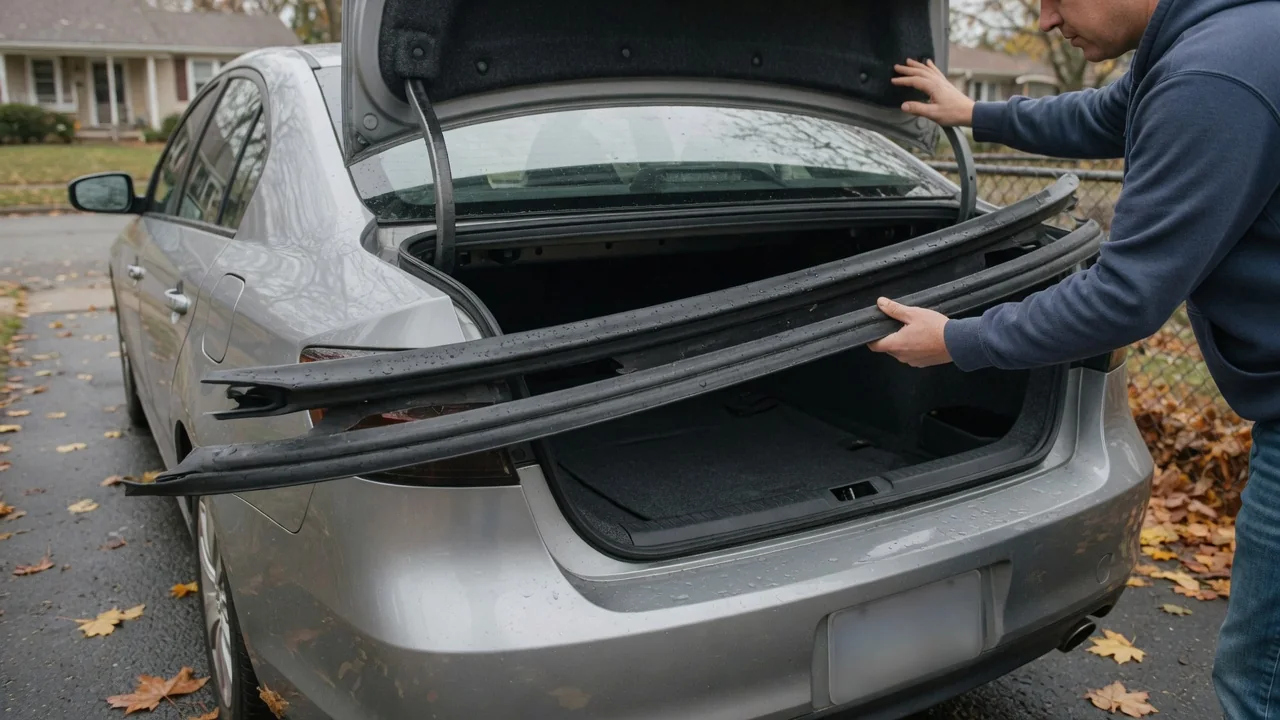
Anyone asking what does a trunk weatherstrip do is really asking how a movable lid keeps a cargo area dry. This rubber seal runs around the trunk opening and fills the gap between the lid and the body, blocking water, dust, exhaust fumes, and road noise. It also cushions the lid when it closes, so the panel sits firmly without rattling.
Compression fit
A trunk weatherstrip works by being squeezed. The seal is usually a hollow or sponge-like rubber bulb mounted on a metal flange around the cargo opening, and when the lid closes, its inner edge presses into that bulb. The rubber deforms to match small irregularities in the sheet metal, creating a continuous barrier. Because the seal pushes back against the lid, it also adds slight tension that helps the latch hold the panel steady over bumps.
That compression only works while the rubber stays springy. Over years of heat, cold, and constant pressure, the bulb can flatten, harden, or crack, leaving it unable to rebound and fill the gap. Owners can often see this as a shiny, flattened strip or sections that feel stiff rather than soft. Designs vary by vehicle: some seals push onto the body flange, others attach to the lid itself, and hatchbacks and SUVs use longer seals around a larger liftgate opening.
Debris
The channel around a trunk opening is designed to carry water away. Rain running off the rear glass and lid flows into a gutter outside the seal and drains toward the bumper area. Leaves, pine needles, seeds, and grit collect in that same gutter, and when enough builds up, water pools against the weatherstrip instead of draining past it. A seal that handles normal runoff can be overwhelmed when standing water sits against its edge.
Debris also interferes with the seal directly. Sand or a small twig trapped between the rubber and the lid holds the two surfaces apart, creating a tiny path for moisture and dust. Grit embedded in the rubber can gradually abrade it each time the lid closes. Wiping the seal and the surface it contacts, and clearing the surrounding channel, is a simple habit that preserves sealing. Where drain paths are located differs between body styles, so a look at the specific vehicle is worthwhile.
Leak diagnosis
A wet trunk does not automatically mean the weatherstrip has failed. Water can also enter through tail lamp gaskets, body seams, antenna or trim mounting points, clogged sunroof drain tubes routed through the rear quarters, or body vents hidden behind the bumper. The location of the moisture offers clues: dampness along the opening edge points toward the seal, while water collecting in the spare tire well or behind a side trim panel may have traveled from somewhere else entirely.
Visual inspection comes first. Tears, gaps at the seam where the seal ends meet, sections pulled off the flange, and dirt trails across the rubber all suggest where water is crossing. A common check involves closing the lid on a strip of paper and feeling how firmly it is gripped at different points around the opening; a loose spot suggests weak compression. Having a helper gently run water over the closed lid while someone watches for drips from a safe position can narrow the source further.
Everyday Use and Observations
In daily driving, a healthy trunk seal goes unnoticed, and that is the point. The cargo area stays dry after a car wash, the carpet has no musty smell, and the lid closes with a solid, damped sound. When the seal deteriorates, the signs are usually gradual: fogged rear windows after rain, a damp odor, water stains on the trunk liner, rust starting along the opening flange, or more road and exhaust noise reaching the cabin on sedans with fold-down rear seats.
The way the lid closes can also change. A swollen, displaced, or newly replaced seal may make the lid harder to latch, while a collapsed one can let the panel rattle or sit slightly uneven. Dust lines inside the opening after driving on gravel roads show where air is being drawn past the rubber. Cold weather adds another observation, since moisture on the seal can freeze the lid to the body, and pulling it free forcefully may tear the rubber.
Limits and Next Steps
A weatherstrip can only seal a properly aligned opening. If the lid sits unevenly because of worn hinges, a misadjusted latch or striker, or previous collision repair, even fresh rubber may not compress evenly around the perimeter. Likewise, a seal cannot compensate for rusted flanges, cracked seam sealer, or leaking lamp gaskets. Replacing the strip without confirming the actual entry point can leave the trunk just as wet as before, so the evidence should guide the decision.
When the rubber itself is torn, hardened, or permanently flattened, replacement is the usual remedy, and the correct part depends on the vehicle's body style and year, so fitment should be confirmed for the specific model. Cleaning the seal and keeping the drainage channel clear are reasonable owner tasks in the meantime. Persistent leaks, visible corrosion, or a lid that will not align are better evaluated by a body shop or technician, since trapped moisture can damage wiring and electronics housed in the cargo area.