What Does a Clean Title Mean on a Car?
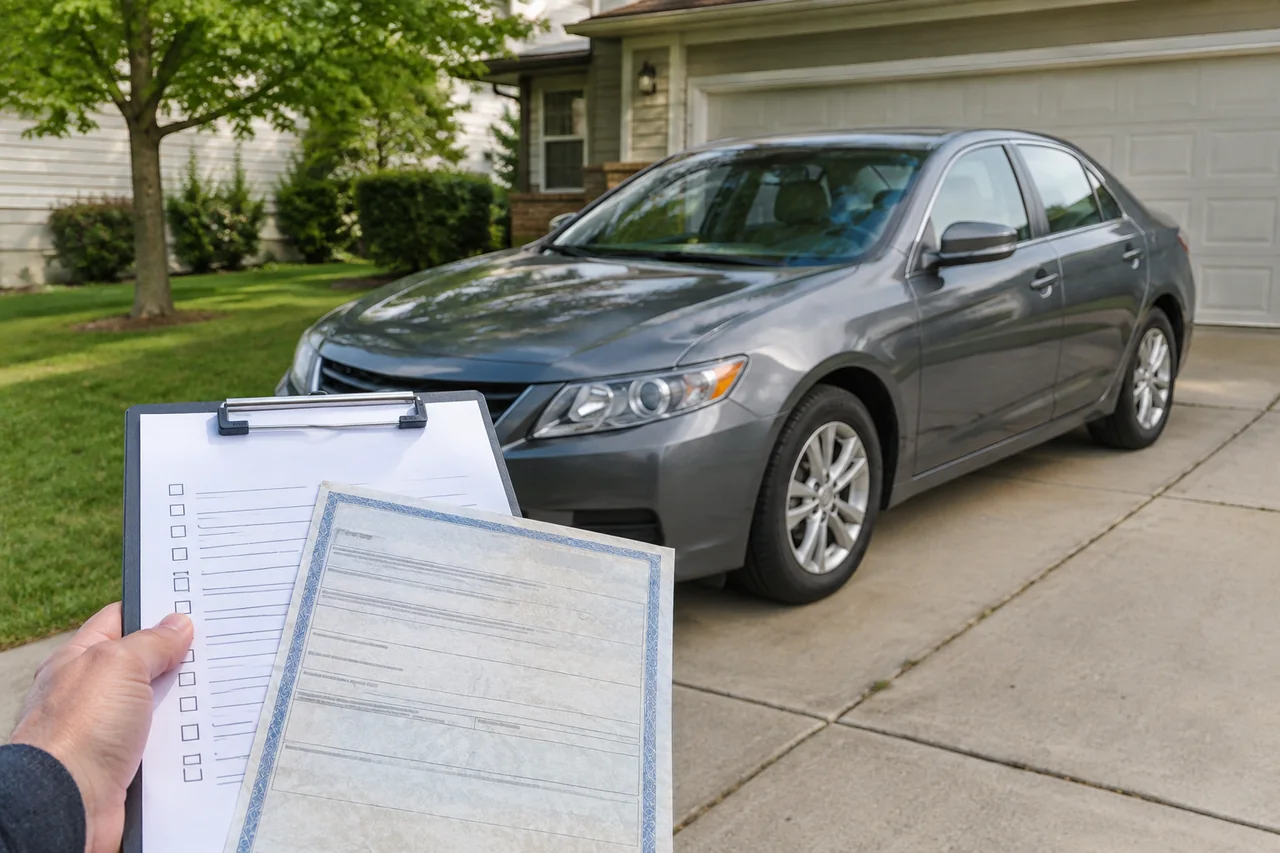
A clean car title is a common way of describing a vehicle title that does not carry an official brand for salvage, flood, or similar recorded conditions. Buyers looking at used cars often ask what a clean title means for a car because the phrase sounds like a guarantee of condition. It is not. Title branding, ownership records, and lien status still need separate checks before money changes hands.
What a Clean Title Means
What a clean title means on a car is that the current paper, or the electronic record behind it, does not show a recorded title brand for events such as salvage or flood damage. The phrase is informal, not a universal legal grade issued by every state. A clean title car is simply one whose present title, as issued, lacks those adverse notations. What is a clean car title in practice depends on the issuing motor vehicle authority's file, which is the record that actually defines official status.
Title terminology and branding rules differ from state to state, so two similar wrecks can produce different paperwork depending on where the loss was processed. What is a clean title for a car in one jurisdiction may not match how a neighboring state labels the same history. The official status lives in the issuing authority's ownership records, not in a seller's advertisement. Clean title status also does not prove accident history, mechanical condition, or the absence of a lien. Those facts sit in other files and must be checked separately.
What Clear Title and Title Brands Describe
A clear title commonly means the owner holds the vehicle free of an outstanding lien or competing claim, so a lender is not still listed on the record. Sellers often blur that idea with what a clean title means for a car, treating both phrases as interchangeable praise. They are not the same check. A title brand is an official notation that records a qualifying event or condition in the vehicle's history, such as salvage after an insurer total-loss decision. That brand stays attached to the title until a later, lawful retitling process changes it.
A salvage title generally marks a vehicle that an insurer or state process treated as a total loss, while a rebuilt title describes later paperwork issued after repairs and any required inspection. Eligibility for that rebuilt title, the inspection itself, and later registration all depend on the state. A car advertised as having a clean title can still have an outstanding loan if the lien was never released. Until a lien release is recorded, the lender's interest can block a clean transfer even when no salvage brand appears.
Damage and Problems a Clean Title Can Leave Unknown
Accident repairs and other damage can exist without ever producing a title brand under the rules of the state that handled the claim. Thresholds for salvage, flood, or similar notations vary, so a repaired unibody, a replaced airbag module, or a poorly matched panel can sit on a car that still has no brand. Title status cannot settle questions of maintenance neglect, hidden mechanical faults, or the quality of earlier bodywork. Those issues show up in how the car drives and how it was put back together, not in the brand field on the vehicle title.
Vehicle history reports can lag or miss events when insurers, salvage auctions, or prior owners never filed complete data. Reporting gaps and delays leave ownership records incomplete even when the current title looks ordinary. Title washing is the concealment or removal of adverse title history, often by retitling in a state that does not carry forward the earlier brand. Earlier records still matter because a washed salvage or rebuilt title can reappear later during registration, insurance underwriting, or a subsequent sale, after the buyer has already paid.
How to Check the Title and Seller’s Authority
Start by matching the VIN on the title to the VIN on the vehicle, typically on the dashboard and door jamb, and to the same number on any vehicle history report or registration printout. Mismatches, restamped plates, or a title that names a different year or body style are reasons to stop. Confirm the seller's identity against the name on the title and ask who else must sign. Co-owners, a surviving spouse, or an estate representative may all be required before ownership can transfer. A photocopy of identification is not proof of legal authority.
Recorded brands, liens, and current title status belong in the files of the state motor vehicle authority that issued the document. Ask that office, or use its electronic title procedures where those exist, rather than relying only on a photocopy the seller hands over. Electronic titles can still show a lienholder even when no paper certificate is in the glove box. Altered paperwork, unexplained gaps in the chain of owners, and unresolved liens are reasons to pause until those issues are verified. Paying first and sorting the title later is how buyers inherit someone else's problem.
History Checks and an Inspection Before Purchase
A vehicle history report can surface earlier title events, reported accidents, salvage auctions, and odometer readings that the current paper never mentions. It remains incomplete because not every collision, flood, or private repair is reported. Compare that report with service invoices, body-shop estimates, and any maintenance log the seller can produce. Dates, mileage, and repair descriptions should line up with the story being told. Gaps, sudden odometer jumps, or invoices that describe structural work on a supposedly untouched car are prompts to ask harder questions before offering money.
An independent prepurchase inspection looks at what the paperwork cannot: weld quality, panel alignment, underbody corrosion, frame measurements if a shop can take them, and how the engine, transmission, and brakes actually behave. A technician who does not work for the seller is better placed to notice overspray, replaced airbags, or moisture in lamp housings. That inspection still cannot certify legal ownership. Neither a prepurchase inspection nor a vehicle history report guarantees a trouble-free car. Both are filters that reduce surprise, not certificates that the next owner will never need a repair.
What to Resolve Before Paying for the Car
Documented title status is what lets a buyer complete the transfer at the motor vehicle office and later prove ownership to the next purchaser. A branded past, even if the current paper looks ordinary, can affect who will finance or insure the car and how easy a later sale becomes. That is not a promise of any particular resale price. Confirm lender and insurer requirements before committing, because some policies and loans treat salvage, rebuilt, or flood history differently from an unbranded record. Discovering that after the check clears is a problem with few cheap exits.
If a loan remains, require a documented path for paying the lienholder, obtaining the lien release, and receiving the ownership documents needed for transfer, whether those documents are paper or electronic. Do not accept a seller's promise to mail the title after the sale. What does clean title mean on a car in an advertisement is a claim to verify, not a completed check. Unresolved paperwork, a missing co-owner signature, or a history discrepancy the seller cannot explain is a reason to delay the transaction. Walking away costs less than buying a car you cannot register.