What Does a Car Suspension Do?
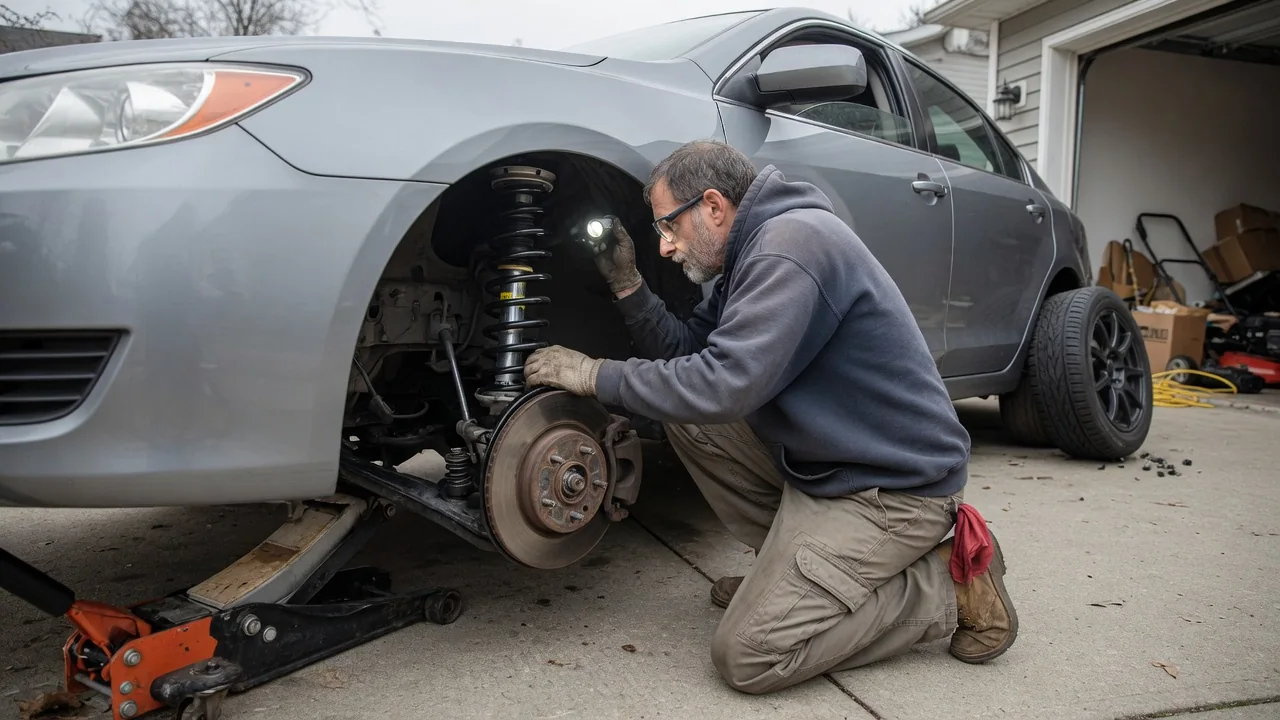
Anyone asking what does a car suspension do is really asking how a heavy body stays level, comfortable and controllable while its wheels travel over uneven pavement. The short answer is that springs carry the weight, dampers control motion, and links hold each wheel in position. Together they let the wheels move up and down while the cabin stays comparatively calm.
Support and movement
The springs are the parts that actually hold the vehicle up. Whether they are coil springs, leaf springs, torsion bars or air springs, they compress under the weight of the body, passengers and cargo, then store and release energy as the wheels meet bumps. Load the trunk heavily and you can watch the rear sit lower, which is simply the springs compressing further. Ride height, and how much it changes under load, depends on the spring design chosen for that vehicle.
A spring alone would keep bouncing after every bump, so each wheel also has a damper, commonly called a shock absorber or, when it forms part of the structure, a strut. The damper forces fluid through small passages, turning motion into heat and settling the body quickly. Control arms, links and bushings then guide the wheel along a set path so it can travel vertically without wandering forward, backward or sideways. Layouts differ widely between a compact car and a pickup truck.
Tire contact
A tire can only steer, brake or accelerate while it is pressed against the road. When a wheel strikes a bump, the suspension lets it rise without lifting the whole car, and then pushes it back down into the dip that follows. If the wheel were bolted rigidly to the body, it would skip across rough surfaces and lose grip for a moment each time. Keeping that contact patch loaded as steadily as possible is arguably the most important job the system performs.
The links also set the angles at which the tire meets the pavement, known as camber, caster and toe. As the body leans in a corner or dips under braking, the geometry is designed to keep a useful amount of tread flat on the surface. Drivers can sometimes see the result in tire wear: a tread that wears much faster on one edge suggests the wheel is not sitting as intended. The correct alignment values are specific to each vehicle and should be confirmed for that model.
Ride and handling
Ride comfort and handling pull the design in different directions. Softer springs and gentler damping absorb broken pavement well, but they allow more body roll in turns, more nose dive under braking and more squat when accelerating. Firmer settings keep the body flatter and make the steering feel more immediate, yet they pass more of the road surface into the cabin. A family sedan, a sports car and a heavy-duty truck each land at a different point on that scale because they are built for different work.
Anti-roll bars, sometimes called sway bars, help manage this compromise by linking the left and right sides of an axle so they resist leaning without stiffening the ride much over bumps that hit both wheels together. Rubber bushings at the mounting points filter vibration and noise before it reaches the body. Some vehicles add adjustable or electronically controlled dampers, or air springs that change height, letting one car behave differently in comfort and sport modes. Whether these features are fitted varies by make, model and trim.
Everyday Use and Observations
In normal driving, a healthy suspension is mostly noticed by what does not happen. The car crosses a speed bump, rises and settles in roughly one movement instead of continuing to bob. It stays reasonably level when braking for a stop sign, tracks straight on a crowned road, and feels stable when a crosswind or a passing truck pushes on the body. The steering wheel stays centered and the cabin remains free of clunks or rattles over patched pavement.
Changes tend to arrive gradually, which makes them easy to overlook. Useful things to watch for include a corner that sits lower than the others when parked on level ground, oily residue on a damper body, extra bouncing after bumps, knocking sounds over rough surfaces, or a vague, floating feel at highway speed. Uneven or cupped tire wear is another clue. None of these observations identifies a specific failed part by itself, since worn bushings, tired dampers, tire problems and alignment issues can produce similar sensations.
Limits and Next Steps
Suspension can only work within its designed range. Every system has a limited amount of travel, and a hard enough impact or a heavy enough load will use it up and bring the bump stops into play. Exceeding the stated payload or towing limits changes ride height, geometry and braking behavior. The parts also wear with age and mileage: dampers gradually lose their control, rubber bushings crack and soften, ball joints develop play, and springs can sag or break. How quickly this happens depends on roads, climate and use.
When something feels different, the sensible next step is a proper inspection with the vehicle raised, where a technician can check for looseness, leaks and damage and then measure the alignment against the specifications for that vehicle. Cars with electronic damping or air suspension may also store fault codes; a code points toward a circuit or condition to investigate, not automatically toward a failed component, and its meaning can depend on the manufacturer. Because these parts hold the car up and keep it steerable, repairs are best left to qualified hands.