What Does a Car Audio Equalizer Do?
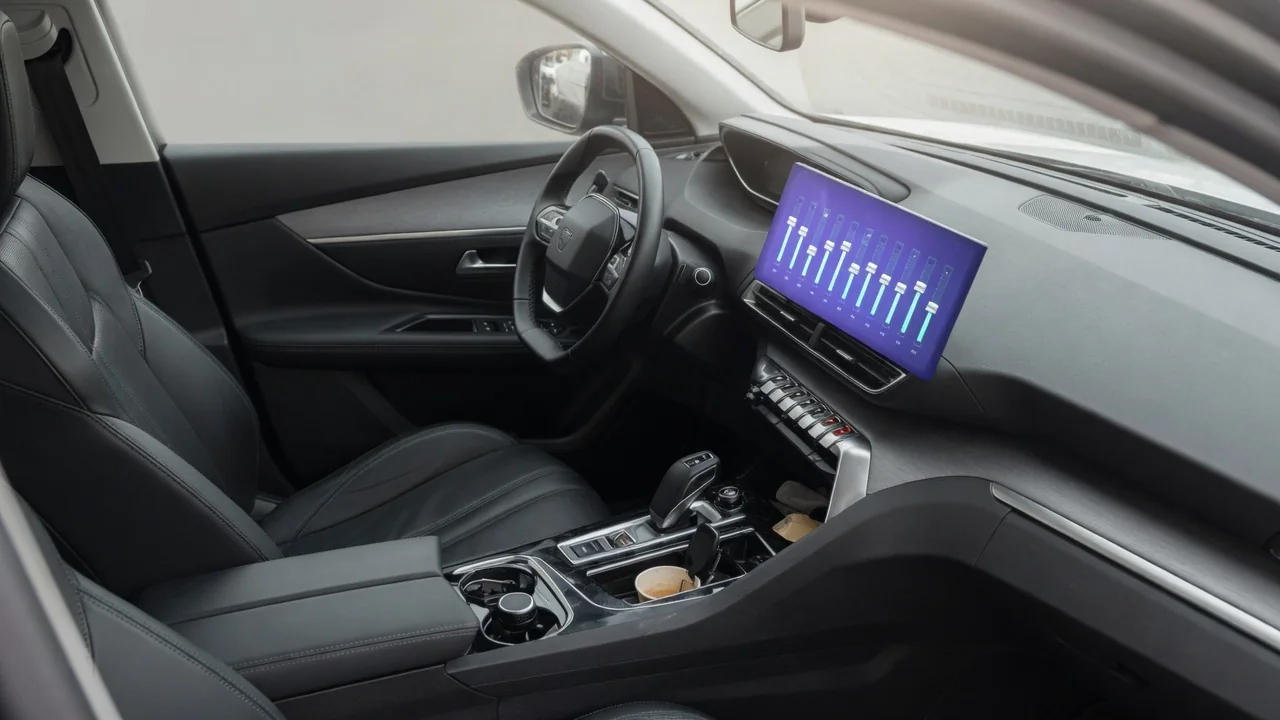
What does a car audio equalizer do? It raises or lowers the volume of selected frequency bands so music sounds balanced inside a cabin full of glass, plastic, fabric, and road noise. Rather than making a system louder overall, it reshapes tone, letting a driver tame boomy bass, soften harsh treble, or bring vocals forward to suit the vehicle and its speakers.
Bass and treble ranges
Bass covers the lowest notes in a recording, such as kick drums, bass guitar, and the deep rumble in electronic or orchestral music. On an equalizer these sit at the left end of the display, generally below a few hundred hertz. Raising these bands adds weight and punch, while lowering them reduces boom that can build up in a small cabin. Door speakers and a trunk-mounted subwoofer respond differently, so the same adjustment may sound full in one vehicle and muddy in another.
Treble occupies the right end of the scale and carries cymbals, string detail, and the crisp edge of consonants in speech. Lifting these bands can add clarity and a sense of air, but too much makes tweeters mounted in the dash or pillars sound sharp, especially when they reflect off the windshield. Between the two lies the midrange, where most vocals and guitars live. Some factory stereos offer only bass, mid, and treble controls, while others provide many narrower bands for finer adjustment.
Start from neutral
Setting every band to its center or flat position gives a reliable baseline, because it reveals how the speakers and cabin sound without any correction. Turning off extras such as loudness, bass boost, or surround processing during this step helps too, since those features stack on top of the equalizer. Playing a familiar, well-recorded track at a normal listening level then shows what actually needs attention, whether that is thin bass, recessed vocals, or a bright edge on cymbals.
From that flat baseline, small changes made one band at a time are easier to judge than sweeping moves across the whole display. Many tuners prefer cutting a band that sounds excessive rather than boosting everything around it, since cuts leave more amplifier headroom. Menu layouts differ widely: some vehicles tuck tone controls under a sound settings screen, others include presets labeled for rock, pop, or talk, and aftermarket head units may add a parametric equalizer with adjustable center frequency and width.
Avoid distortion
Every boost asks the amplifier for more power in that band, and bass boosts are the most demanding. When the amplifier or head unit runs out of clean output, the signal clips, flattening the peaks of the waveform and producing a harsh, crackling, or fuzzy sound. Small factory speakers can also reach their mechanical limits, creating a flapping or rattling noise on deep notes. These symptoms usually appear first at high volume, which is why a setting that sounds fine at a moderate level may fall apart when turned up on the highway.
Keeping boosts modest and lowering competing bands instead protects both sound quality and equipment. If distortion appears, reducing the bass setting or the volume is a sensible first check; if it clears up, the equalizer was likely pushing the system beyond its limits. Distortion that persists at low volume with flat settings points elsewhere, perhaps a damaged speaker, a loose panel, or a poor recording or heavily compressed stream. Systems with separate amplifiers add gain settings that interact with the equalizer, and those vary by installation.
Everyday Use and Observations
Daily driving changes what you hear. Tire and wind noise mask low frequencies at speed, so bass that seemed generous in the driveway can seem to vanish on the freeway. Some vehicles compensate automatically with speed-sensitive volume or tone, while others leave it to the driver. Different sources matter as well: podcasts and phone calls benefit from a clear midrange, while Bluetooth streams, satellite radio, and wired connections may each sound slightly different with identical settings.
Useful observations are simple ones. Vocals should sound natural and centered rather than nasal or buried, bass notes should be distinct rather than a single drone, and cymbals should shimmer without causing fatigue on a long trip. Door panels, the rear deck, or the license plate buzzing in time with music suggest bass energy exciting loose trim rather than a tuning flaw alone. Saving a couple of presets while parked, where the stereo allows it, makes switching between music and spoken content quicker and less distracting.
Limits and Next Steps
An equalizer shapes what the system already produces; it cannot create output the hardware lacks. Small speakers will not deliver deep bass no matter how far the lowest band is raised, and boosting to fill a gap caused by cabin acoustics often wastes power without fixing the dip. It also cannot correct speaker placement, timing differences between the left and right sides, or a blown driver. Fade and balance controls, crossovers, and time alignment, where fitted, handle those separate jobs.
When careful tuning still leaves the sound lacking, the next step depends on the vehicle. The owner's manual explains which tone and processing features a particular stereo includes, and comparing each speaker using balance and fade can reveal one that sounds weak or distorted. Upgrades such as better speakers, a subwoofer, sound-deadening material, or a digital signal processor can extend what tuning achieves, but integration with factory amplifiers differs between models, so a qualified car audio installer should confirm what suits the specific system.