What Device Starts a Car Engine? The Starter Motor Explained
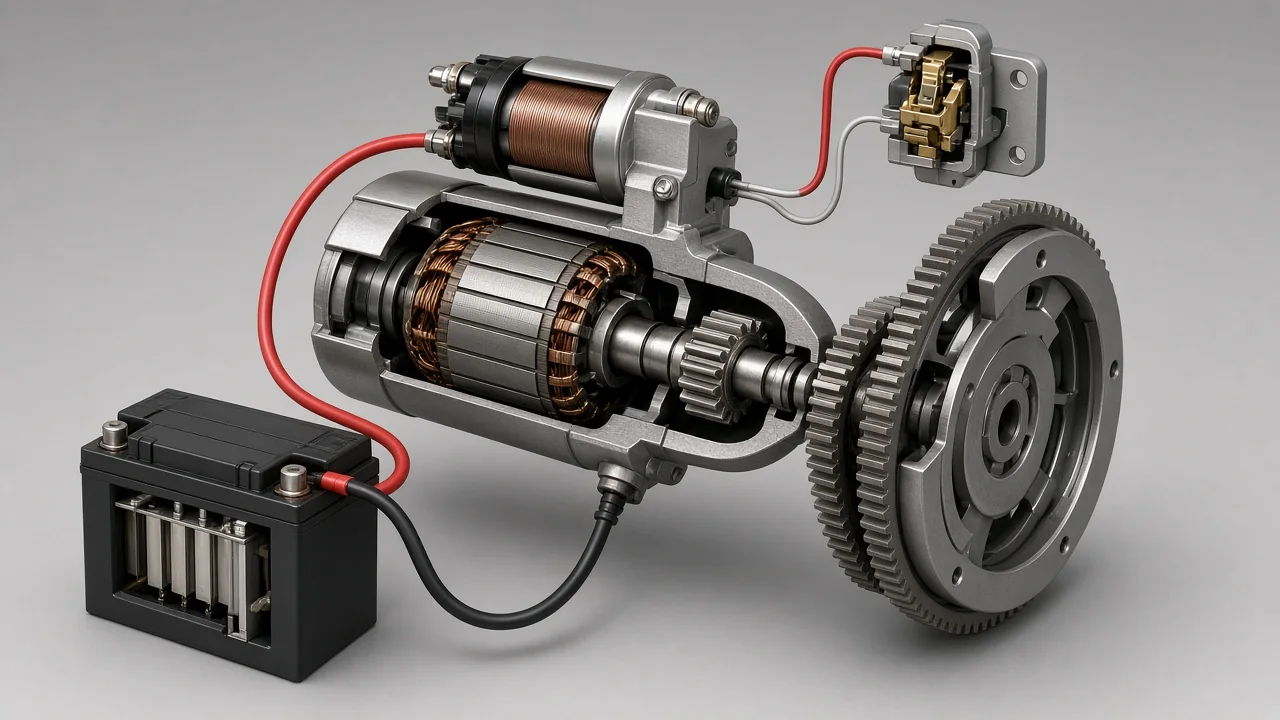
The device in a car used to start the engine is the starter motor, an electric motor that cranks the engine until it can run on its own. Because an internal combustion engine cannot start from rest, the starter spins the crankshaft to begin the intake, compression, power, and exhaust cycles. The starter only operates for a few seconds during startup; once the engine fires, the starter disengages and the engine runs independently.
The Device That Starts a Car Engine: The Starter Motor
The starter motor is the device in a car used to start the engine. It converts electrical energy from the battery into mechanical rotation to crank the engine until combustion can sustain operation. Without this initial rotation, the pistons would not move, the air-fuel mixture would not compress, and ignition could not occur. The starter motor performs this task only at startup, engaging for a brief period and then disengaging once the engine runs on its own.
An internal combustion engine cannot start itself from rest because it relies on a repeating cycle that requires motion to begin. The crankshaft must turn to draw in air and fuel, compress the mixture, and position the piston for the power stroke. The starter provides that initial motion. It is typically mounted near the junction of the engine and transmission, where its drive gear can reach the flywheel or flexplate. The starter works only during cranking and is not used once the engine is running.
How the Battery, Ignition Switch and Solenoid Work Together
Starting a car begins with the ignition switch or push-button start. When the driver initiates the start, a low-current signal travels to the starter relay or solenoid. The solenoid then closes heavy contacts, allowing high current from the battery to flow to the starter motor. This sequence protects the ignition switch from carrying the large cranking current. The solenoid does two jobs: it switches the high current and it pushes the starter drive gear forward to engage the flywheel.
The car battery serves as the stored energy source for cranking. Starting an engine demands far more current than most other electrical loads because the starter must overcome the engine's compression and friction. To prevent starting in unsafe conditions, safety interlocks such as park/neutral or clutch-pedal switches may be part of the circuit. These switches ensure the vehicle cannot be started in gear or without the clutch depressed, depending on the design, and they can interrupt the start signal if not satisfied.
Inside the Starter: Pinion Gear, Flywheel and Overrunning Clutch
Inside the starter, a small pinion gear meshes with the ring gear on the flywheel or flexplate. When the starter motor spins, the pinion turns the ring gear, which rotates the crankshaft and moves the pistons. The gear ratio between the small pinion and the large ring gear multiplies torque, allowing a relatively small electric motor to turn a large engine. The overrunning clutch, also called a one-way clutch, lets the pinion spin freely if the engine starts and turns faster than the starter, protecting the starter from being driven to excessively high speed.
A starter motor can turn a large engine because of gear reduction and high current. Gear reduction multiplies the motor's torque, while the high current from the battery provides the necessary power. Some starters are gear-reduction designs, where a set of gears between the motor and the pinion further increases torque. Others are direct-drive, where the motor shaft drives the pinion directly. Both types accomplish the same task of cranking the engine, and the appropriate type depends on the vehicle's design.
Starting Systems in Modern Cars: Push-Button and Start-Stop
Push-button start systems still use a starter motor. Instead of a mechanical ignition switch, the vehicle's electronics receive a signal from the start button and decide when to engage the starter. The system may automatically crank the engine for a set time or until the engine starts, then disengage the starter. This automation hides the starter's operation but does not eliminate it. The starter motor remains the device that turns the engine over, controlled by the vehicle's computer and power distribution modules.
Start-stop systems, which shut off the engine at idle and restart it when needed, rely on a starter designed for frequent use. These starters typically have reinforced components to withstand many more engagement cycles than conventional starters. Hybrid and electric vehicles may start differently or have no conventional starter; some hybrids use the motor-generator to spin the engine, while pure electric vehicles do not have an engine starter at all. Owners should consult their owner's manual for specifics about their vehicle's starting system.
Common Signs of a Failing Starter
Common signs of a failing starter include a single click when turning the key, rapid clicking, grinding noises, a whirring sound without the engine turning, slow cranking, or starting only sometimes. A single click often indicates the solenoid is engaging but the motor is not turning. Rapid clicking suggests insufficient current, often from a weak battery or bad connection. Grinding may mean the pinion gear is not meshing properly with the flywheel. However, these symptoms can also come from a weak battery, corroded or loose connections, or ignition problems, so a symptom alone does not prove the starter is bad.
Observing other electrical behavior can help narrow the cause. If the dash lights dim significantly while cranking, the starter may be drawing too much current or the battery is weak. If the headlights stay bright but the engine does not crank, the problem may lie in the starter circuit rather than the battery. If the engine cranks normally but does not start, the starter is likely fine, and the issue points toward fuel, spark, or other systems. These observations are useful but not conclusive; professional testing is often needed.
Safe Checks and When to Get Professional Testing
Safe do-it-yourself checks are limited to observations. Look for visible battery terminal corrosion, which can cause poor connections and starting problems. Note the exact symptoms and the conditions when the problem occurs, such as cold weather or after the car has been sitting. This information helps a technician diagnose the issue. Avoid tapping the starter, bypassing the solenoid, or jumping terminals, because of the risk from high current, moving parts, and the vehicle moving unexpectedly if the transmission is in gear.
A professional shop can load-test the battery, test the charging system, measure voltage drop, and check starter current draw to find the real cause. These tests isolate whether the problem is the battery, cables, solenoid, or starter motor. Repeated long cranking attempts can overheat the starter and cause damage. If the engine does not start after a few seconds of cranking, stop and get help rather than continuing to crank and risking further damage.