What Causes Wind Noise Around a Car Door?
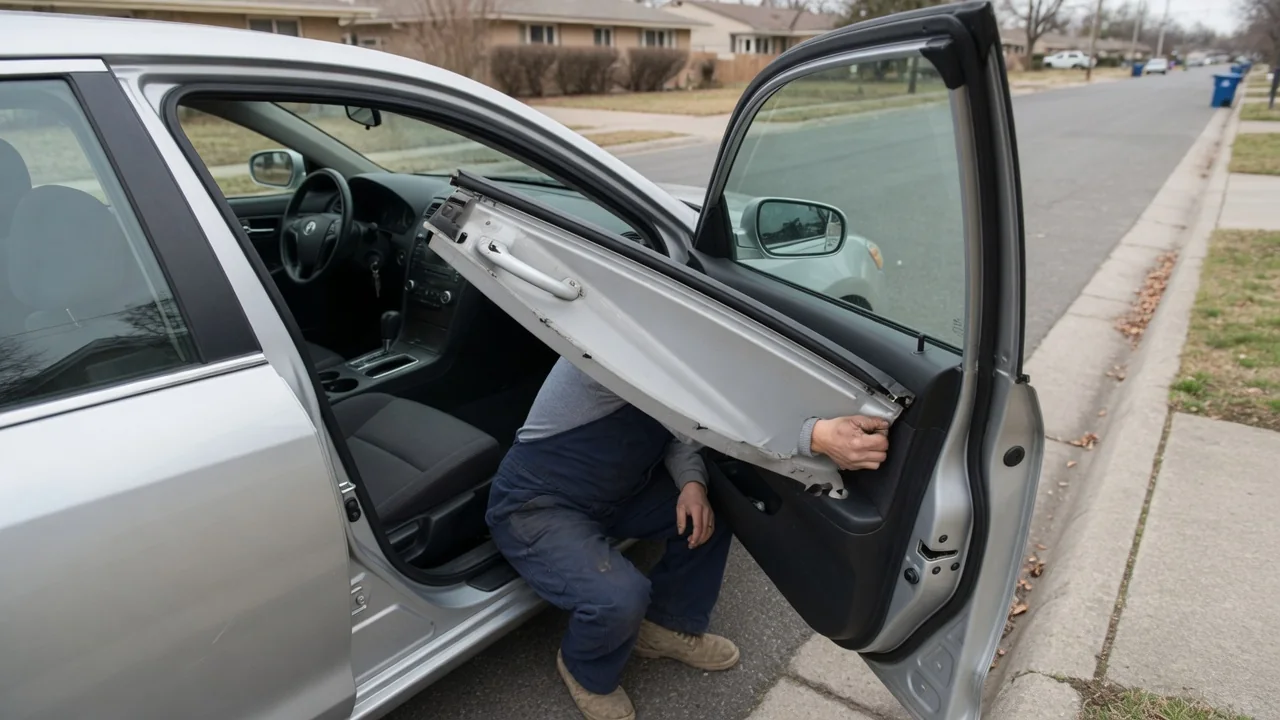
Drivers who ask what causes wind noise around a car door usually find the answer in one of three places: a weatherstrip seal that no longer presses firmly against the body, a side mirror or trim piece disturbing the airflow, or a door or window that sits slightly out of position. Each source leaves different clues, and sorting them out starts with careful listening.
Locate the sound
Wind noise tends to appear as road speed climbs, because air moving along the body builds pressure differences around every gap and edge. A whistle generally points to air squeezing through a small opening, while a broad rushing or roaring sound suggests turbulence tumbling off an exterior part such as the mirror housing. Noting the speed at which the sound begins, and whether it changes in a crosswind or when passing large trucks, helps separate a leak from an aerodynamic disturbance.
A passenger can narrow the location by moving an ear along the top of the window frame, the front pillar, the mirror base, and the lower door edge while someone else drives. Sound concentrated near the upper rear corner of the glass points somewhere different than a hiss near the mirror. Vehicles with frameless door glass behave differently from those with full frames, since the glass itself seals against the body, so the likely trouble spots vary with door design.
Inspect seals
The primary door seal is a hollow rubber weatherstrip that compresses when the door closes, and it loses effectiveness as it ages. Look for sections that appear flattened, hardened, cracked, torn, or pulled out of their retaining channel, especially at corners where the strip bends sharply. Many vehicles use a second seal on the body opening and separate channels that guide the window glass, so a full inspection covers more than the single strip visible on the door edge.
A simple check is closing the door on a strip of paper at several points around the opening and feeling how firmly it is gripped; noticeably looser spots suggest weak seal contact there. Dirt lines or dust trails on the inner face of the rubber can also show where air has been passing. Debris caught in the seal, a folded lip, or leftover adhesive from earlier bodywork can hold the rubber away from the metal even when the material itself is still in sound condition.
When repair helps
Repair is worthwhile when inspection ties the noise to something specific. A damaged or shrunken weatherstrip can usually be replaced, and a seal that has simply come loose can often be reseated in its channel. If the door sits unevenly in its opening, with wider gaps on one side or a latch that needs a hard slam, adjustment of the striker or hinges by a body shop may restore even compression. Misalignment sometimes follows collision repair or years of hinge wear.
Mirror-related noise calls for a different remedy. A cracked housing, a missing cover cap, a loose base gasket, or a mirror that was folded and not fully returned to its detent can all disturb airflow against the side glass. Window problems matter too: glass that stops slightly short of the top channel, or frameless glass that does not tuck properly under the roof seal, leaves a path for air. The correct parts and adjustment methods depend on the vehicle, so model-specific service information is worth consulting.
Everyday Use and Observations
Daily driving offers plenty of evidence if you pay attention to patterns. Noise that appears only in strong crosswinds may be normal for the body shape, while a sound present on calm days at moderate highway speed deserves a closer look. Compare the driver side with the passenger side, since a difference between otherwise identical doors is a strong hint. Water marks inside the door opening after rain or a car wash often accompany the same gaps that admit air.
Recent changes are equally informative. Wind deflectors, roof racks, crossbars, aftermarket mirrors, and window visors all alter how air travels past the door, and a noise that began after fitting one of them likely traces to it. The same goes for windshield replacement or door repairs, where trim and moldings near the front pillar may not have been seated fully. Cold weather can stiffen rubber and make a marginal seal noisier in winter than in summer, so seasonal variation is a useful clue.
Limits and Next Steps
Some wind noise cannot be eliminated because it is inherent in the vehicle's shape. Boxy bodies, upright windshields, large mirrors, and frameless glass generally produce more airflow sound than sleek sedans with heavily insulated doors, and an older car rarely matches the quietness it had when new. Riding in a similar vehicle provides a fair reference point. If the sound matches, the cause is probably design rather than a defect, and replacing parts is unlikely to change it much.
When the source remains unclear, a body shop or dealer can help with tools most owners lack, such as listening devices, smoke, or ultrasonic leak detectors that reveal where air escapes. Describe the speed, wind conditions, and location you noted, because that record shortens the search. Temporarily covering a suspected gap with low-tack painter's tape during a short test drive is a common diagnostic trick, but keep it clear of mirrors and glass you need to see through, and treat the result as a pointer rather than a permanent fix.