What Can Puncture a Tire? Glass, Nails, Rocks and Other Road Hazards
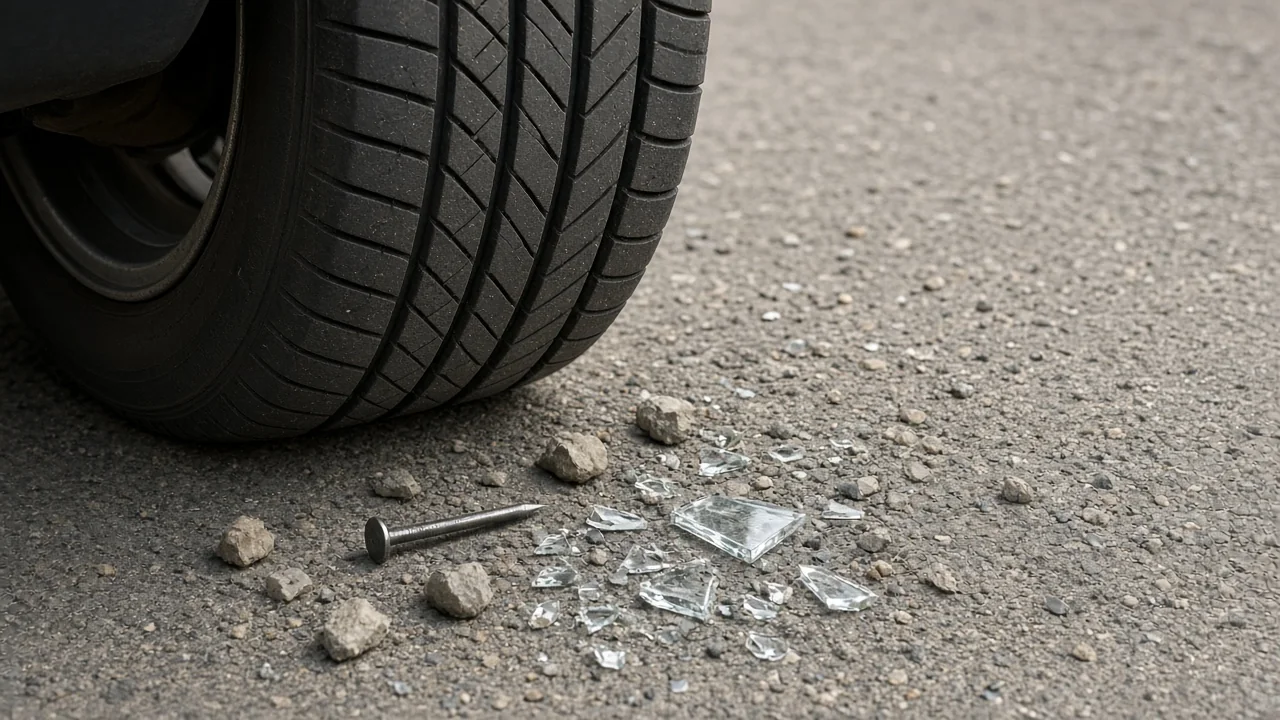
Drivers often wonder what can puncture a tire after rolling over glass, nails, rocks, or other sharp road debris. A car tire is built to resist cuts, yet it is not puncture-proof. Shape, rigidity, and how an object meets the tire tread decide whether air loss follows. Seeing debris on the pavement does not by itself prove the casing was breached.
What Allows an Object to Puncture a Car Tire?
Whether an object can puncture a car tire depends on more than the fact that it looks sharp. A rigid point, a thin edge, and an orientation that holds the object upright against the road all raise the chance of penetration. Soft or flexible debris tends to flatten under the load. Tire condition also matters: worn tread, existing tread cuts, or a weakened sidewall give a sharp object a shorter path into the casing.
Rubber and internal reinforcement make it reasonably hard to puncture a tire during ordinary driving, but they do not make the tire puncture-proof. A scuff on the surface is not the same as embedded debris, and a shallow cut is not the same as a hole that lets air escape. Passing a piece of glass or a rock on the road does not establish that the tire was damaged. Only later air loss, a pressure warning, or a puncture inspection can show what actually happened.
Can Broken Glass and Bottles Puncture a Tire?
Glass can cut or puncture a tire, including a car tire, but driving over fragments does not guarantee damage. Broken glass, glass shards, and shattered glass behave differently depending on how a piece sits on the pavement. A thin shard that stays upright and is braced by the road can concentrate force into the tread. A bottle lying on its side, a broken beer bottle, or loose chips that lie flat may only scuff rubber or lodge in a groove.
A glass bottle can puncture a tire if a sharp remaining edge is supported and meets the rubber at a penetrating angle, yet that outcome is not automatic for any glass type. Glass lodged in a tread groove is embedded debris, not proof of an air leak. Do not touch fragments or pull them out; the piece may be sealing a hole, and handling it can cut skin or open a path for air loss. Leave puncture inspection to a technician who can assess the casing safely.
Why Nails, Screws and Thumbtacks Can Cause Air Loss
Nails and screws often cause air loss because they are rigid and pointed. As the tire rolls over them, the tread can drive a fastener in rather than kicking it aside, leaving embedded debris in the rubber. That object may partly obstruct its own hole, so air loss can be slow instead of sudden. A tire pressure warning or a gradual drop in inflation is often the first sign, not an immediate flat.
No single nail length guarantees a puncture, because remaining tread depth, tire construction, and entry angle decide how far a fastener travels. A short nail can still reach the air chamber in worn rubber, while a longer one may stop short in thicker tread. A thumbtack can puncture a tire if it stays rigid and is braced by the road, but many tacks bend or never reach the inner liner. Leave the object in place until a shop can inspect the puncture.
How Rocks, Gravel and Ice Can Damage Tires
A rock can puncture a tire when an angular edge is driven into the rubber with enough support from the pavement. Rocks with a sharp corner can produce tread cuts or, in demanding contact, a path through the casing. Gravel sitting in tread grooves is common and is not proof of a puncture. Sharp gravel fragments can still cut or lodge in the rubber if they stay pointed as the tire rolls over them.
Ice can puncture a tire only under unusual contact, and ice on the road by itself does not establish that a tire was pierced. An impact on ice may involve a hidden rock, a pothole, or other road damage that the driver never sees. Penetration differs from impact damage: a hard strike can bruise the casing, crack a wheel, or unseat a bead and cause air loss without a classic hole. Treat unexplained deflation after winter driving as a reason for inspection, not as proof of ice.
Can Plastic Debris Puncture a Tire?
Plastic can puncture a tire, but plastic is a broad category, so the answer depends on the object's rigidity and shape. A flexible bag or a crushed bottle typically flattens and does not pierce the tread. A sharp, rigid fragment, such as a broken housing, a clipped fastener, or a hard shard from molded plastic, may damage a tire when it is braced against the road and meets the rubber at a penetrating angle.
Identifying debris as plastic cannot establish whether a tire is leaking or internally damaged. Soft plastic may leave a smear or sit harmlessly in a groove, while a stiff edge can cut the tread or, less often, reach the inner liner. Sidewall damage from a rigid fragment is more serious than a small object in the tread because sidewall rubber is not designed to be repaired the same way. A later pressure drop still needs inspection; the material of the debris is only a clue, not a diagnosis.
Could Porcupine Quills or Cat Claws Puncture a Car Tire?
Sharpness alone does not establish that porcupine quills or a cat's claws can puncture a car tire. Quills and claws are pointed, but they also need rigidity, a supporting surface, and enough contact force to drive through tread and reinforcement. Ordinary contact with a porcupine, or a cat walking on or scratching at a parked car, is not an expected cause of a car tire puncture. Those contacts rarely supply the conditions that pierce a tire casing, so look first at ordinary road debris.
Marks on the rubber, hair, or animal material near a tire do not establish the source of an air leak. A slow leak after a rural drive is more often a nail, screw, or other sharp road debris than a quill. Do not test these possibilities, handle wildlife, or try to extract quills from a tire. If air is escaping, treat it as a puncture inspection problem and have the tire examined rather than attributing the damage to an animal based on nearby evidence.
What to Check Safely After Encountering Road Debris
After hitting debris, watch for a tire pressure warning, visible deflation, hissing, vibration, or a change in steering and ride. A slow leak from embedded debris may not be obvious for miles. Stop somewhere safe before looking at the tire, away from traffic. Do not stand in a live lane, touch sharp road debris, or remove an object from the tread. Pulling glass, a nail, or a screw can turn a partly sealed hole into rapid air loss and can cut your hands.
A visual check cannot rule out internal damage. Sidewall damage, a hidden cut, or a bruised casing may still leak later even if the tread looks intact. Pressure loss needs professional assessment rather than continued driving and guesswork. Do not keep going on a visibly flat or severely damaged tire, because that can ruin the casing and affect control. Roadside assistance and a shop puncture inspection are the appropriate next steps when the tire is low, noisy, or obviously compromised.