What Affects EV Range: Cold Weather, Speed, Aging and How to Maximize It
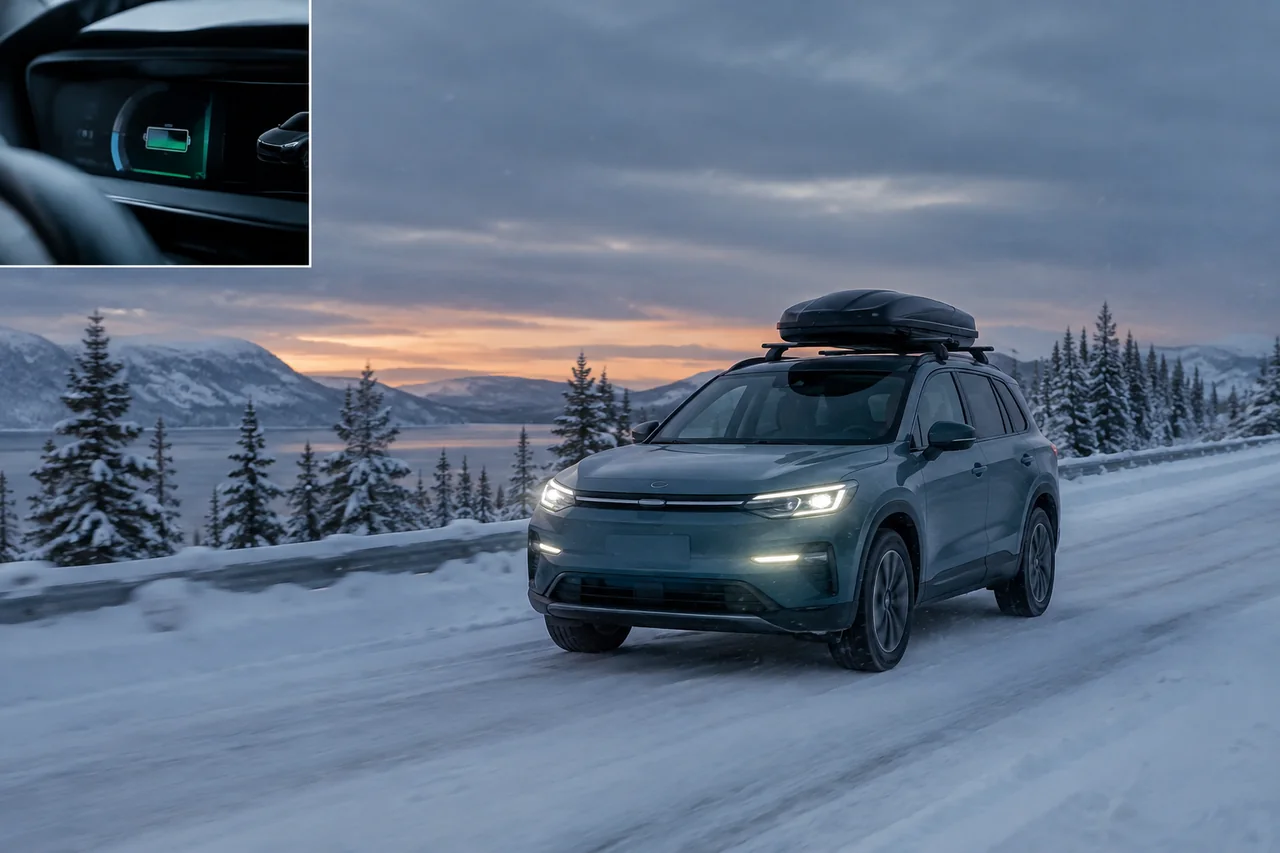
Electric vehicle range depends on real driving conditions, not just the rated figure from a standardized test. Temperature, speed, load, and battery age all change how far a charge actually takes you. Understanding these EV range factors helps you read the dashboard estimate sensibly and avoid surprises. Winter cold can cut miles significantly, while towing or a roof box raises energy consumption per mile. Smart driving and charging habits, such as preconditioning and steady speeds, recover much of that lost range and keep the battery healthier over time.
The Main Factors That Determine Real-World EV Range
The number on the window sticker is a laboratory result from a controlled drive cycle, not a promise for your commute. Your real-world range shifts with terrain, weather, and how you drive. The vehicle’s energy use per mile—often shown as kWh per 100 miles—is the more honest number. If the display shows higher consumption, range drops. Learning to watch this efficiency readout turns the guesswork into cause and effect: a cold morning or a headwind raises the figure, while gentle driving lowers it, directly changing the predicted miles left.
The dashboard range estimate, sometimes called a guess-o-meter, recalculates from recent driving and current conditions. After a fast highway run, it may show fewer miles; after a slow city trip, it may climb. It is not measuring the battery’s true capacity but predicting the future based on the past. Other key EV range factors include outside temperature, cabin heating and cooling, speed, aerodynamic drag, vehicle weight and payload, terrain, tire condition and pressure, and battery state of health. Aging reduces total stored energy, while cold temporarily limits usable energy and adds heating draw.
Why EV Range Drops in Cold Weather and How Much to Expect
Cold weather attacks EV range through two mechanisms: battery chemistry slows down and cabin heating consumes stored energy. In freezing temperatures, the electrolyte inside lithium-ion cells becomes more resistive, reducing available power and regenerative braking. Meanwhile, a resistive cabin heater can draw several kilowatts, especially if you demand tropical warmth. Vehicles with a heat pump fare better because they move heat rather than create it, but the exact EV range loss in cold weather depends on temperature, trip length, heating method, cabin settings, and driving style, so no universal percentage applies to every model.
Short winter trips are especially punishing because the battery and cabin never warm up, and the heater runs at full power the whole time. On longer drives, the battery self-heats and the heater’s demand averages out. Preconditioning the cabin and battery while plugged in draws grid power instead of battery energy and improves cold-weather range. Using seat and steering-wheel heaters instead of blasting cabin air can save meaningful energy. Parking in a garage helps keep the pack warmer. Tire pressure drops in cold air, increasing rolling resistance, so check it often. Consult the owner’s manual for model-specific cold-weather features; every EV behaves differently.
How Speed and Aerodynamic Drag Affect EV Range
Aerodynamic drag rises with the square of speed, so doubling your speed quadruples the air resistance. Sustained highway driving therefore uses far more energy per mile than moderate-speed travel. The optimal speed for EV range is not a single magical number; it depends on vehicle shape, tires, gearing, and conditions. Generally, efficiency improves at lower steady speeds where drag is manageable, but driving too slowly on a highway is impractical and may run accessories longer. The best practice is to choose a steady, legal speed that balances time and energy, then watch the efficiency display to find your vehicle’s sweet spot.
Smooth acceleration and anticipation make a bigger difference than most drivers realize. Hard acceleration demands high current, and repeated high-speed bursts waste energy that regenerative braking cannot fully recover. Regenerative braking converts kinetic energy back into electricity, but its efficiency is not 100 percent, so coasting to a stop is better than braking to a stop. Outside factors such as headwinds, rain, and elevation changes raise energy use even at the same speed. A strong headwind acts like extra aerodynamic drag, rain adds rolling resistance, and climbing hills consumes energy that descent regen only partially returns.
Towing, Roof Boxes and Extra Load: The Range Cost of Carrying More
Towing is the fastest way to watch your range estimate collapse because a trailer adds weight, rolling resistance, and especially aerodynamic drag. A large frontal area disrupts airflow and creates turbulence that the car must push through. The result can be half the normal range at highway speeds, so plan charging stops conservatively. Always stay within the manufacturer’s rated towing capacity and follow the owner’s manual for hitch setup, tongue weight, and any tow mode. Some EVs have a tow mode that adjusts the range estimate and stability control to account for the trailer, giving a more honest prediction.
A roof box or roof rack also adds aerodynamic drag, though typically less than a trailer. The penalty grows with speed, so a long highway trip with a cargo box may show a 20 to 30 percent efficiency hit, while city driving barely notices it. Remove the roof box when not in use to restore clean airflow. Heavy cargo and passengers have a smaller but real effect, mostly due to increased rolling resistance and the energy needed to accelerate mass, especially on hilly routes. On your first loaded trip, watch real-time energy consumption to build a personal baseline rather than trusting the unloaded range estimate.
Does EV Range Decrease Over Time? Understanding Battery Aging
Lithium-ion batteries gradually lose usable capacity with age and use, a process called battery degradation. This slowly reduces maximum range, typically by a small percentage each year, but it is normal and distinct from a sudden fault. The battery state of health reflects this long-term decline. Common factors linked to faster degradation include frequently sitting at a very high or very low state of charge, long exposure to high heat, and heavy reliance on DC fast charging. The vehicle’s battery management system actively cools, heats, and limits charge rates to slow this process, so real-world aging varies widely by model and usage.
It is easy to confuse apparent range loss with true capacity loss. Winter temperatures, aggressive driving, heavy loads, or a recently changed range estimate can make the car show fewer miles without any battery damage. True capacity loss shows up as a consistent reduction in maximum range even under ideal conditions. A dealer or qualified EV technician can run a battery health check that reads the pack’s actual capacity, often as a percentage of new. Review your vehicle’s battery warranty terms in the owner’s documentation for coverage details; do not assume specific degradation rates or lifespan figures for any model.
Practical Driving and Charging Habits to Maximize EV Range
Improving EV range starts with simple habits. Keep tires inflated to the pressure on the driver’s door placard, not the sidewall. Use eco or efficiency drive mode, which softens throttle response and may limit climate power. Drive smoothly, maintain a steady moderate speed, and use regenerative braking to capture energy when slowing. Anticipate traffic lights and coast to stops where safe. Remove unneeded weight from the trunk and take off roof racks when not in use. Routine maintenance like wheel alignment reduces rolling resistance and extends range. These small adjustments can add 10 to 15 percent to real-world range.
Climate control is a major range eater, so precondition the cabin while plugged in to use grid power instead of battery energy. On the road, use seat and steering-wheel heaters, which draw far less power than heating the whole cabin, and set a moderate cabin temperature. Recirculation mode reduces the need to heat or cool incoming outside air. For charging, follow the manufacturer’s recommended everyday charge limit, often around 80 percent for daily use, and save full charges for long trips. Avoid leaving the car at very low charge for extended periods. Plan trips with the built-in route planner that includes charging stops, and build a buffer for weather, speed, and load to avoid range anxiety.