Wax for Black Cars: Choosing Gloss and Applying It Safely
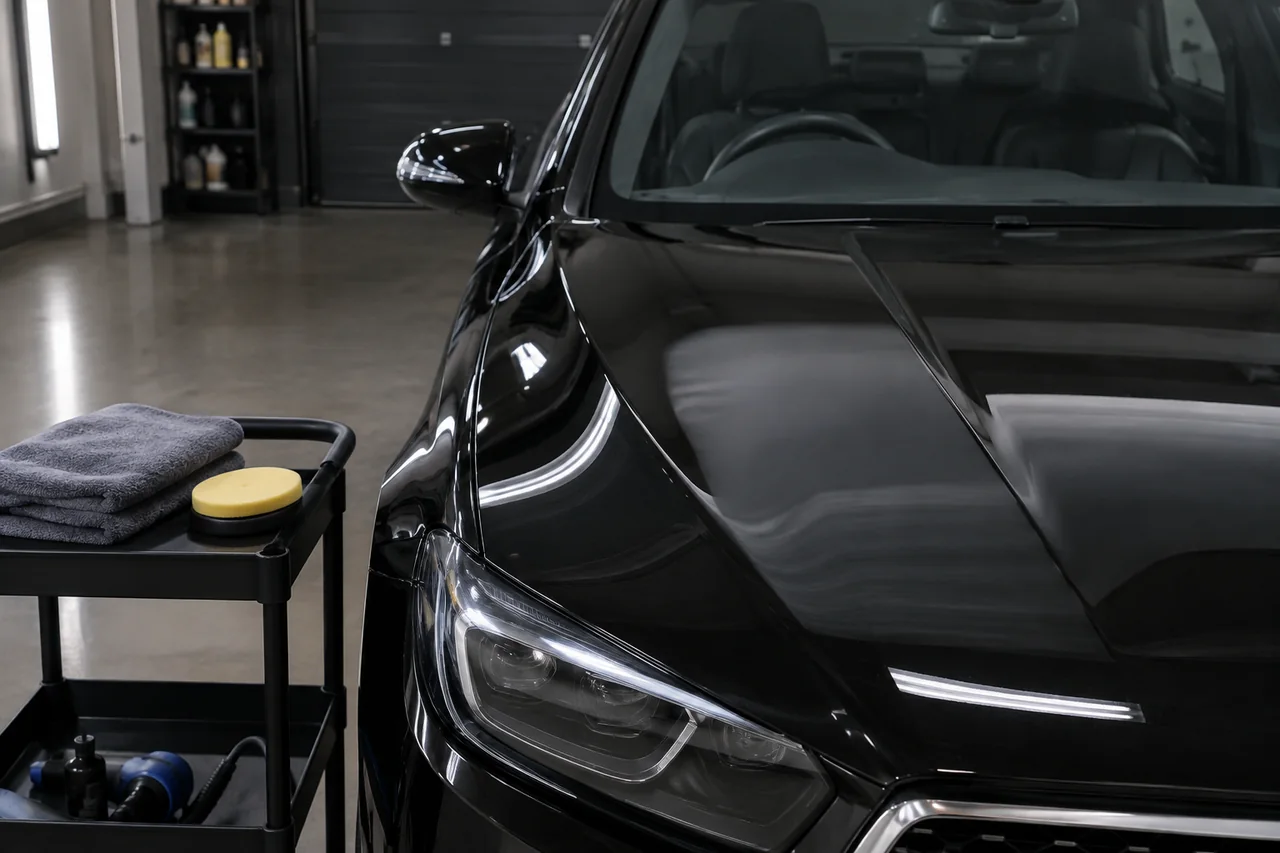
Choosing the best car wax for a black car is less about finding a single winner and more about matching a formula to your paint, your routine, and the look you want. Black paint rewards careful work with deep gloss, but it also exposes residue, streaks, and fine swirl marks. This guide covers tinted wax, spray wax, polish-and-wax blends, and technique that protects the clear coat.
Choose Wax Around Your Black Paint’s Finish and Care Routine
Top-rated lists can narrow the field, but the best wax for black car paint depends on the finish, the conditions where you work, how much time you have, and the appearance you prefer. A paste or liquid may suit someone who enjoys a slower weekend session, while a spray wax fits quick upkeep between washes. Because black paint makes leftover haze and fine marks conspicuous, give real weight to how easily a product wipes off cleanly. A wax that removes without heavy buffing reduces the chance of adding new marring while you finish.
Before buying any car wax for black paint, confirm it suits your surface. Many waxes are not intended for matte or satin finishes, where they can add unwanted shine, and vinyl wraps or coated paint may carry their own product restrictions. Read the label along with the coating or wrap maker's care guidance. Keep expectations realistic, too. Wax can add a sacrificial layer of surface protection and enhance paint gloss, but it does not remove scratches, prevent swirls permanently, or promise a fixed lifespan, since durability depends on formula, weather, and washing habits.
Understand What Black-Tinted Wax Can Do
Shoppers looking for black colored car wax will find two kinds of products. Some black-labeled waxes actually contain colorants, while others simply market a clear formula for dark finishes, so a product sold as black car wax may carry no pigment at all. Check the product description rather than judging by the bottle. Where pigments or temporary fillers are included, they may make light swirl marks and minor surface defects less visible for a while. How well that works depends on the formula and the condition of the paint underneath.
A car wax with black color is still a cosmetic layer. It does not replace missing paint, repair clear-coat damage, or permanently eliminate swirls, and whatever it hides can reappear as the wax wears or after repeated washing. Some tinted formulas can also leave visible staining or residue on textured plastic trim, rubber seals, or badges, so check the label for trim restrictions and avoid those areas when directed. Testing a small, inconspicuous panel first shows how the product spreads, hazes, and removes on your specific paint.
Select and Use Spray Wax Without Streaks
A black car spray wax fits best as a maintenance step, topping up gloss and slickness after a wash without the time a paste demands. Products differ in how they are meant to be used: some are designed for a wet surface right after rinsing, while others require fully dry paint, so check that instruction before starting. When comparing options for the best black car spray wax, look for finish compatibility, clear application directions, straightforward removal requirements, and suitability for the temperatures and conditions where you usually wash.
Use the amount the label specifies on a cool, clean panel, and work one manageable area at a time so product does not dry before you wipe it. Streaking on black paint usually traces back to excess product, a hot surface, damp or overloaded towels, or a spray layered over an incompatible sealant or coating. If streaks appear, follow the label's correction directions, which may call for a fresh towel or a light reapplication, rather than rubbing hard. Aggressive buffing can trade a cosmetic streak for new fine marring.
Read Polish-and-Wax Labels Before Treating Swirls
Names like black car polish and wax can describe very different products. Protection comes from waxes, polymers, or similar ingredients that sit on the clear coat. Temporary filling uses oils, resins, or pigments to make fine defects less noticeable. Abrasive polishing physically levels a thin amount of clear coat to reduce defects. A single black car wax polish may combine all three functions or offer only one, and its name does not reliably reveal which. Understanding these roles helps you interpret claims such as hiding swirls or restoring shine.
Read the description and directions to learn whether a polish-and-wax product contains abrasives, cleaners, or fillers, since abrasive products demand more care and are not meant for frequent use. If swirl marks look reduced after waxing, treat that as a possibly temporary effect rather than proof the defects are gone; inspecting again after several washes gives a clearer picture. Scratch correction is a separate process. For peeling clear coat, deep damage, or uncertainty about what finish or coating your car has, have a professional detailer or body shop assess it first.
Prepare Black Paint and Towels Before Waxing
Paint preparation starts with a thorough wash and rinse, because loose grit left on the surface can be dragged by an applicator and create the very marks you want to avoid. Rinse well from top to bottom, then dry gently with clean, soft towels suited to automotive paint, blotting or lightly gliding rather than scrubbing. Once dry, inspect the paint under useful lighting, such as diffused daylight or a handheld inspection light, to spot remaining dirt, water spots, or areas that need attention before any wax goes on.
Run clean fingertips lightly across a panel; if it feels rough, bonded contamination remains. Stop there instead of trying to scrub it away with the wax applicator, which can drag particles across the clear coat. Addressing it may call for a dedicated decontamination product, but abrasive prep should not become a routine step. Set up in shade with a cool surface, clean foam applicators, and plenty of spare microfiber towels. Any towel or applicator dropped on the ground should be replaced, because it can pick up grit that scratches black paint.
Apply and Remove Wax With Minimal Paint Marring
When you wax a black car, less product usually gives a better result. Spread a thin, even layer with a clean foam applicator and light pressure, working the section size the product specifies rather than covering the whole vehicle at once. Thick coats are harder to remove and more likely to leave wax residue in panel gaps and around emblems. Follow the label's dwell and removal directions closely, since some formulas should haze before removal, others wipe off almost immediately, and working times vary with temperature and humidity.
Remove wax gently with clean microfiber towels, folding and turning to fresh faces often so residue is not smeared back across the paint. If you feel grit or unexpected drag, stop and check the towel and surface before continuing. Afterward, inspect from several angles and under different lighting, since black paint can hide haze head-on and reveal it at a slant. Respect any curing restrictions on the label, such as avoiding water exposure for a period. Gentle washing habits and the paint's behavior, rather than a fixed calendar, help signal when rewaxing makes sense.