Water Pump Seal Leaks: Causes, Diagnosis, and Sealant Limits
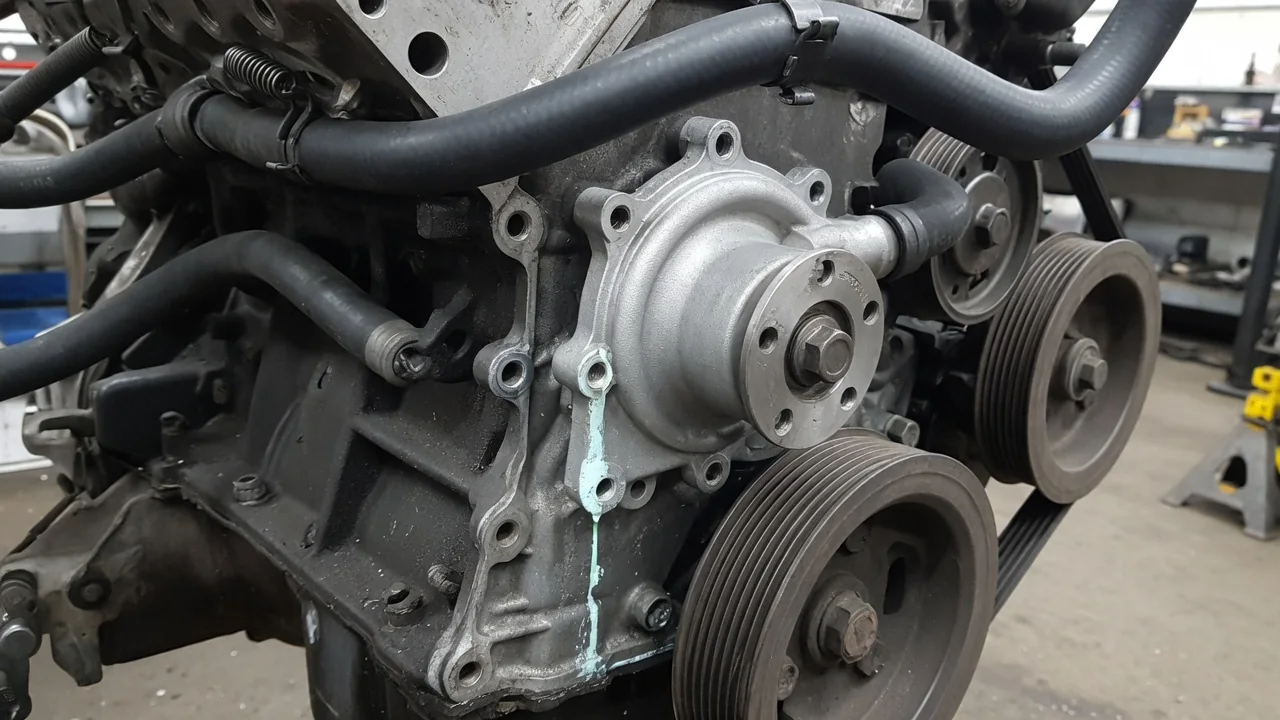
A leaking water pump seal can send coolant out of the pump rather than through the engine. Conventional belt-driven pumps typically rely on a mechanical shaft seal, while a separate pump mounting gasket or O-ring seals the housing to the engine. Understanding weep-hole moisture, the limits of coolant stop-leak, and when gasket sealant belongs at the joint helps you confirm the leak source before assuming the pump itself has failed.
Where Water Pump Seals Keep Coolant Contained
In a conventional belt-driven water pump, a mechanical shaft seal rides on the rotating shaft to keep pressurized coolant inside the housing. That water pump seal is not a simple rubber ring around the pulley; it is a set of mating faces that must stay aligned and lubricated by the coolant itself. Designs vary by pump family, so not every unit uses the same face materials, spring loading, or cartridge layout. When those faces wear, coolant can escape along the shaft instead of circulating through the block and radiator.
A second sealing path sits at the pump-to-engine joint. Some applications use a pump mounting gasket; others use an O-ring in a machined groove, and a few specify a thin film of installation compound. Leakage there can look like a pump failure even though the shaft seal is intact. Many housings also include a weep hole that vents seepage from a failing shaft seal so it does not flood the bearing. Plugging that hole does not restore the water pump seals; it only hides the evidence and can force coolant into the bearing cavity.
What Weep-Hole Moisture and Coolant Residue Can Tell You
Visible wetness on the pump body, dried coolant residue below the weep hole, fresh drips, or a slowly falling coolant level are clues that something is leaving the closed loop. Those signs still need tracing because hose joints, a thermostat housing, or a heater connection above the pump can leave the same trail. Seal wear, abrasive contamination, coolant chemistry that does not match the system, and shaft or bearing play can all contribute to leakage. None of those factors, by itself, proves which water pump seal has opened.
An old residue mark alone cannot establish an active failure. Dried coolant can remain long after a past seepage event, a previous repair, or a brief weep that later stopped. Any allowance for light initial seepage after service must come from the applicable manufacturer guidance for that pump, not from a general rule. Recurring wetness or unexplained coolant loss still warrants assessment even when the temperature gauge looks normal, because a small shaft-seal leak can grow before the engine overheats.
Confirm the Leak Source With Safe Observations
Owner checks should wait until the engine is fully cooled and switched off. Never open a hot cooling system, and do not reach near belts, pulleys, or fans while anything can still move. With the vehicle parked safely, look at accessible areas for a coolant trail from hoses, clamps, the thermostat housing, or other components mounted above the pump. Fluid running down from a higher joint can coat the pump and make a water pump seal look responsible when the actual leak is elsewhere.
A puddle under the front of the engine, residue color, or a photograph of dried stains cannot by itself identify the leaking joint. Coolant can travel along the block, drip from the lowest point, and change appearance as it dries. When the source remains unclear, a professional cooling system pressure test and closer inspection can separate shaft-seal leakage at the weep hole from mounting-joint leakage at the gasket or O-ring. That distinction matters because the repair path is not the same for both leak locations.
Can Coolant Stop-Leak Seal a Water Pump Leak?
Coolant stop-leak, sometimes sold as a water pump sealer or water pump sealant additive, cannot restore worn seal faces, correct shaft movement, or repair a damaged bearing. Those mechanical conditions remain after the additive is poured in. An additive may reduce visible dripping for a time in some systems, but that does not mean it will stop a particular leak or return the mechanical shaft seal to a serviceable condition. Treating a failing pump as a chemistry problem leaves the underlying wear unaddressed.
Depending on the formulation and the cooling-system design, stop-leak material can restrict small passages, coat heat-exchange surfaces, or complicate later diagnosis when a shop is trying to find the real leak. Residues can also interfere with subsequent repairs. Check the vehicle manufacturer's guidance before considering any coolant additive, and do not assume a product is compatible with every pump, gasket, or O-ring. There is no universal ranking of water pump sealant products that substitutes for that application-specific check.
When Installation Gasket Sealant Is Appropriate
Externally applied installation gasket sealant is meant for the pump-to-engine joint, not for an internal water pump seal. A bead or film at the mounting face cannot rebuild worn shaft-seal faces or close a weep-hole leak. Whether the joint uses a dry gasket, an O-ring, or a specified sealant is an application decision found in the pump and vehicle instructions. Follow those instructions rather than treating every water pump as if it needs the same compound at the housing flange.
Adding gasket sealant where none is specified can keep the gasket or O-ring from seating, squeeze material into the coolant passages, or create a leak path of its own. Excess compound that enters the cooling system can lodge in small galleries or a radiator. Surface preparation, sealant placement, curing time, and fastener tightening belong in the applicable service instructions, not in a general procedure. The useful decision at this stage is simply whether the application calls for a dry joint, an O-ring, or a named sealant, and then to stay within that specification.
When a Leaking Pump Needs Professional Repair
Once shaft-seal leakage is confirmed, replacement of the pump is the typical course on designs that do not offer a serviceable cartridge. Pumps that are rebuilt in service still need application-specific assessment rather than a generic seal kit assumption. A technician should evaluate bearing condition, belt or chain drive components, coolant condition, and the actual leak location before choosing the repair. That review helps avoid replacing a pump when only the mounting gasket leaked, or installing a new pump onto a drive or coolant problem that will damage the next water pump seals.
Overheating warnings, steam, or rapid coolant loss are reasons to stop safely, shut off the engine, and arrange assistance rather than continue driving. After repair, verification means checking for renewed leakage at the weep hole and the mounting joint, then confirming cooling-system operation with the vehicle's specified procedures. A water pump sealer in the coolant is not a substitute for that confirmation. If leakage returns, the leak source should be re-identified instead of assuming the new pump is automatically at fault.