Warped Brake Rotors: Symptoms, Diagnosis and Repair Options
What warped brake rotors actually means
A brake rotor, sometimes called a brake disc, is the metal disc that the brake pads clamp against to slow the wheel. Drivers often describe a warped rotor as a pulsating brake pedal, steering wheel shake, or a rhythmic grabbing feeling when braking. In many cases, the rotor is not bent like a warped record. The more common cause is uneven friction material transfer or hard spots on the rotor face, which create thickness variation as the rotor passes through the pads.
The term brake rotor warp is therefore useful shorthand, but it covers two related conditions: measurable lateral runout or disc thickness variation. Both can produce the same pulsing sensation, and the repair decision depends on which condition is present and how severe it is.
Symptoms that point to a rotor problem
The most recognizable symptom is a pulsing or shuddering brake pedal during moderate braking. The pulse often changes with vehicle speed: it may feel faster at higher speeds and slower as the vehicle comes to a stop. Some drivers feel the pulse mainly in the pedal, while others feel it in the steering wheel or seat. Vibration under braking that disappears when the brakes are released is a stronger indicator of a brake rotor issue than a constant road-speed vibration.
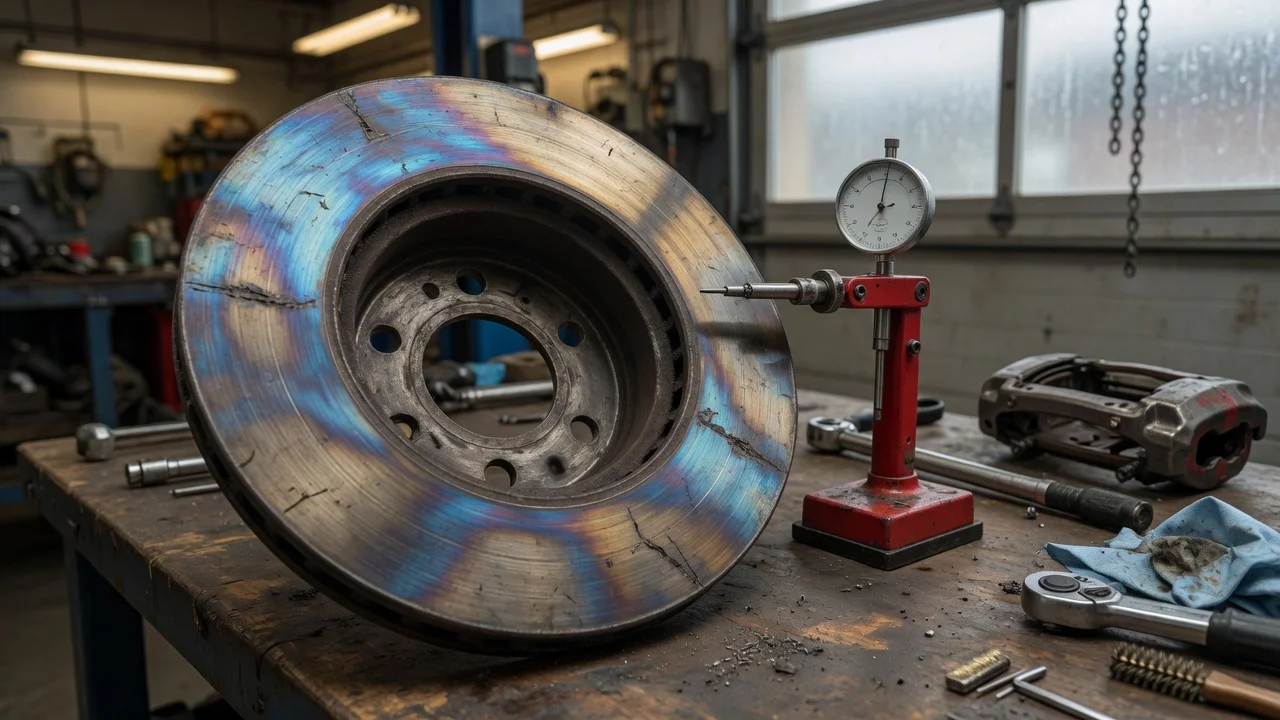
Other possible signs include uneven braking feel, a rhythmic scraping or rubbing sound, or visible marks on the rotor face such as bluish patches, grooving, or uneven wear patterns. These observations do not prove that the rotor is the only problem, but they help narrow the inspection.
Causes that can mimic or create rotor warp
Uneven pad deposits are the most common explanation for a pulsing brake feel. After hard or prolonged braking, pad material can transfer unevenly to the hot rotor. This changes the effective thickness of the disc and creates a grab-release-grab sensation. In this situation, the metal rotor itself may still be within specification.
Genuine mechanical runout can develop from sloppy installation, corrosion or debris trapped between the rotor and hub, a distorted hub flange, or a rotor that was machined while not mounted true to the vehicle. Overheating can also create hard spots in the rotor metal and contribute to thickness variation. Another cause that can be mistaken for rotor warp is a suspension problem, such as a worn control-arm bushing or a sticking brake caliper, so the symptom alone is not enough for a diagnosis.
How to diagnose the condition
Begin by confirming when the symptom occurs. A vibration that appears only while applying the brakes and clears when the pedal is released points toward the brake system. Brake during a stop from highway speed, then repeat on a safe road. Note whether the pulse is felt through the pedal, steering wheel, or seat, and whether it changes with pedal pressure.
A visual inspection can reveal uneven pad contact, heat discoloration, cracks, or grooves. However, a rotor can cause a noticeable pulse while still looking acceptable. The discriminating checks are mechanical measurements: lateral runout is measured with a dial indicator while the rotor rotates, and disc thickness variation is measured with a micrometer at several points around the rotor face. These measurements should be compared with the specification published for the specific vehicle, because acceptable limits vary.
Clean the hub and rotor mounting surfaces before measuring, and check that the rotor is seated correctly. If runout is measurable, compare the rotor measurement with the hub measurement. This helps separate a warped or uneven rotor from a distorted hub or debris behind the rotor. If the hub shows excessive runout, replacing the rotor alone may not solve the problem.
Resurfacing versus replacement
Resurfacing, also called machining or turning, removes a thin layer from both rotor faces to restore a flat and parallel friction surface. It is most appropriate when the rotor is above the minimum thickness specification, the runout or thickness variation is small, and the rotor has no structural damage. The rotor must have enough remaining material after machining to stay above the minimum stamped or published thickness.
Replacement is the safer choice when the rotor is near or below the minimum thickness, deeply scored, cracked, heat-checked, or worn unevenly enough that resurfacing would leave it too thin. Replacement is also appropriate when the vehicle requires both rotors on an axle to have similar braking characteristics or when a new rotor reduces the labor involved in correcting an uncertain part. If one rotor is replaced, the pads on that axle are usually replaced as well so the new rotor does not start with an irregular friction surface.
Repair steps and supporting parts
A successful rotor repair includes more than swapping or machining the disc. Remove rust and debris from the hub mounting face, inspect the caliper slides and piston for free movement, and check the brake pads for even wear. A caliper that is sticking or not sliding correctly can create the same hot spots and uneven deposits that led to the original complaint.
When installing a rotor, use the correct torque sequence and specification for the wheel fasteners. Uneven or excessive tightening can distort the rotor and hub assembly. After repair, bed the pads and rotors according to the pad or vehicle manufacturer's procedure if one is available. This helps form an even transfer layer rather than repeating the uneven deposit pattern.
What the evidence cannot confirm
Rotor wear limits, torque values, runout specifications, and bedding procedures vary by make, model, year, and brake option. No universal measurement can be supplied here, and a rotor should not be resurfaced based on appearance alone. If the vehicle shows a fault code, ABS warning, or electronic parking-brake message, treat that as a separate electronic or hydraulic system to be diagnosed with the appropriate scan tool and service information rather than assuming it identifies a faulty rotor.
A pulsing brake pedal remains the central clue, but the cause should be confirmed with runout, thickness, hub, caliper, and mounting checks before money is spent on new rotors.