Choosing a 12-Volt Battery Charger at Walmart
The short answer
A 12-volt battery charger is the correct type for most passenger cars, light trucks, SUVs, motorcycles, lawn tractors and many marine and RV batteries, because those vehicles use 12-volt electrical systems. If you are shopping for one at Walmart, in store or online, the voltage is only the first check. Whether a given charger suits you depends on three things: your battery's chemistry, how much charging current you need, and whether you want to recharge, maintain or jump-start.
This article does not have current Walmart product listings, prices, stock levels or test results to draw on. Treat it as a guide to reading the specifications on whatever chargers your local store or the online catalog shows, and confirm availability yourself.
Conditions that change the answer
Lithium batteries: Lithium iron phosphate (LiFePO4) batteries, common in some motorcycles, RVs and marine setups, need a charger with a dedicated lithium mode. A charger made only for lead-acid batteries can undercharge or damage them. AGM and gel batteries: These sealed lead-acid types are fitted to many newer vehicles, especially those with engine start-stop. They charge best on a charger with a specific AGM or gel setting. Other system voltages: Some vintage vehicles and small equipment use 6-volt batteries, and some heavy trucks and equipment use 24-volt systems. A 12-volt-only charger is wrong for these, though many chargers offer both 6-volt and 12-volt settings. Hybrids and electric vehicles: These still have a 12-volt auxiliary battery, but the charging connection points and procedure vary by model and model year. Check the owner's manual for your specific vehicle before connecting a charger. Battery management systems: Some vehicles track battery condition electronically, and some manufacturers specify connecting to a designated ground point rather than directly to the negative terminal. The correct procedure depends on make, model year and trim, so the owner's manual is the authority here.
Charger types you are likely to see
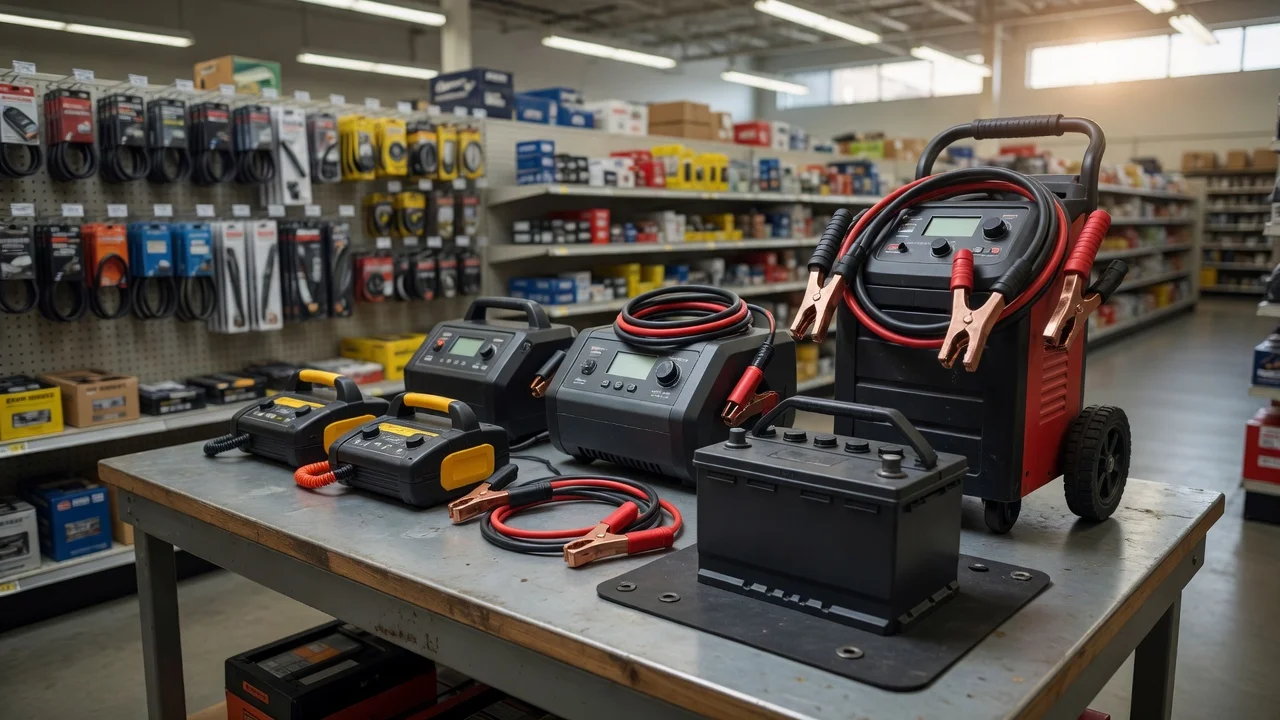
Type | What it does | Best suited to; Maintainer (often called a trickle or float charger) | Supplies low current to keep a charged battery topped up over long periods | Vehicles in storage, seasonal motorcycles, boats, lawn tractors; Smart or automatic charger | Adjusts current through several stages and reduces output as the battery fills, which lowers the risk of overcharging | Recharging a flat battery and general home use; Charger with engine-start function | Adds a short high-current boost to help crank an engine with a weak battery | Garage use when you need to start a car promptly; Portable jump starter | A self-contained battery pack for jump-starting, not a charger, although some models include charging features | Roadside emergencies away from mains power
Reading the amperage rating
Amperage, measured in amps, tells you how much charging current the charger delivers. A low rating, around one to two amps, suits maintaining a battery or slowly charging a small one, such as a motorcycle battery. Higher ratings recharge larger car and truck batteries faster. Many chargers let you select the amperage, which lets one unit handle both small and large batteries. The battery's capacity, listed in amp-hours (Ah) on many batteries, together with the charger's amp rating gives a rough idea of charging time. Actual time depends on how depleted the battery is and on the charger's charging stages.
What to check on the box or listing
Supported voltages: 12-volt at minimum, plus 6-volt if you own older or small equipment. Supported chemistries: Look for flooded (standard lead-acid), AGM, gel and lithium, matching the battery you actually have. Amperage range: A low setting for maintaining and a higher one if you need faster recharging. Automatic float or maintenance mode: This allows the charger to stay connected safely for long periods. Protection features: Reverse-polarity protection guards against clips connected the wrong way round. Short-circuit and overheat protection add further safety margins. Connection options: Clamps for terminals and, for long-term maintenance, ring-terminal leads that can stay attached to the battery. Weather rating: Relevant if the charger will be used in a damp garage or near a boat.
Next step
Before shopping, read the label on your battery to confirm its voltage and chemistry, and note whether you mainly need to maintain a stored vehicle, recharge a flat battery or start an engine. Then compare the chargers Walmart lists against the checklist above. If your vehicle is a hybrid, an EV, or a newer model with start-stop or battery monitoring, confirm the manufacturer's charging procedure in the owner's manual for your model year and trim before you buy. For specific models, prices or current stock, check the store or the online listing directly, because none of that information was available for this article.