Walker Catalytic Converters: Choosing a Compatible Replacement
Before you start
A Walker catalytic converter is a vehicle exhaust component, not a camera, microphone, or software tool. Selection happens locally using your vehicle details and the product information available from the seller or manufacturer. You do not need an online service to begin, but you will need accurate fitment data.
Gather the exact year, make, model, engine size, and submodel or trim where applicable. Catalytic converter fitment can change between engine options, drive configurations, California-emissions variants, and federal-emissions variants. Also note whether the vehicle was originally built to meet California emissions standards, because that may affect the required replacement part.
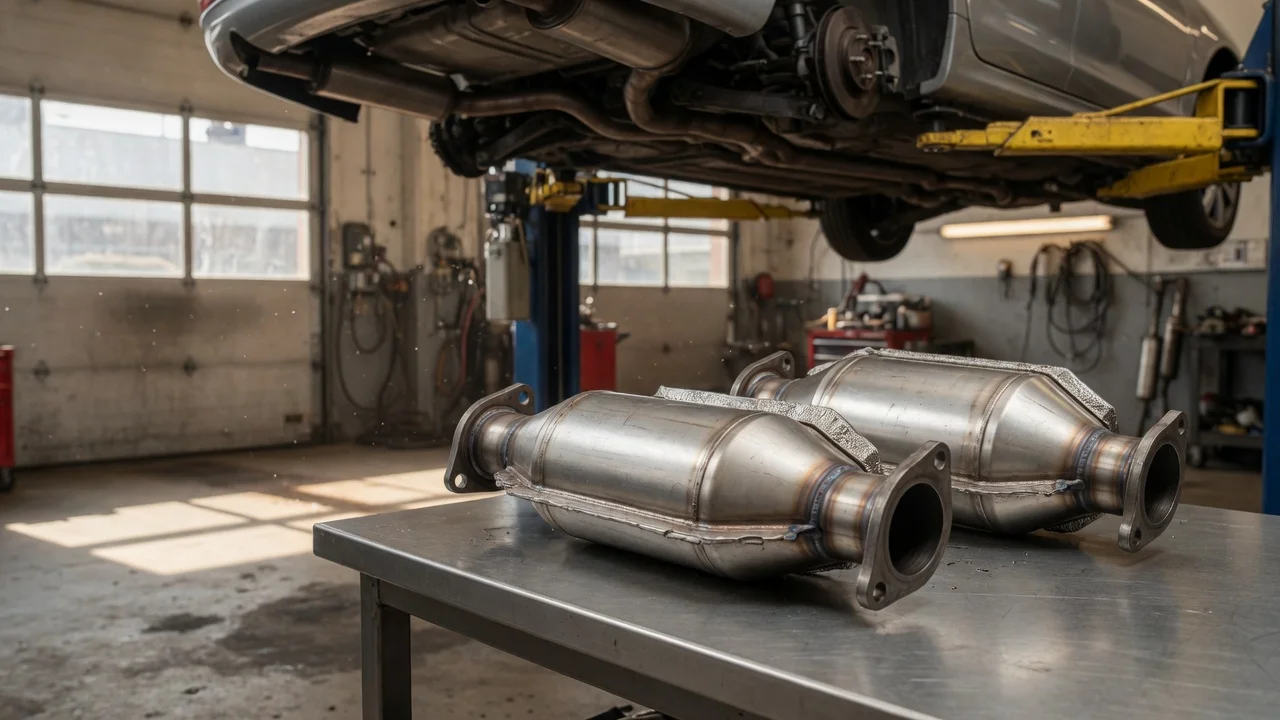
Identify the converter location if the vehicle has more than one. Some cars use a manifold converter close to the engine, a rear or underbody converter further along the exhaust, or both. A Walker replacement catalog normally lists the converter by position, so knowing whether the rear converter, front converter, or complete assembly is needed helps avoid ordering the wrong part.
Step-by-step instructions
Work from verified fitment rather than assuming one Walker converter fits a broad group of vehicles. Small differences in flange shape, pipe diameter, oxygen sensor placement, and overall length can matter during installation.
Enter the complete vehicle details into the Walker catalog or the seller's part finder. Start with the VIN when the catalog accepts it, because the VIN can help narrow the exact build. If VIN lookup is unavailable, select the year, make, model, engine, body, and emissions package manually.
Compare the listed converter position with the one you intend to replace. If the catalog shows a front manifold converter assembly and you need a rear underbody converter, the part number will differ even though both may appear in the same vehicle family.
Check the emissions note. A Walker converter may be listed as federal, California, or CARB compliant. Where the vehicle requires a California Air Resources Board approved replacement, choose the CARB-compliant number instead of a federal part. The same model may have different part numbers for these two versions.
Review the installation notes before purchasing. Some converters are direct-fit and are meant to bolt into the original location. Others are universal-fit and require cutting, welding, or clamping. If you plan to keep the original exhaust routing and flanges, select a direct-fit Walker option.
Confirm the oxygen sensor provisions. A converter may include a sensor port, or it may rely on a port elsewhere in the exhaust. The replacement should work with the original sensor location and thread size. If the original sensor is seized or damaged, plan for proper removal and inspection before the converter is replaced.
Write down the full Walker part number and compare it with any seller listing, packaging, or invoice before ordering. Do not rely on a product photo alone, because a generic image may represent a similar converter rather than the exact fitment.
If you are unsure between two possible numbers, keep a second choice nearby and check both against the vehicle details. Changing the engine displacement, transmission, or emissions market can remove one number and confirm the other.
Check the output
The expected result is a single Walker part number that matches the vehicle year, build, converter location, and emissions requirement. The part must be listed for the engine configuration in your vehicle, not a similar model with a different exhaust layout.
Confirm the replacement belongs in the same position as the old converter. A correct rear converter and a correct front converter can have very different shapes, even when both are described as compatible with the same car.
Check the physical format. A direct-fit converter should match the original pipe path and connection points closely enough to install without reworking the exhaust. A universal-fit converter is only a general shape and requires fabrication decisions, so it is not the best verification of exact compatibility.
If possible, compare the listed inlet and outlet diameters, overall length, and body shape with the existing part before removal or purchase. Measurements should come from the seller's product data or the manufacturer's specification. Do not rely on guesses or photos alone.
Common problems and next steps
The most common problem is a part finder that returns multiple converters for the same vehicle. In that case, narrow the search by converter location, engine code, and emissions compliance. Match the old converter visually and by position before choosing a number.
A California-emissions vehicle may show a lower-priced federal converter as compatible. That can be misleading when the vehicle is registered in a state that requires the CARB-approved replacement. For those cars, use the California or CARB listing even if another number appears in the same search.
A universal fit result can appear under the search for a direct-fit model. Universal converters are not a wrong result in every case, but they do not share the same installation path. If the goal is a replacement that fits the original mounts and flanges, filter for direct-fit only.
A Walker converter that fits the same engine in one platform does not automatically fit every model that uses that engine. Exhaust routing and converter shape vary by body and drivetrain. Always return to the exact year, model, and submodel listed in the vehicle information.
When the correct number is found, use it as the primary reference for ordering and communication with a parts supplier. If the part must be returned later, having the full Walker number and the original fitment details makes it easier to identify an exchange or correction.