WABCO Air Suspension Compressor Selection Guide
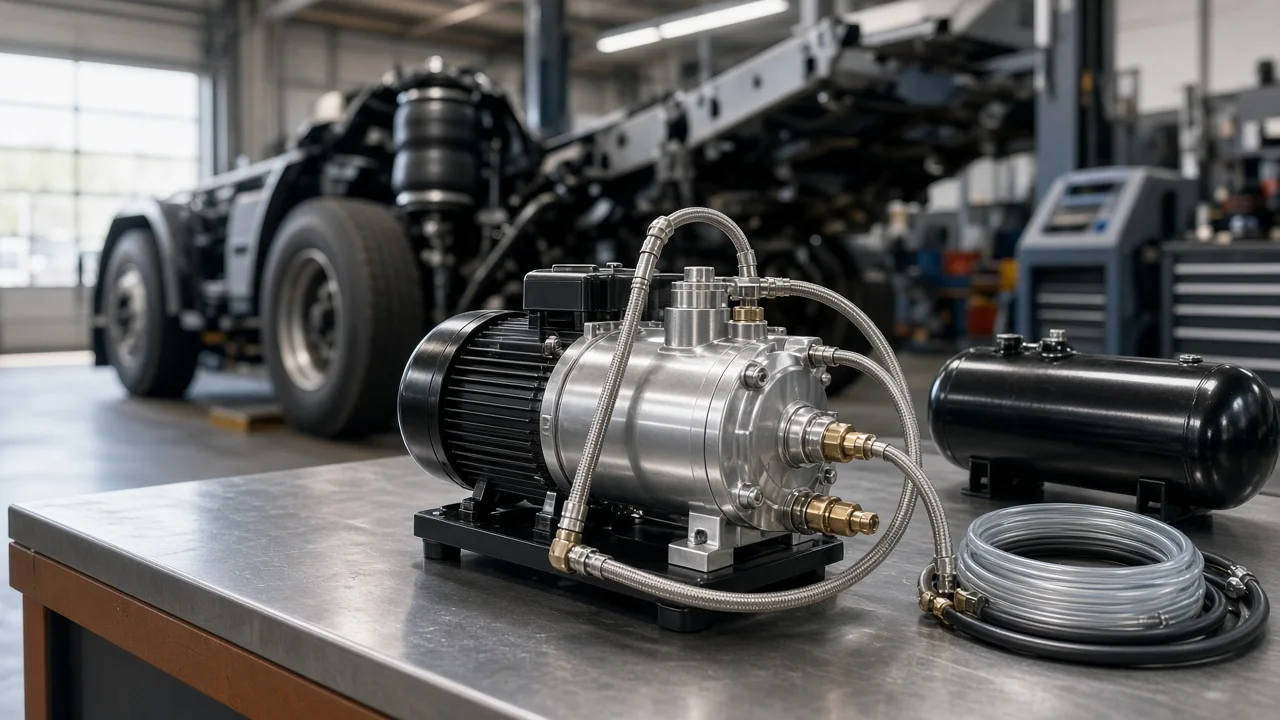
A WABCO air suspension compressor supplies the pressurized air that keeps an air-sprung vehicle at its intended ride height. When the original unit runs slowly, trips its thermal protection or stops working, replacing it takes more than finding the right brand name on the box. This guide covers how to confirm what the compressor must do, verify fitment, weigh the features that matter, budget for ownership costs and build a sensible shortlist before you buy.
Define the job the product must do
Start with the symptom and the vehicle, not the part. A compressor that runs constantly, takes far longer than usual to raise the vehicle, or triggers a fault message alongside a sagging corner may be failing. The same symptoms often come from a leaking air spring, a cracked air line, a sticking valve block or a faulty relay. A worn compressor is frequently the victim of a leak elsewhere. The leak forces it to run longer than its design allows, so it overheats and loses output. If you buy a new unit without finding that leak, you usually end up paying twice.
Next, consider how the vehicle is used. A daily driver that rarely changes height places modest demands on the compressor. A vehicle that tows, carries heavy loads or often uses off-road height settings asks it to work harder and more often. Record the make, model, model year, VIN and, if readable, the part number on the existing compressor label. These details narrow the choice faster than any catalog search. They also protect you from units that look similar but differ in fittings or electronics.
Check compatibility
WABCO compressors appear as original equipment on several European SUVs and luxury models, and the same basic pump design can be packaged differently for each application. Match the replacement against the original part number or a VIN-based lookup from the seller or dealer. Then confirm the physical interfaces: the electrical connector shape and pin count, the number and size of air line fittings, the position of the dryer and exhaust outlet, and the bracket and mounting points that hold the unit in the vehicle. Some assemblies include the bracket and rubber isolators. Others are the compressor only and reuse your existing hardware.
Watch for supersessions. Manufacturers sometimes replace an original part number with a revised one, and the newer unit may need a different connector adapter, relay or software state. A reputable listing explains the supersession instead of just claiming universal fit. WABCO is now part of ZF, so some current packaging carries ZF branding. A different name on the box is therefore not, on its own, evidence of a counterfeit. Unusually low prices, vague fitment lists and missing part numbers are better reasons for suspicion.
Features that affect the choice
The most meaningful difference between options is what comes in the box. A complete assembly with compressor, dryer, bracket and isolators costs more, but it removes guesswork and replaces wear items that commonly fail together. A bare compressor or a piston-and-seal repair kit is cheaper. However, it relies on the condition of your old dryer, mounts and fittings. A saturated dryer can send moisture into the system and shorten the life of the new pump and the valves.
The source of the unit also matters. You will find genuine dealer parts, boxed original-supplier units, remanufactured units and independent aftermarket copies. Remanufactured units may carry a core charge, and their quality depends on what the rebuilder actually replaces. Ask whether the motor, piston seal, dryer and thermal protection were renewed or only cleaned and tested. Treat phrases such as heavy duty, upgraded or OE quality as claims rather than evidence. A stated part number, documented warranty terms and a clear list of included components tell you more than any label.
Finally, consider noise and heat. Compressors sit on isolators because pump vibration would otherwise pass into the body, and they include thermal protection to prevent overheating. Hardened isolators or a missing heat shield can make a sound new unit seem faulty.
Limitations and ownership costs
A compressor cannot fix leaks, a failed valve block, a damaged height sensor or a corroded wiring connector. Before installation, check the relay that powers the compressor. A relay that sticks closed can keep a new pump running until it fails. Budget for a replacement relay, any missing isolators or O-rings, and a new intake filter if the design uses one.
Safe working practice is part of the cost. Support the vehicle on suitable stands at the manufacturer's lifting points, never on the air suspension alone, because releasing system pressure can lower the body without warning. Many systems require a jack or service mode, or a specific depressurizing sequence, before work begins. Follow the model-specific procedure. For brackets and fittings, use the fastener specification in the service information rather than guessing.
After fitting, you will often need a diagnostic tool to clear stored faults, test the compressor and confirm or calibrate ride height. Do not enter height values without manufacturer data. Wheel alignment is set at a specified height, so if the height calibration changes, an alignment check may be advisable. Long term, watch for slow leaks, keep the intake path clean and replace the dryer when the service information calls for it.
Build a practical shortlist
Compare candidates using the same questions for each. Does the listing state a part number that matches yours or a documented supersession? Do the connector, air fittings, dryer position and bracket match the original? Is the unit new, remanufactured or aftermarket, and is there a core charge? Which parts are included: dryer, bracket, isolators, relay, fittings? What warranty length and conditions apply, and does the warranty require proof that leaks were repaired or a new relay fitted? Can the seller confirm fitment from your VIN?
Eliminate any option whose seller cannot answer those questions clearly. Among the remaining units, weigh price against completeness and warranty rather than brand claims. If the vehicle has an aging, moisture-damaged dryer or perished mounts, a complete assembly is usually better value despite the higher upfront price. If the failure is recent, the cause is confirmed and the surrounding parts are healthy, a quality compressor-only unit can be a reasonable choice. Either way, confirm the underlying fault before ordering, and plan the installation around proper vehicle support and the manufacturer's procedure.