VW Tiguan Turbo Boost Control Position Sensor: Identification
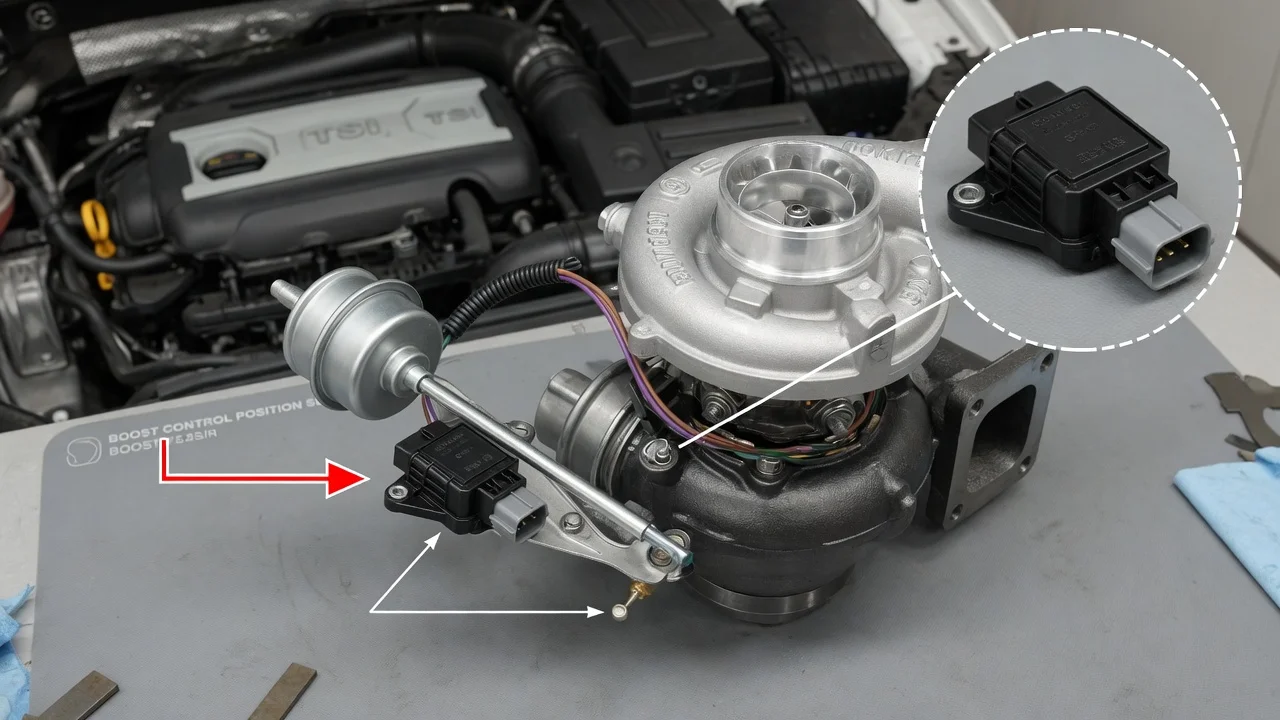
If a scan tool on your Volkswagen Tiguan reports a fault for the turbo boost control position sensor, the first job is working out which physical part that name refers to. The wording comes from generic diagnostic code descriptions, not from a parts catalog, so it rarely matches the label on a box at the parts counter. This guide explains what the sensor does, how to find it on your engine and what to confirm before spending money on parts.
The short answer
On a gasoline Tiguan, the turbo boost control position sensor reports where the turbocharger's wastegate is positioned. Volkswagen documentation generally refers to the related parts as the charge pressure actuator and its position sensor. On many 2.0 TSI engines with an electronically controlled wastegate, the sensor is built into the actuator housing mounted on the turbocharger, so it is typically not a standalone part you can unbolt and swap. On diesel versions sold outside the United States, the same code wording refers to the sensor that tracks the variable vane mechanism inside the turbo.
Because the Tiguan has been built with several engine versions, there is no single answer for every vehicle. Some earlier engines use a vacuum-operated wastegate controlled by a solenoid valve, and their position-sensing arrangement differs from later electric actuators. The reliable identification method is to confirm the engine code for your exact vehicle configuration and then match the part number on the component itself.
How boost control position sensing works
The turbocharger is driven by exhaust gas. The wastegate is a valve that lets some exhaust bypass the turbine wheel, which limits how fast the turbo spins and how much boost it produces. The engine control module decides how much boost it wants for the current load and engine speed, then commands the actuator to open or close the wastegate accordingly.
The position sensor closes that loop. It sends a signal back to the engine control module showing where the actuator linkage actually is, so the module can compare the commanded position with the real one. If the two disagree beyond what the software allows, or if the signal drops out or sits outside its expected range, the module stores a fault and may reduce power to protect the engine. Codes in the P2562 to P2565 range describe this sensor circuit, while underboost or overboost codes can appear alongside them when the mismatch affects actual boost pressure.
What changes the answer for your Tiguan
The Tiguan has been sold in more than one generation, and the 2.0 TSI engine inside it has gone through revisions. Whether the wastegate is moved by vacuum or by an electric motor, whether the position sensor is integrated or separate, and how the part is serviced all depend on the engine version. Model year alone can be misleading around changeover periods, so the engine code is the better reference. Market matters too: diesel Tiguans sold elsewhere use variable geometry turbochargers, where the sensor and its fault behavior differ from a gasoline wastegate system.
Modifications and operating conditions also change the picture. Aftermarket tuning, a replacement turbocharger or previously repaired wiring can mean the installed hardware no longer matches the factory parts catalog. Heat is a constant factor because the actuator sits on the turbocharger close to the exhaust, so connectors and wiring in that area go through repeated heat cycles. A fault that appears only after hard driving or a long climb points somewhere different from one that is present at a cold start.
How to identify the part on your vehicle
Start with paperwork and labels. The engine code is usually printed on the vehicle data sticker, commonly found in the spare wheel well or in the service booklet, and it is also marked on the engine. A dealer or parts supplier can decode your VIN to the exact build. Service history helps as well, since invoices may show whether the turbocharger or actuator has already been replaced and with which part.
Next, look at the hardware. On the transverse 2.0 TSI, the turbocharger sits on the exhaust side of the engine toward the firewall, so a clear view usually requires removing the engine undertray or lifting the vehicle safely onto proper stands. On engines with an electric wastegate, the actuator is a sealed housing attached to the turbo, with a rod running to the wastegate arm and an electrical connector. A vacuum actuator instead has a round canister with a hose attached. Inspect only when the engine is fully cool, because the turbo stays hot long after shutdown. Note the part number on the actuator and compare it with the catalog listing for your VIN.
A scan tool that reads live data adds useful evidence. Many capable tools display commanded and actual wastegate position. Watching these values at idle and during a gentle rev, or running an actuator test where the tool supports it, shows whether the signal tracks the command smoothly, sticks or jumps. Judge the readings against manufacturer specifications from proper service information rather than numbers quoted on forums.
Practical checks before buying parts
A position sensor code does not automatically mean the sensor has failed. Common contributors include a damaged or corroded connector, chafed wiring near hot exhaust parts, and wear or binding in the wastegate linkage, which can make a healthy sensor report an unexpected position. A careful inspection of the connector and harness, a look for obvious play, damage or binding at the linkage, and clearing the code to see whether and when it returns are reasonable first steps. Record any other stored codes as well, since boost leaks or intake faults can change how the system behaves.
If the sensor is integrated into the actuator, replacement normally involves the actuator assembly, and on some engines parts availability or the condition of the wastegate itself steers the repair toward the turbocharger. Some electronic actuators also require a basic setting or adaptation procedure with a scan tool after installation. Skipping that step can leave a brand-new part reporting faults.
Limitations and next step
This explanation is general. Connector pinouts, signal values, test procedures and torque figures come from the factory repair information for your engine code, and none of them should be guessed. There is also no universal replacement interval for this part; it is not a routine item on the maintenance schedule and is replaced only when diagnosis shows it is faulty.
Seek professional help if the vehicle is in reduced power mode, if boost-related codes keep returning after basic checks, or if you lack a scan tool that can read live actuator data and run adaptations. A shop with Volkswagen-specific diagnostic equipment can confirm the fault, check for applicable software updates or service campaigns, and order the correct part by VIN. Bring your code history and notes on when the fault appears, because that information shortens diagnosis.