VW T5 Glow Plug Relay: How to Choose the Right Replacement
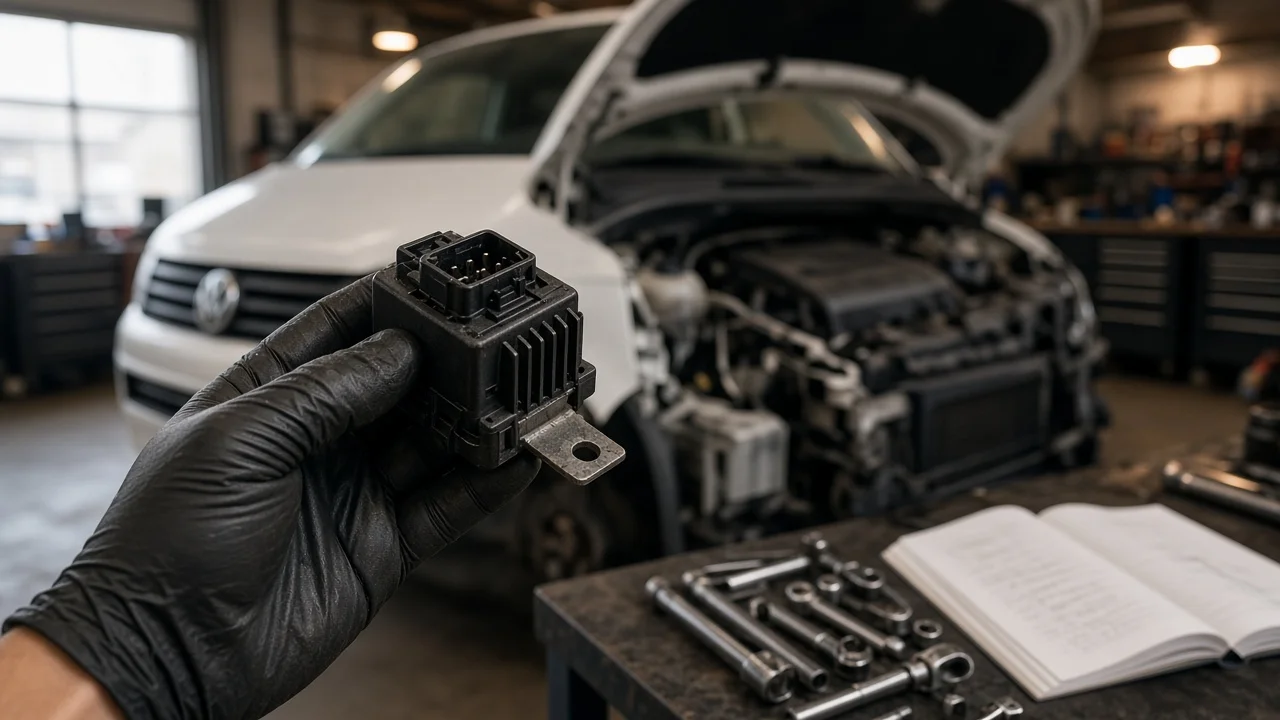
On a diesel VW T5 Transporter, the glow plug relay or control module switches the heavy current that heats the glow plugs before and just after a cold start. When it fails, the van may crank for a long time, run rough and smoky until warm, or store glow circuit fault codes. Choosing a replacement is mainly a fitment job. The correct part depends on engine code, model year and the type of glow control, not on branding.
Define the job the product must do
Start by confirming the van actually has glow plugs. The T5 range was sold with both petrol and diesel engines, and only the diesels use a glow system. Earlier diesel T5 vans came with 1.9 TDI and 2.5 TDI pump-injector engines, and later facelifted models came with 2.0 TDI common rail engines. The 1.9 and 2.0 are four-cylinder units and the 2.5 is an inline five, so the number of plugs the relay must feed depends on the engine configuration.
Next, decide what problem you are solving. A failed relay usually shows up as poor cold starts, white smoke that clears once the engine warms, a glow warning lamp that behaves oddly, or stored glow circuit codes. Fuel delivery faults cause many of the same symptoms. Read the fault memory with a scan tool and, where you can do it safely, check whether the plugs receive power during preglow. A new relay is justified when the evidence points at the switching side. It is not justified when the plugs are getting power and the engine still struggles.
Check compatibility
The engine code is the most reliable starting point. It appears on the vehicle data label, in the service records and on the engine itself, and you should read it together with the VIN and model year. Earlier pump-injector engines generally use a relay-style unit that switches battery voltage to the plugs when the engine control unit commands it. Later common rail engines generally use a dedicated glow control module that pulses power to each plug and reports circuit faults back to the engine control unit. The two designs are not interchangeable, even if the housings look similar in listing photos.
Match the physical interfaces as well: connector shape and pin count, the mounting bracket or socket style, and enough current capacity for the number of plugs. Plug type also matters. Systems with pulsed control commonly use lower-voltage plugs, and a unit designed to supply continuous battery voltage can overheat them. The most dependable cross-check is the original part number printed on the old unit. Compare it against the replacement maker's application list for your engine code, not a generic T5 label.
Features that affect the choice
Options usually fall into three groups: genuine dealer parts, parts from original-equipment suppliers sold in their own packaging, and independent aftermarket units. When comparing them, look for an explicit cross-reference to the original part number, fitment listed by engine code, clear photos of the connector and terminals, and a warranty with a realistic return process. For control modules, check that the unit supports the diagnostic feedback the engine control unit expects. Otherwise you may simply trade one warning for another.
Treat marketing labels with caution. Words such as heavy duty, upgraded or fast start do not change how long the system glows, because the engine control unit sets preglow and afterglow timing from temperature and other inputs. The goal is a relay that meets the original specification and fits correctly. Some sellers bundle a relay with a set of glow plugs. That can make sense when the plugs are old or one has failed, since a shorted plug can stress the relay output, but only if the plugs are the correct type for your engine.
Limitations and ownership costs
A glow plug relay only delivers power to the plugs. It cannot fix low fuel pressure, air entering at the fuel filter housing or low-pressure lines, a weak fuel pump, a clogged fuel filter, a leaking or worn injector, or low compression. Reasonable first steps are a visual leak check of the low-pressure side for wet joints or fuel smell, and a filter change if one is due. Do not open high-pressure fuel lines or injector connections to bleed or test them. Pump-injector and common rail systems operate at very high pressure, so follow the manufacturer's procedure or leave that work to a diesel specialist. Fuel additives are not a proven fix for hard starting caused by any of these faults.
Fitting a relay is usually straightforward, but plan for a few extras. Disconnect the battery before unplugging the unit, check the connectors and wiring for corrosion or heat damage, and clear stored codes afterwards so you can see whether they return. A scan tool is worth having for glow faults and for live data such as injector correction values, which can point to an injector problem a new relay will not solve. Battery condition also matters, because a weak battery reduces glow plug output on a cold morning.
Build a practical shortlist
Before ordering, run each candidate through the same short checklist. Have you confirmed the engine code and model year from the van itself? Does the part match your engine's control type, either a simple relay or a pulsed glow module? Does the seller list the original part number as a cross-reference? Do the connector, pin count and mounting match the old unit? Is it compatible with the fitted glow plugs, especially low-voltage plugs? Is fitment stated by engine code rather than just T5 or Transporter? Are the warranty and return terms clear in case the unit does not suit?
After installation, confirm the result instead of assuming it. The glow lamp should behave normally, no glow circuit codes should return after a few cold starts, and the engine should start promptly without prolonged white smoke. If cold starting is still poor with a working relay and powered plugs, check fuel delivery, the injectors and compression next. Keep the old unit and the packaging until you are satisfied, in case you need to return the new one.