VW Passat B6 Electronic Parking Brake Control Module Location
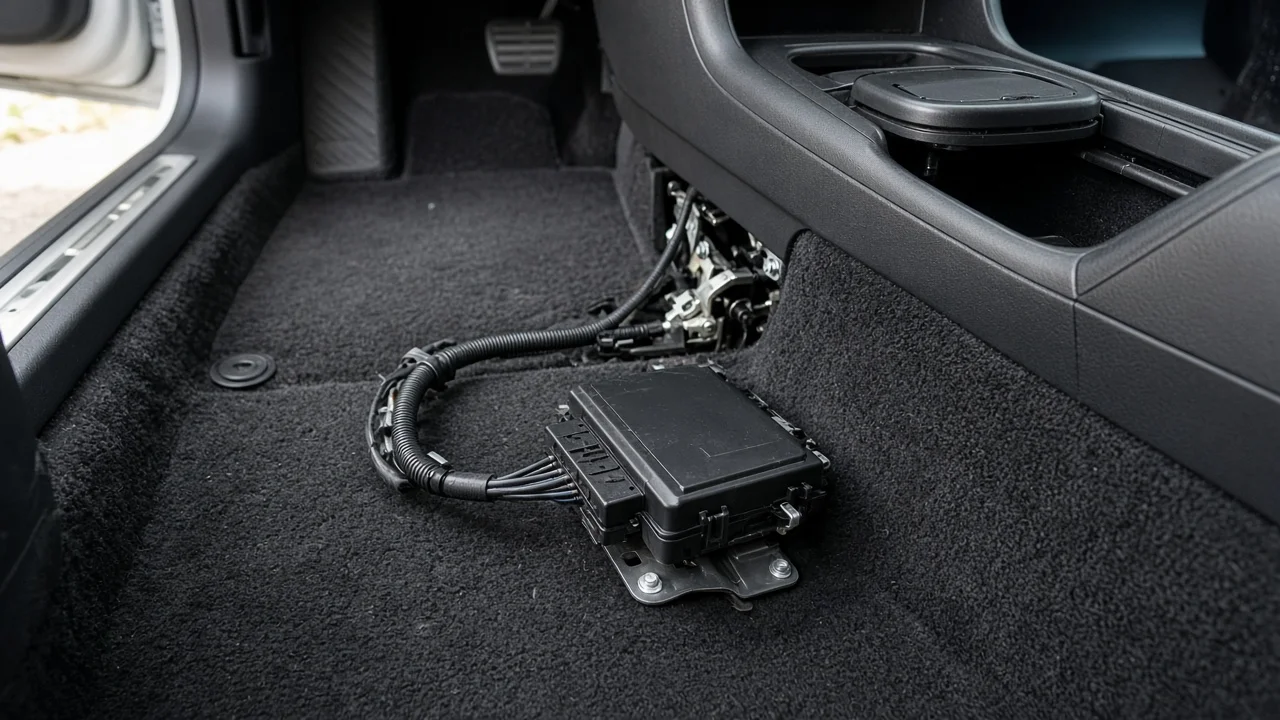
The B6 Passat, sold in the United States for the 2006 through 2010 model years, replaced the traditional lever or pedal with an electromechanical parking brake. When that system shows a warning, owners often want to know where its control unit is before deciding whether to inspect, scan or book service. This guide explains where the module is normally mounted, how it fits into the brake system, and what you can check without risking damage to the rear brakes.
Where the parking brake module is located
On the B6 Passat, the electromechanical parking brake control module is a standalone unit, not part of the ABS assembly. Volkswagen wiring diagrams identify it as J540. It is generally documented as mounted in the luggage compartment on the left side, behind the side trim panel, close to the wiring that runs to the rear calipers. Reaching it usually means lifting the trunk floor covering and loosening the left side trim. Mounting brackets, trim fasteners and harness routing can differ between the sedan and the wagon and across production changes. Treat this location as a starting point and confirm it in the repair information for your VIN before you remove any panels.
If you only need to communicate with the module, you do not have to find it physically. A diagnostic tool that supports Volkswagen systems reaches it through the OBD port under the dashboard. The module usually appears as the parking brake controller, commonly listed under address 53. Reading the stored faults there is normally a faster first step than taking apart the trunk trim.
How the electronic parking brake works
When you pull the switch on the center console, the request goes to the control module. The module then powers a small electric motor mounted on the back of each rear caliper. Each motor drives a reduction gearbox and a spindle inside the caliper. The spindle pushes the piston outward and clamps the brake pads against the brake rotors. The parking brake uses the same pads and friction material as normal braking; only the method of applying force is different. The module monitors motor current to decide when the clamp force is sufficient. To release the brake, it runs the motors in reverse. Under certain conditions, such as the driver's door being closed and the seatbelt fastened, the brake can also release automatically when you drive off.
The module communicates with the ABS and stability control system over the vehicle data network. That connection lets it support functions such as controlled emergency braking if the switch is held while the car is moving. Because the motors, rather than hydraulic pressure alone, position the rear pistons, those pistons cannot simply be pushed back with a tool. The module has to retract them first, and this directly affects how rear brake work is done.
What changes the answer
Body style is the first variable. Trunk and cargo-area trim on the wagon differs from the sedan, so the access route to the module is different even where the general location is similar. Model year and running production changes can also affect brackets, connectors and part numbers. The Passat CC shares much of its engineering with the B6, but it is a separate model, so confirm its details independently. Locations quoted for later Passat generations do not transfer to the B6. The US-market Passat introduced for 2012 uses a foot-operated parking brake, and on some later Volkswagen platforms the parking brake function is handled by the stability control unit rather than a separate module.
The car's history matters as well. A previously replaced or salvage-sourced module may differ from the original, so check part numbers and vehicle fitment rather than assuming the factory configuration is still in place. Operating conditions also affect the faults you see. Low battery voltage, poor grounds, moisture and cold weather can all cause parking brake warnings that are unrelated to a failed module.
What the owner can do
Start by noting exactly what happens. Record whether a warning lamp or message appears and whether you hear the motors run at both rear wheels or only one. Also note whether the brake fails to apply, fails to release, or works intermittently. Check the battery and its terminals next, because the caliper motors draw substantial current and a weak battery can set parking brake faults. Then scan the parking brake controller and write down every fault code before clearing anything. The codes often show whether the problem is the module, the switch, one motor or the wiring.
If the codes point toward the module or its supply, inspect the left side of the luggage compartment for dampness, wet carpet or water in the spare wheel area. Look for corrosion at the module connector. At the rear wheels, check the motor connectors and harness for damage, because they are exposed to road spray and salt. Follow the service procedure for disconnecting the battery and unplugging connectors so you do not create new faults.
For rear brake work, use a scan tool to put the parking brake into service or maintenance mode so the motors retract before you remove the pads. Never force the piston back. After the new pads are installed, close the system with the tool and run the required basic setting. While the wheels are off, measure the pads and rotors against the wear limits in the service information and check the brake fluid level and condition. Inspect the caliper for leaks and confirm the slide pins move freely.
Limitations and next step
A general location description cannot account for every individual car. The only firm reference is the service information for your VIN. Replacing the module is not a plug-in job, because a new or used unit typically needs coding and adaptation with a capable diagnostic tool before it works correctly. A replacement that appears to match may still be incorrect for your car if the part number or software differs.
Stop driving and arrange professional service in any of these situations: the parking brake will not release, a rear wheel drags or smells hot, or the brake will not hold the car on a slope. Until the car is repaired, park on level ground, shift into Park and chock the wheels. Do not take apart a caliper motor to free a stuck brake unless you are following the documented procedure. A brake specialist or dealer with Volkswagen diagnostic capability can confirm the fault, release the system safely and verify that the rear brakes work correctly afterward.