VW Jetta Brake Booster Vacuum Hose: Choosing the Correct Part
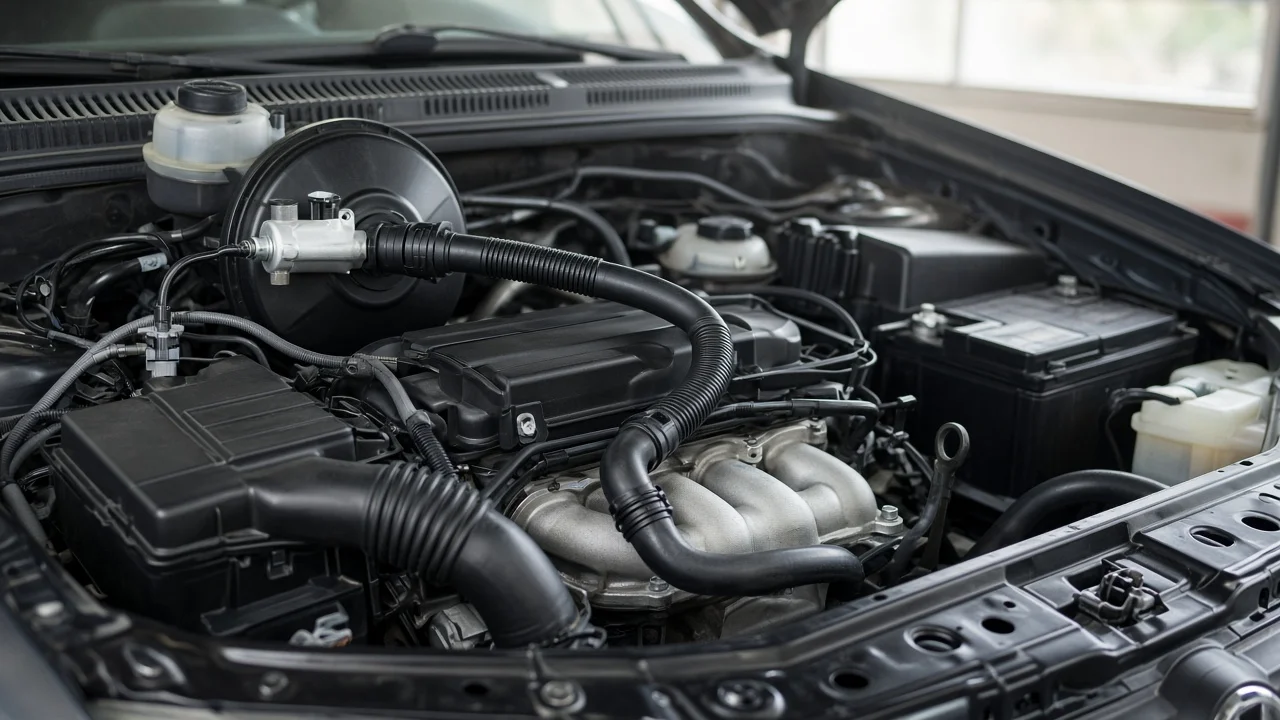
On a fourth-generation Jetta, the brake booster vacuum hose is a short, inexpensive part with an important job. It carries vacuum to the booster so the pedal stays light. When the hose cracks, collapses or loses its check valve function, the pedal turns hard and stopping takes more effort. This guide explains how to choose the right replacement for a gas or TDI MK4, what to confirm before ordering, and where a new hose alone will not solve the problem.
Define the job the hose must do
The booster multiplies your foot force by using the difference between vacuum on one side of its diaphragm and atmospheric pressure on the other. The vacuum source depends on the engine. On gasoline MK4 Jettas, including the 2.0 liter, 1.8T and VR6, the hose runs from the intake manifold to the booster. Diesel engines do not produce useful manifold vacuum, so a TDI Jetta uses a camshaft-driven vacuum pump, and the booster hose connects to that pump instead. On the 1.8T, the intake manifold sees boost pressure under load, so the check valve in the line also keeps pressurized air out of the booster.
Before buying anything, confirm the hose is actually the fault. With the engine off, press the pedal several times to use up stored vacuum, hold light pressure, then start the engine. The pedal should sink slightly as vacuum builds. If it stays hard, vacuum is not reaching the booster. Look for cracked or soft rubber, a loose connection at the booster grommet, hissing at idle, and on gas engines a rough idle or lean-running fault codes. A hard pedal is not a brake pads, brake rotors or caliper problem, and worn friction material will not cause it. If the pedal is hard or stopping feels weak, limit driving and have the car inspected, because reduced assist can lengthen stopping distances considerably.
Check compatibility
The MK4 Jetta was sold in the US from the 1999.5 model year into 2005, and the vacuum line is specific to the engine rather than the body. Find the engine code on the vehicle data sticker, usually located in the spare tire well and often repeated in the service booklet, and match the part to that code rather than to the model year alone. This matters most for diesels. Early MK4 TDI models use the ALH engine, while later cars, including most 2004 TDI Jettas, use the pump-injection BEW engine. A 2002 TDI and a 2004 TDI can need different hose assemblies, because the vacuum pump design and connection points differ between the two engines.
Beyond the engine code, check the interfaces at both ends. At the booster, the line usually plugs into a rubber grommet in the booster shell, so the fitting diameter and elbow angle must match. At the source end, the connection may be a barbed nipple on the manifold or pump, or a molded fitting. Note where the check valve sits and which direction it faces, and compare the overall length and preformed bends with your old part. A hose that is too long can rub on hot or moving components, while one that is too short will be stretched and can pull off the fitting. Good vehicle fitment listings name the engine code, not just Jetta and a year range.
Features that affect the choice
Material is the first real difference between options. The booster line must resist collapsing under vacuum while tolerating engine heat and oil vapor. Molded assemblies made to the original shape keep their bends without kinking. Generic straight hose cut to length can work only if it is rated for vacuum and has a suitable wall thickness; ordinary fuel or heater hose may soften and flatten, which restricts flow just when you need assist. On a TDI, oil mist from the vacuum pump makes oil resistance especially relevant.
The second difference is how the check valve is supplied. Some replacement lines include an integrated valve; others expect you to reuse or buy it separately. The valve holds vacuum in the booster after the engine stops and, on the 1.8T, blocks boost. Test it by blowing through it: air should pass from the booster side toward the engine or pump side, and not in the opposite direction. Treat marketing labels such as OE quality or heavy duty as claims rather than evidence. More useful indicators are a fitment listing by engine code, photos that match your original fittings and bends, a clear statement of whether the valve is included, and an original equipment manufacturer brand or a direct-replacement design.
Limitations and ownership costs
A new hose restores vacuum supply but cannot repair other parts of the assist system. If the booster diaphragm is torn, the master cylinder is failing, or a TDI vacuum pump is worn, the pedal will remain hard or inconsistent after the swap. The hose also has nothing to do with the hydraulic side of the brakes: replacing it does not open the system, so no brake fluid is lost and no bleeding is required. Likewise, it does not change pad or rotor wear limits; those still need checking against the service specifications for your car during routine inspections.
The part is usually cheap, but plan for small extras. Old plastic fittings and the booster grommet harden with age and can crack during removal, so having a new grommet and suitable clamps on hand avoids a half-finished job. While the area is open, inspect neighboring vacuum lines, since aged rubber on one hose often means others are near the end of their life. After installation, repeat the engine-off pedal test and listen for leaks at idle. If assist is still poor, stop driving the car and have the braking system diagnosed by a professional rather than continuing to replace parts.
Build a practical shortlist
Narrow your options with a short comparison. First, confirm the engine code from the data sticker and keep only parts listed for that code. Second, compare each candidate against your removed hose: fitting type at the booster, fitting type at the manifold or vacuum pump, length, and preformed bends. Third, check whether the check valve is included, where it sits and which way it flows. Fourth, prefer vacuum-rated, heat- and oil-resistant construction over generic hose. Fifth, set aside any listing that only states a broad year range without an engine or fitment detail you can verify.
Once two or three candidates pass those checks, choose based on how closely the part reproduces the original design and whether it includes the valve and grommet you need. Avoid choosing purely on price or on vague durability claims. A correctly matched hose should restore normal pedal feel immediately; if it does not, the fault lies elsewhere in the assist system and needs professional diagnosis before the car returns to regular use.