VW Disc Brake Conversion Kits: What to Check Before You Buy
The short answer
A disc brake conversion kit can replace the original drum brakes on many classic Volkswagens, most often air-cooled models such as the Beetle. Whether a particular kit suits your car depends mainly on the front suspension design, the wheel bolt pattern you want to keep or adopt, and whether the brake hydraulics are matched to the new setup. A kit that fits one VW may not fit another of the same model name if the suspension, market or year differs, so confirm those details on the car itself before ordering.
What a conversion kit usually changes
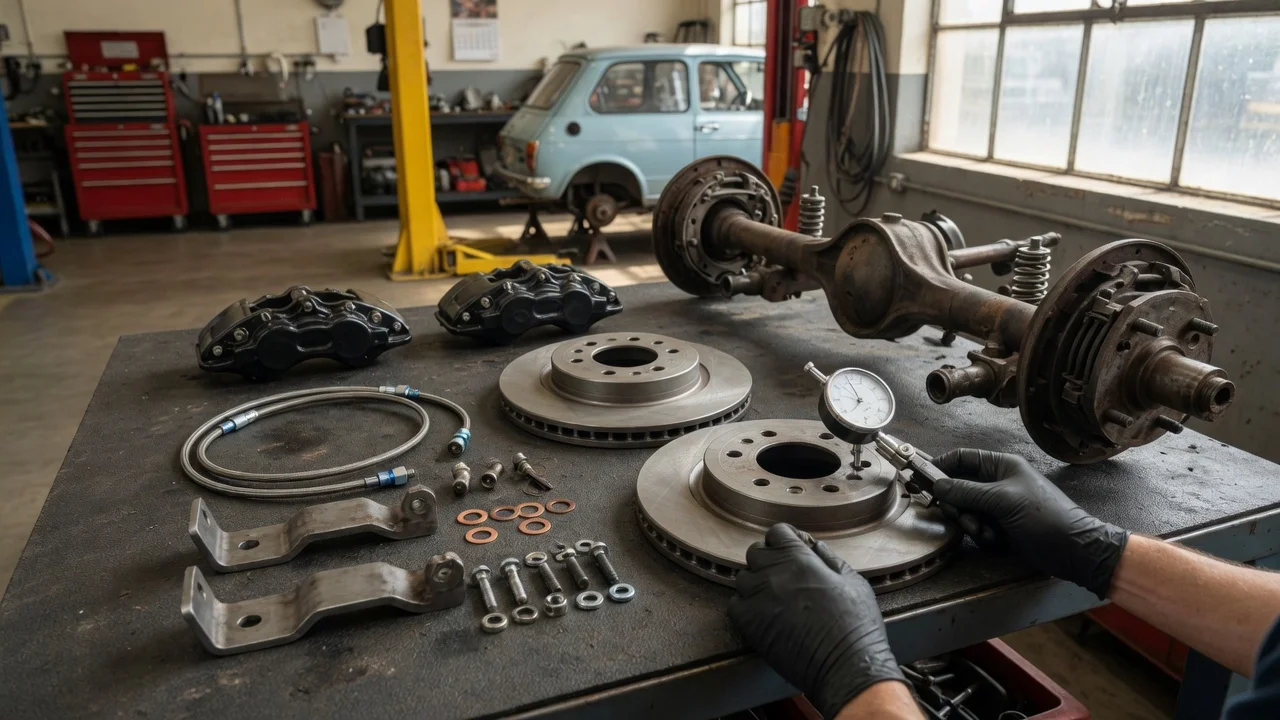
Drum brakes press shoes outward against the inside of a rotating drum. Disc brakes squeeze pads against a flat rotor with a caliper, which generally sheds heat more readily and can be easier to inspect and service. A conversion kit swaps the drum hardware at the front, the rear or both for rotors, calipers, mounting brackets and related parts.
Kits vary in what they include. Some supply only the parts at each wheel, while others add hoses, hub or spindle components, or hydraulic parts. Read the parts list closely, because anything not included may still be needed for a working, balanced system.
Details that decide fitment
Front suspension type: Beetles were built with different front-end designs, including king pin and ball joint beams and, on Super Beetles, a MacPherson strut layout. Kits are generally specific to one design, and the changeover years differ by market, so identify the front end by inspection rather than by model year alone. Wheel bolt pattern: Some kits keep the original pattern, while others change it. A changed pattern means your current wheels may no longer fit. Wheel size and clearance: Calipers need room inside the wheel. Confirm the kit maker's stated minimum wheel size and offset against the wheels you plan to run. Lowered or modified suspension: Drop spindles, narrowed beams and other modifications can affect which kit will bolt on. Vehicle type: Beetles, Type 2 buses, Type 3 models and Karmann Ghias do not share every brake part, and some later models had factory front discs in certain markets. Choose a kit listed for your exact vehicle.
Hydraulics: the part buyers often overlook
Disc calipers and drum wheel cylinders need different fluid volumes and pressures. After a conversion, the existing master cylinder may not deliver the right pedal feel or balance. Early cars with a single-circuit master cylinder are commonly upgraded to a dual-circuit unit at the same time for added safety, since a leak then affects only part of the system.
Front-to-rear balance matters too. Converting only the front axle changes how braking force is split, and some setups call for a proportioning valve or a residual pressure valve to keep the rear drums working correctly. Follow the kit maker's hydraulic recommendations for your configuration, and ask them directly if the instructions do not cover it.
Front only or all four wheels?
The front brakes do most of the work when stopping, so many owners convert the front axle first and keep rear drums. Rear disc kits exist but add complexity, especially around the parking brake, which must still work and meet local requirements. Your choice depends on how the car is used, your budget and whether the rear drums are in good condition.
Questions to resolve before buying
Which front suspension does my car actually have, and does the kit list it by name? Will the kit keep or change my wheel bolt pattern, and what wheel size and offset does it require? What does the kit include, and which hoses, hydraulic parts or hub components must I buy separately? Does the maker recommend a specific master cylinder or valve for this setup? Do local inspection, registration or insurance rules require brake modifications to be declared or certified?
Information gaps to check yourself
This guide does not include verified prices, part numbers, rotor or caliper dimensions, braking test results or availability for any specific kit, and none should be assumed. Model-year changeovers for suspension and brake designs also differed between markets. Confirm fitment with the kit maker using your car's chassis details, and if you are not confident working on brakes, have the conversion done or inspected by a qualified mechanic before driving.