VW Crafter Camper Van Conversion: Options, Kits and What to Expect
The essential answer
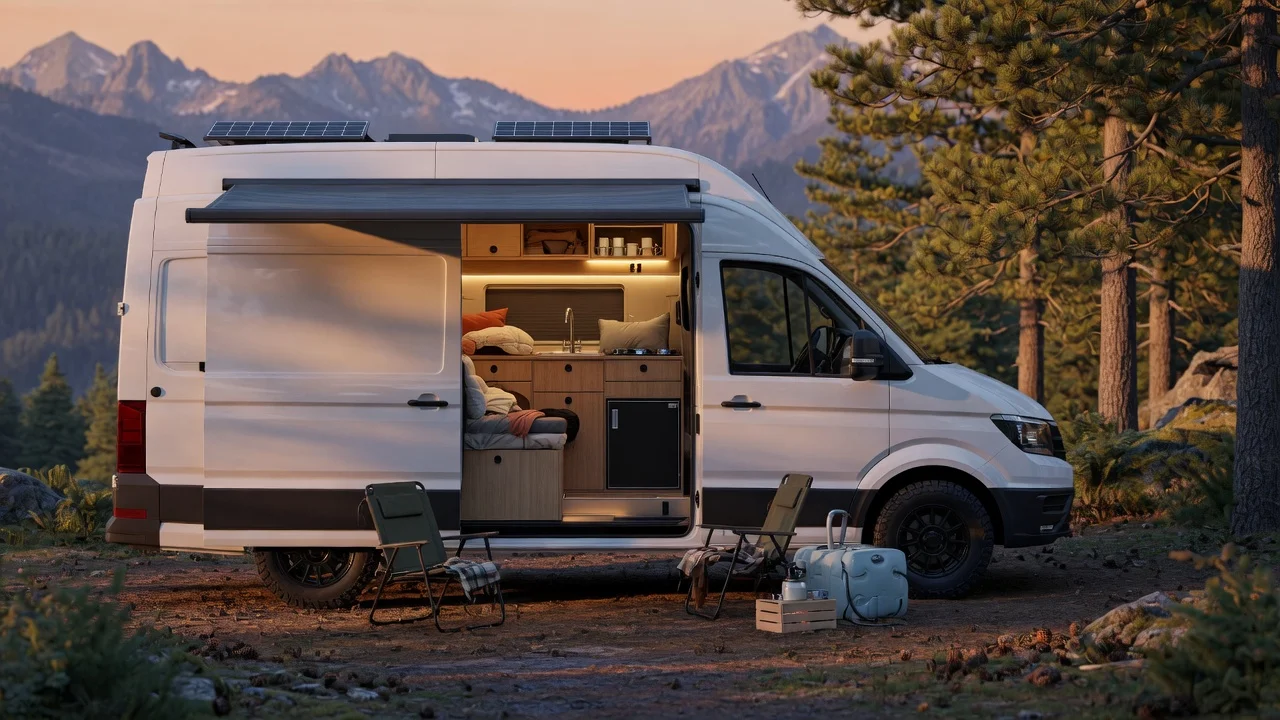
A VW Crafter camper van conversion is the process of taking a panel van, crew van or chassis cab version of the Crafter and fitting it out with insulation, flooring, furniture, electrical systems, water storage and sleeping accommodation. The scope changes significantly depending on whether you buy a complete conversion kit, commission a professional converter, or build from individual components. Model year, wheelbase, roof height and whether the base vehicle is front-wheel drive, rear-wheel drive or all-wheel drive all affect layout, underfloor space and overall build cost.
What qualifies as a Crafter camper conversion
This guide covers conversions based on the current second-generation Crafter, introduced in 2017 and revised during later production years. Earlier Crafters shared engineering with the Mercedes-Benz Sprinter and differ in interior dimensions, fixing points and available aftermarket parts. When evaluating any kit or measurement, confirm the generation, body length and roof option of the donor vehicle. A conversion usually includes a sleeping area, a seating or dining zone, a galley, storage and an electrical installation. Heating, water and toilet facilities are optional but common in full builds.
Main conversion routes
The three main routes are a self-build from individual components, a flat-pack or modular conversion kit, and a professional turnkey conversion. Self-build gives the most control over layout and materials but requires competence in cutting, fixing, wiring and plumbing. A conversion kit reduces fabrication work because it supplies pre-cut panels, furniture units and often a defined layout. Professional conversion transfers design and installation risk to an outside company and typically produces a vehicle that is easier to insure and resell, at a higher initial cost.
Conversion kits for the VW Crafter
A VW Crafter camper van conversion kit is a collection of matched components intended to fit a specific Crafter body length and roof height. Kits commonly include insulated wall and ceiling panels, floor sections, furniture units, bed bases, gas or electric cooking modules, and sometimes a water tank or electrical harness. The advantage is dimensional compatibility: parts are cut or formed for the Crafter’s profile, which reduces on-site measuring and trimming. The limitation is flexibility, because the kit usually prescribes a fixed internal layout.
Choosing the donor Crafter
Wheelbase and roof height determine the most important internal dimensions. The Crafter is offered in multiple lengths, with roof heights that materially affect headroom and whether a fixed high bed or upper sleeping space is practical. Front-wheel drive versions generally have a lower load floor, while rear-wheel drive and all-wheel drive versions can have different underfloor clearances that affect water tank placement and step height. A sliding side door on the left or both sides changes where the galley and seating can be installed.
Key build stages
Strip, clean and treat the interior metalwork; Plan and fit electrical cable runs and plumbing routes; Install sound deadening and thermal insulation; Fit the floor, wall and ceiling panels; Install furniture and securing rails; Connect the leisure electrical system; Fit water tanks, sink, pump and heater if specified; Install the bed, seating and gas or diesel heating; Check ventilation, gas tightness and electrical protection
Electrical system basics
A camper conversion usually adds a leisure battery separate from the starter battery. A DC-to-DC charger keeps the leisure battery charged while driving, and a mains hook-up charger works when the van is parked on a campsite supply. An inverter can supply mains-voltage appliances, but it draws high current from the battery. Correct cable sizing, fusing and isolation switches are safety-critical. If a kit includes a pre-made electrical harness, check that it matches the battery chemistry and charging components you intend to use.
Heating and ventilation
Insulation alone is usually not enough for year-round use. Diesel-fired air heaters are common because they can draw fuel from the Crafter’s tank or a separate supply and provide dry heat. Gas and electric heating also exist, but gas heating produces water vapour and electric heating demands a large battery bank or a hook-up. Fixed low-level vents and a roof vent reduce condensation and allow cooking gases or heater exhaust to be managed safely.
Water and gas installations
A simple water system uses a fresh-water container, a submersible or inline pump and a small sink draining to a removable waste container. Fixed underfloor tanks are possible but vary with drive type and body length. Any gas system, including bottled gas for a hob or heater, should use a sealed locker vented to the outside, rigid or approved flexible pipework, and a gas drop-out vent at floor level. Local regulations and vehicle safety standards can affect what is permitted in a self-built conversion.
Common decisions and trade-offs
Decision | Practical trade-off; Fixed high bed | More storage below, but less headroom and reduced seating flexibility; Folding bed or rock-and-roll bed | Better daytime seating, but often a more complex installation; Compressor fridge | Runs efficiently on 12 V but costs more than a basic coolbox; Gas hob | Fast cooking and independent of battery power, but needs a safe gas locker; Shower or wet room | Adds comfort and weight; requires waterproof panelling and ventilation; Large lithium battery bank | Longer off-grid running, but higher cost and more care with charging
What to verify before buying a kit
Confirm the exact Crafter variant: body length, roof height, drive layout, side-door position and whether the van has a bulkhead or glazing. Check the kit’s declared internal height and width against the donor vehicle, not against a generic Crafter description. Look for documentation covering fixing methods, weight distribution and any declared compliance with vehicle conversion standards. Ask whether the kit assumes a particular floor thickness or wheel arch profile, because these affect cabinet fitment.
Weight and payload
A camper conversion adds significant weight. Insulation, furniture, battery bank, water and passengers all reduce the payload that remains before the vehicle reaches its gross vehicle weight rating. A Crafter is available in different gross weight classes, and a heavier conversion may require uprating or registration changes depending on local rules. Lighter materials such as plywood-based furniture or composite panels can reduce weight, but they still add up quickly once water, heating and electrical components are included.
Known gaps and uncertainties
No specific brand, kit price, lead time or crash-test result is cited here because the supplied evidence does not identify a particular conversion kit or test. Exact internal dimensions vary by Crafter generation, wheelbase and roof option, so any measurement should be checked against the actual vehicle. Insurance, roadworthiness certification and registration requirements differ by market and are not covered by the available information. Professional conversion quality and after-sales support also vary widely and cannot be generalised from the supplied material.
Next actions
Start by recording the exact VIN, body type, wheelbase, roof height and drive configuration of the Crafter you intend to convert. Measure the internal load space rather than relying on published brochures alone. Decide whether you want a fixed layout from a kit or a bespoke self-build, then shortlist components that match your off-grid electrical needs, heating requirement and passenger count. If you are not confident in electrical or gas work, have those parts checked by someone qualified before the van is used for sleeping.