VW Brake Booster Vacuum Hose Price: Comparing Replacement Parts
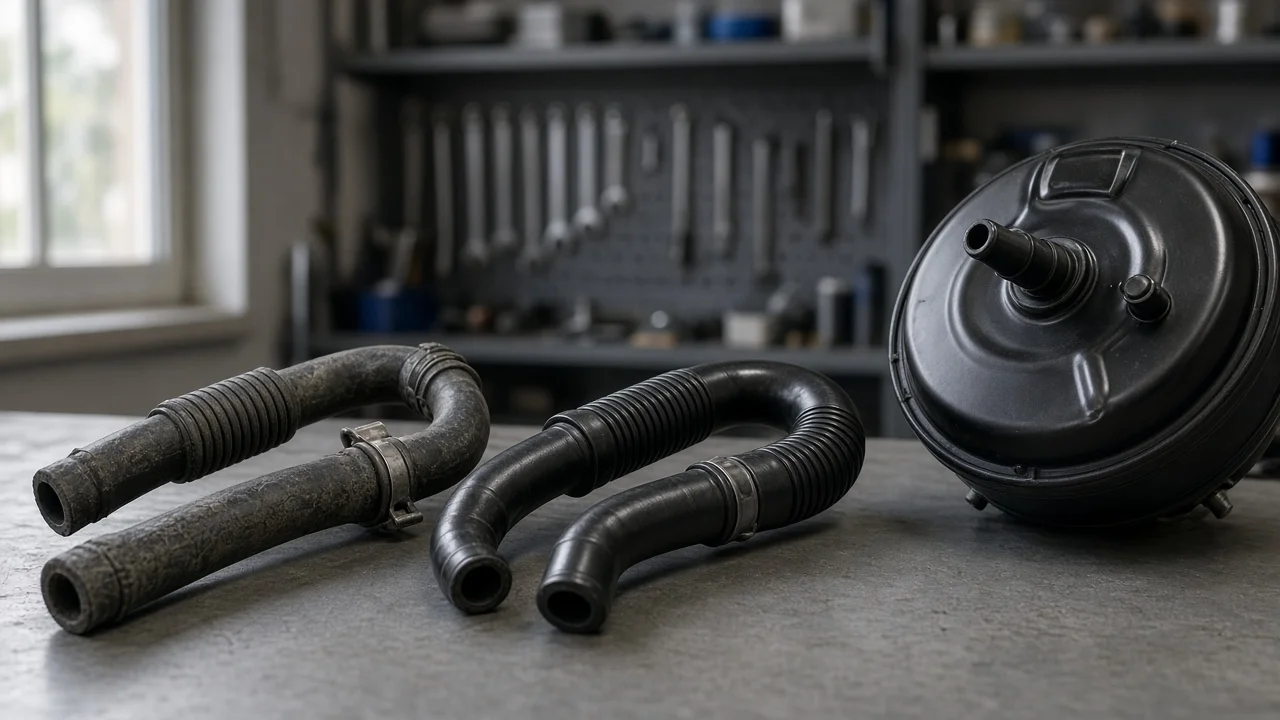
A cracked or collapsed brake booster vacuum hose on a Volkswagen can turn a light, predictable brake pedal into a hard one that takes far more effort to stop the car. The part itself is usually not the expensive side of a brake repair, but quotes vary widely because VW uses different hose routings, check valve designs and vacuum sources across engines and model years. This guide explains what a price should cover, what moves it up or down, and how to compare offers fairly.
What the estimate includes
The vacuum hose connects the brake booster to its vacuum source. On many gasoline engines that source is the intake manifold. On diesels and many turbocharged gasoline engines, an engine-driven vacuum pump supplies it instead. Many VW applications use a molded hose assembly with an integrated one-way check valve and quick-connect fittings. Others use a separate check valve pressed into a rubber grommet on the booster. So a parts price might cover only a hose section, a hose with its valve, or a complete assembly with clips and grommet.
Separate three kinds of figures: a parts-only price, an installed price, and a total that also covers diagnosis. A shop estimate may include confirming that the hose is the cause of a hard pedal, leak or smoke testing, a booster function check and a road test. Another estimate may cover only swapping the part. Replacing the vacuum hose does not open the hydraulic system, so brake fluid, brake pads, brake rotors and calipers are not part of this job. If a quote includes them, it covers a different scope and should be judged separately.
What changes the cost
Vehicle fitment matters most. Model, model year and engine code all affect which hose is correct. VW also supersedes part numbers over time, so two cars with the same model name can need different parts. Identifying the part by VIN avoids most mismatches. A molded assembly with an integrated check valve normally costs more than a plain hose section. However, on cars designed around a molded assembly, replacing only the rubber portion is often not a practical or reliable option.
The part source also moves the price. Choices include a genuine VW part, a part from an original-equipment supplier, and an aftermarket replacement. Labor depends on access. Some hoses run across the top of the engine and are reachable after removing the engine cover. Others route behind the intake or near the turbocharger and require removing other components first. Shop type and location affect the labor rate, so dealer and independent rates often differ. Finally, inspection may reveal a cracked booster grommet, a weak vacuum pump or a leaking booster diaphragm. These findings raise the total, but they are separate repairs, not part of the hose price.
Compare like-for-like options
The usual options are a genuine molded assembly, an equivalent assembly from another supplier, or universal hose cut to length with a separate check valve. Brake vacuum hose must hold vacuum without collapsing and resist oil vapor. The check valve must also face the correct direction. VW quick-connect fittings may not seal properly with generic hose and clamps. Because this hose is part of the braking system, generic heater hose or an improvised repair is not a suitable substitute, however cheap it looks.
Warranty belongs in the comparison too. Ask whether the parts warranty and the labor warranty are both included, and whether the shop warrants parts you supply yourself. Then confirm that each quote lists the same items, such as the check valve, grommet and clips. Each should also include the same associated work, such as diagnosis, a leak test and a road test. A lower quote that leaves out the valve or the verification is not a true saving.
Read an itemized quote
An itemized quote should show the part number and brand. It should also say whether the VIN was used to confirm fitment and whether the check valve and grommet are included. Look for labor time and labor rate as separate figures. Check whether a diagnostic fee is charged and whether it is credited toward the repair if you approve the work. Shop supplies, disposal or environmental fees, and taxes should each appear on their own line so you can see the full total.
Read the exclusions carefully. Many estimates state that additional faults, such as a failing vacuum pump, a leaking booster or other intake leaks, will be quoted separately. Ask the shop to get your approval before doing anything beyond the agreed scope. Sometimes a quote also includes unrelated brake work, such as pads or rotors whose friction material is near its wear limits. That work may be justified, but it should appear as separate line items so the hose repair cost stays easy to compare.
Decide the next step
Start by noting what you have noticed, such as a hard pedal, a hissing sound near the booster or a rough idle. Give the shop your VIN and ask it to confirm that the hose is actually the source of the problem. Request itemized quotes covering the same scope, and check the part type and warranty on each. Finally, approve any additional work in writing before it begins.
If the brake pedal suddenly becomes hard or the car needs much more force to stop, limit driving and arrange a professional inspection. The hydraulic brakes still work without vacuum assist, but much more pedal force is needed and stopping distances can increase. Avoid shortcuts such as taping a split hose, removing or bypassing the check valve, or plugging the line. Each of these can leave the brakes with little or no assist.