VW and Audi Coolant Specifications: G12, G13, G48 and Your Jetta
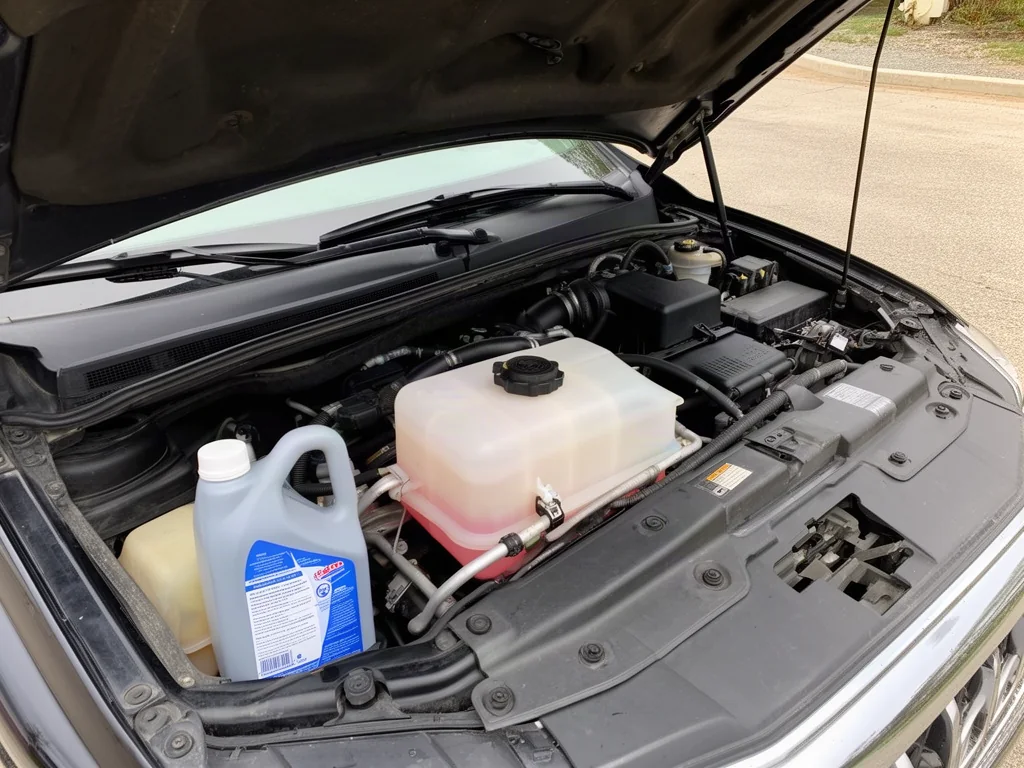
Choosing coolant for a Volkswagen, Jetta or Audi depends less on brand or color than on matching a documented specification. Volkswagen Group vehicles call for coolant that meets a specific VW TL 774 standard, and the familiar G12, G13 and G48 names point to different formulations. This guide covers how to find the right approval, read bottle labels carefully and handle top-offs safely.
Find the Coolant Specification for Your Volkswagen or Jetta
The Jetta badge doesn't tell you which coolant belongs in the system. Volkswagen has changed its coolant requirements over the years, and the approved fluid for a given car depends on its documented specification, not the model name. For a reliable lookup, gather the model year, the engine code or description and the market the car was built for. When engines or production changes overlap within a model year, the VIN lets a dealer or service database pin down the exact requirement for that specific vehicle.
The owner's manual or maintenance booklet usually names the required VW TL 774 designation. Vehicle-specific service information shows whether a newer product has since been approved as a replacement. Treat other clues with caution. Markings molded into the coolant expansion reservoir show what the part was designed around, not necessarily what is in it today. Color varies between brands and fades with age, and an old receipt can't confirm what later top-offs added. Only documentation tied to the car establishes the requirement.
Read G12 Family Labels and G12 Evo Approvals
G12, G12+, G12++ and G12 Evo sound like small revisions of one product, but they are separate designations tied to different formulations and approaches to corrosion protection. A jug that simply says G12 somewhere on the label isn't enough. What matters is the complete specification, because the aftermarket often uses the family name loosely. A product described as compatible with G12 is not the same as one with a documented Volkswagen approval for the exact standard your car requires.
Read the back label for the full VW TL 774 designation, including the suffix letter, and look for an explicit statement of coolant approval rather than vague phrases like suitable for. Wording such as engine coolant or radiator coolant describes the same fluid circulating through the whole system. There is no separate approved product for each component. If you plan to use G12 Evo or another G12 family product in place of an earlier fill, check vehicle-specific service information to confirm the substitution is approved for your car.
Confirm Whether G13 Is Approved for Your VW
A G13 label means the coolant is intended to meet a particular Volkswagen standard in the TL 774 series, one that followed the earlier G12 family formulations. That doesn't make it the right choice for every Volkswagen. Some vehicles were filled with other specifications at the factory, and later guidance may call for something else. To confirm suitability, compare the approval your vehicle documentation requires with the specification printed on the product. Make sure the bottle states an actual manufacturer approval rather than a general claim.
Some owners see G13 molded or printed on the coolant expansion reservoir and assume that settles it. If current service information for your car lists an approved replacement, that guidance takes priority over the older marking, because reservoirs aren't updated when requirements change. Likewise, a familiar color, a well-known brand or a label promising compatibility with European vehicles proves nothing about approval. Those broad claims often cover many manufacturers' specifications at once, and they may not match the exact standard Volkswagen documents for your engine.
Verify the Required Coolant for an Audi
Audi owners follow the same process with their own documentation. Start with the model, model year and engine, then check the owner's manual or maintenance records for the required coolant specification. An Audi dealer or a service database can use the VIN to confirm whether that requirement still applies or has been replaced. G13 is a good choice for an Audi only when the car's documented requirement or current replacement guidance supports it, not just because Audi and Volkswagen share a parent company.
Volkswagen Group brands use common terminology, but that shared vocabulary doesn't mean one coolant fits every Audi. Platforms, engines and build years differ, and so do their requirements. If the installed coolant or an earlier replacement approval isn't documented, ask your service provider specific questions. Which specification does the car require? Which product did they use last? Was it a full exchange or a top-off? Does their guidance come from the manufacturer's service information? Clear answers help you avoid mixing fluids later.
Check G48 Approval Before Using It in a Volkswagen
G48 is another Volkswagen Group designation, and seeing it on a bottle doesn't show that it belongs in your Volkswagen or Audi. The same logic applies as with G12 and G13. What counts is the exact manufacturer approval documented for that product and the requirement documented for your vehicle. If the two match, or current service information approves that product as a replacement, you have good grounds for using it. Without that match, the name alone isn't evidence.
It's tempting to assume an older car can take any coolant from the same family, that a familiar color means the right chemistry or that a label listing dozens of makes covers yours. None of these replaces checking the specification. Additive packages affect how well coolant protects aluminum, seals and heater cores over time. If a bottle doesn't show clear approval information, set it aside. Ask the maker or seller for the product's technical documentation, and confirm it suits your vehicle before adding it.
Handle Mixing Questions, Unknown Coolant and Low Levels Safely
Whether a coolant is approved as a replacement fill and whether you can mix it with what's already in the system are separate questions. A product can be approved for a full exchange without any guidance allowing it to be combined with a different coolant, so look for the manufacturer's direction on mixing. Before topping off, wait until the engine is fully cold. Check the coolant level against the reservoir marks, look for crusty residue around the cap or hoses and review your coolant service history.
Appearance can't prove chemical compatibility, so treat an unknown mixture with caution. Premixed coolant is labeled ready to use, while concentrate must be diluted according to the vehicle and product instructions, so read both before preparing a fill. If you're unsure what's in the system, keep losing coolant or see signs of contamination such as oil or sludge, have a professional look at it. Never open a hot, pressurized reservoir, because scalding coolant can spray out. If the temperature warning comes on or the gauge climbs, pull over safely and turn off the engine.