VW ABS Wheel Speed Sensor Prices: Choosing a Replacement Part
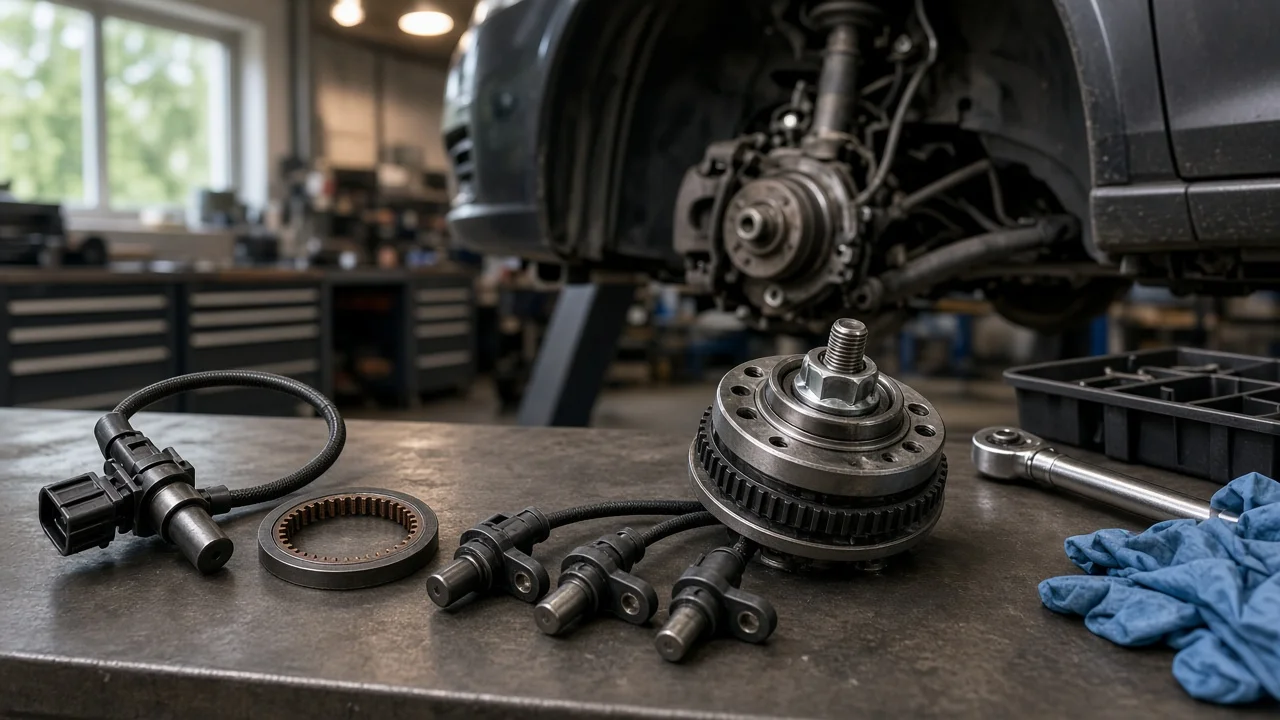
An ABS warning light on a Volkswagen often points owners to a wheel speed sensor. The sensor is one of the less expensive parts of the braking system. The final bill still depends on whether the sensor is really at fault, which corner of the car it serves, how easily it comes out and what else the shop adds. This guide explains how to read a VW ABS wheel speed sensor price, compare parts fairly and avoid buying the wrong one.
What the estimate includes
A wheel speed sensor quote can mean three different things. A parts-only price covers the sensor alone, sometimes with a new mounting bolt. A replacement estimate adds labor: removing the wheel, unplugging and routing the harness, taking out the old sensor and fitting the new one. A complete repair total also includes diagnosis and any extra work found once the wheel is off. It should also cover a final scan to clear codes and a test drive confirming that all four sensors report sensible speeds.
Keep those levels separate before you compare ABS wheel speed sensor cost between sources. A low parts figure from a retailer cannot be compared directly with a shop's out-the-door number. A shop's labor-only figure may also assume that you supply the part. Ask each source which level its number represents and whether tax, shop supplies and the diagnostic fee are included.
Confirm the fault and the exact part
The ABS light alone does not show which sensor has failed, or whether any sensor has failed. A scan tool that reads ABS module codes and live wheel speed data should point to a specific corner. The cause can be the sensor, its wiring or connector, a damaged or contaminated encoder ring, or excessive wheel bearing play. Replacing a good sensor will not cure any of those. If the red brake warning light is also on, the pedal feels different or the brake fluid level is low, stop driving and have the brakes inspected before thinking about part prices.
Once the corner is known, match the part to the car rather than to the model name. Front and rear sensors are usually different, and left and right can differ too. The correct part number can change with model year, platform, engine and brake package. A 2011 VW Jetta shows the risk. That year was sold as a sedan on a newer platform and as a SportWagen carried over on the earlier one, and some trims used different rear brake hardware. As a result, listings for a 2011 Jetta ABS wheel speed sensor do not fit every car sold under that name. Confirm vehicle fitment with the VIN, or read the number printed on the old sensor.
What changes the cost
The part price varies mainly by source and position. Genuine dealer parts, sensors from the original equipment manufacturer sold in its own packaging, and aftermarket units fall into different price ranges. A rear sensor may also be priced differently from a front one on the same car. Some sensors come with a section of integrated harness or a new clip, which raises the price but can save a separate wiring repair.
Labor is where estimates differ most. On many Volkswagens the sensor is held by a single bolt in the steering knuckle or rear carrier, and a clean swap is quick. Corrosion changes that. A sensor seized in its bore may break during removal and need careful drilling or cleaning, and occasionally further work on the knuckle or hub. Where the encoder is built into the wheel bearing, a damaged ring means replacing the hub or bearing. That job involves removing the caliper and rotor and turns a modest repair into a much larger one. Local labor rates also move the total, as does whether the road test and code clearing are billed separately.
Compare like-for-like options
Compare offers only on the same scope. A dealer quote might include diagnosis, a genuine part and a post-repair road test. An independent shop quoting only the part and fitting is not cheaper in a meaningful sense, even if its number is lower. Before deciding, line up the same corner, the same part category, the same labor items and the same warranty on parts and workmanship.
For the part itself, the safest saving is usually a sensor from a reputable supplier that is listed for your exact VIN or original part number. Very cheap unbranded sensors can have weak connectors or inconsistent signals. These can bring the warning back or cause erratic ABS or stability control intervention. Used sensors save little and carry the same corrosion and connector history as the one you are removing. Splicing in a sensor from a different model or bypassing the warning is not a repair, because anti-lock braking and stability control depend on accurate wheel speed readings.
Read an itemized quote
A useful quote names the wheel position, the part number and brand, and whether the part is genuine, original equipment or aftermarket. Labor should appear as hours or a flat charge with the rate stated. Diagnosis should be listed separately or noted as credited toward the repair. Look for a line covering the scan, code clearing and test drive, and for the warranty terms on both part and labor.
Then check the exclusions. Many shops quote a straightforward swap and add charges if the old sensor is seized, the bolt snaps or the harness needs repair. Ask how those cases are priced and whether the shop will call you before going ahead. Wheel bearing or hub work, encoder ring replacement and any brake work should each be a separate, clearly justified item. While the wheel is off, a technician may report brake pads with little friction material left or rotors near their wear limits. That is worth knowing, but it is a separate decision and should be quoted on its own rather than folded into the sensor price.
Decide the next step
Start with a proper diagnosis. Get the stored ABS codes and, ideally, live wheel speed data so the faulty corner and the cause are confirmed. Decode the VIN or read the old sensor's number to identify the exact part. Then request itemized estimates at the same scope from two or three sources, and ask each how it would handle and charge for a seized sensor or damaged wiring.
Fitting a sensor yourself is reasonable if you have the correct part, can remove the old one without damage and have a scan tool to clear codes and check the readings. Follow the service information for your model, including torque values and routing the harness away from moving suspension and hot brake components. Avoid guessing parts from the warning light, clearing codes without a repair, or using sensors from other models. If braking feels abnormal or a red brake warning appears, stop using the vehicle and arrange professional service.