Volvo XC90 Parking Brake Shoes: Fitment and Selection
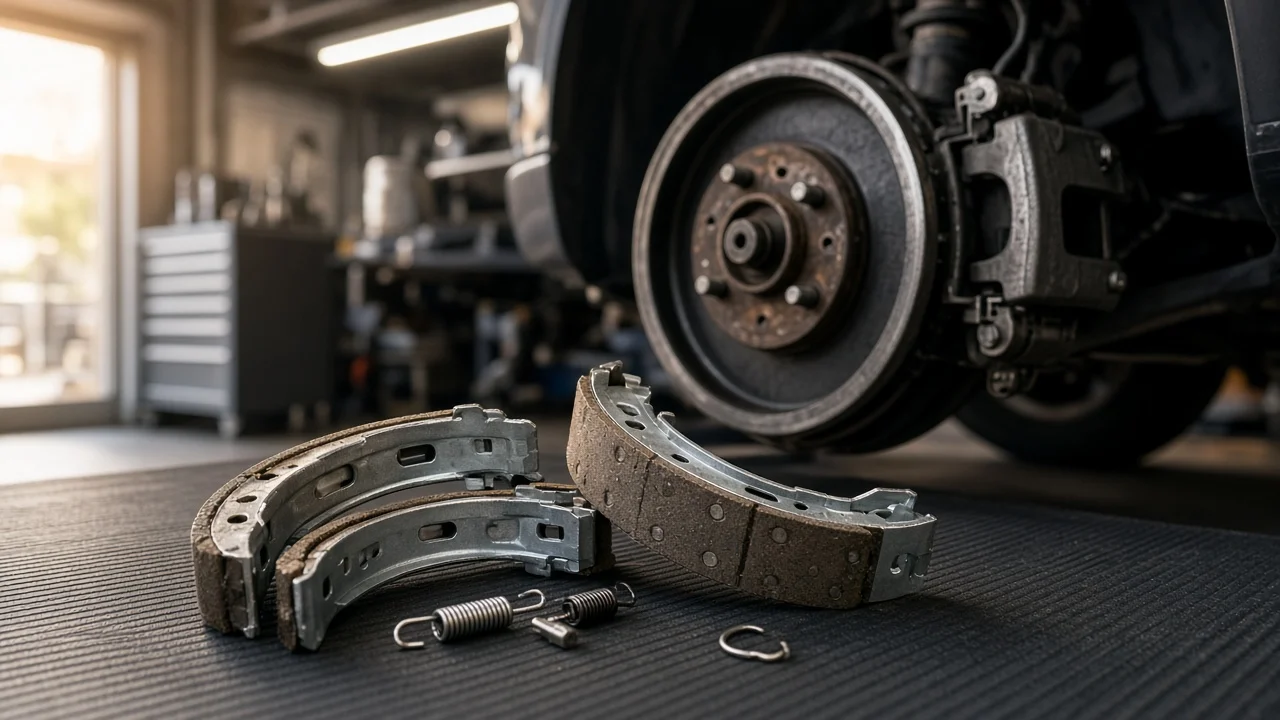
On a first-generation Volvo XC90, the parking brake does not use the rear brake pads. It relies on a small pair of shoes in each rear wheel that expand inside a drum machined into the hat of the brake rotor. If the vehicle creeps on a slope with the brake set, or the pedal travels further than it used to, worn or contaminated shoes are a likely cause. This guide covers how to confirm you need new shoes, match the correct set and judge what you are buying.
Define the job the product must do
A parking brake holds a stationary vehicle. It is not meant to stop one in motion. On the first-generation XC90, sold in the US from roughly the 2003 through 2014 model years, a foot pedal pulls cables to the rear wheels, where the shoes press outward against the inner drum surface of each rotor. Because they do almost no dynamic braking, these shoes usually outlast several sets of brake pads. When they fail, the cause is more often rust on the drum surface, a seized adjuster or cable, grease or fluid contamination, or wear from driving with the brake partly applied.
Pin down the symptom before you order parts. A brake that holds weakly while the shoes still have plenty of friction material may only need adjustment or a freed-up cable. Grinding from the rear when the brake is applied, lining that has cracked or separated from the shoe, or a deeply scored drum surface points to replacement. Note that the second-generation XC90, introduced for the 2016 model year, uses an electric parking brake with motors on the rear calipers that clamp the brake pads. It has no parking brake shoes, so this part does not apply to those vehicles.
Check compatibility
Confirm vehicle fitment by VIN, not by model name alone. Within the first generation, rear brake sizes can differ by engine, model year and brake package, and a shoe set made for one drum diameter will not adjust correctly in another. Run the VIN through a parts catalog or a dealer parts counter to get the original part number. Then compare the listing against that number and its stated dimensions, especially shoe diameter and lining width. A listing that names only the model and a broad year range is not enough confirmation on its own.
Several interfaces have to line up. The shoes locate on the backing plate with hold-down pins and springs, connect to the cable through the actuating lever, and are spread apart by a star-wheel adjuster. Check whether a product is shoes only or a kit with return springs, hold-downs and an adjuster. Also inspect the rotor. Because the drum is part of the rotor hat, measure its inner diameter against Volvo's wear limits for your vehicle. If it exceeds the maximum, is badly scored or has worn a lip, new shoes will not seat properly, and the brake rotors should be replaced as an axle pair.
Features that affect the choice
The friction material and how it is attached matter more than any label on the box. Look for lining that is bonded or riveted fully to the steel shoe with no visible gaps, clean chamfered edges, and a corrosion-resistant finish on the shoe web, since rust under the lining can lift it over time. Terms such as ceramic, performance or heavy duty say little about a brake that mostly works while the vehicle is parked. Useful evidence includes a cross-reference to the Volvo part number, published dimensions, and a manufacturer with a track record of supplying original-equipment parts.
The biggest practical difference is whether you buy shoes alone or a complete hardware kit. Springs lose tension and adjusters seize from road salt and moisture, and the shoes sit behind the caliper and rotor, so most of the cost of the job is getting to them. Fitting new springs, pins and a freely turning adjuster at the same time avoids taking the rear brakes apart twice. Reusing old hardware makes sense only if it is clean, straight and fully functional.
Limitations and ownership costs
Replacement involves removing the rear caliper and its bracket, hanging the caliper so the flexible hose carries no weight, and pulling the rotor, which is often rusted to the hub. The hydraulic system normally stays closed, so the brake fluid is not disturbed. If a hose or caliper is damaged or opened during the job, the system will need bleeding. Spring and hold-down tools make the work easier, and the caliper bracket bolts must be torqued to the value in the service information. The shoes themselves are usually inexpensive. The labor, and any rotors found to be beyond their limits, usually make up most of the bill.
Setup is part of the job. New shoes must be adjusted at the star wheel, usually reached through an access hole in the rotor hat, before the cable is adjusted. Then follow the bedding-in procedure in the service information so the lining conforms to the drum. Skipping these steps is a common reason a brand-new set still holds poorly. Shoes also have clear limits. They will not fix a stretched or seized cable, a faulty pedal mechanism or a corroded drum surface, and they have no effect on the service brakes or on noises coming from pads and rotors.
Build a practical shortlist
Narrow the options with a short set of checks. Confirm that the part number matches your VIN-derived original and that the listed diameter and width agree with it. Decide whether you need a full hardware kit, based on the condition of your springs and adjuster. Measure the drum section of each rear rotor against its wear limit before ordering, so you know whether rotors, and usually new pads, belong in the same order. Prefer shoes with sound lining attachment and corrosion protection over marketing claims. Finally, check the seller's return terms in case fitment differs, and keep the receipt for any warranty claim.
If the parking brake will not hold the vehicle at all, if a brake warning light is on, or if inspection turns up damaged caliper hardware, a leaking hose or heavy rotor corrosion, stop relying on the brake. Park on level ground, chock the wheels and have the system checked by a qualified technician before driving the vehicle further.