Volvo Parking Brake Service Mode: What It Is and When You Need It
The short answer
On Volvo models fitted with an electronic parking brake (EPB), service mode is a maintenance state that retracts the electrically driven rear caliper mechanism and keeps the parking brake from applying while work is carried out. It is generally needed before replacing rear brake pads or discs. On these vehicles the parking brake is applied by an electric motor at each rear caliper, not by a cable and lever, so the caliper piston usually cannot simply be pushed back by hand the way it can on a conventional brake.
The main qualification is that the method for entering and leaving service mode depends on the model, model year and generation. Vehicles with a traditional handbrake or foot-operated cable parking brake do not have this mode at all.
Why service mode exists
An electronic parking brake replaces the handbrake lever with a switch. When the brake is applied, a motor-driven spindle inside each rear caliper pushes the piston against the pads. To fit new, thicker pads, the spindle must be wound back first. Service mode commands the motors to do that and stops the system from reapplying the brake automatically during the job, for example when the car is switched off or a door is opened.
Forcing the piston back without retracting the mechanism risks damaging the caliper motor or spindle, and it can trigger parking brake fault messages.
How service mode is typically accessed
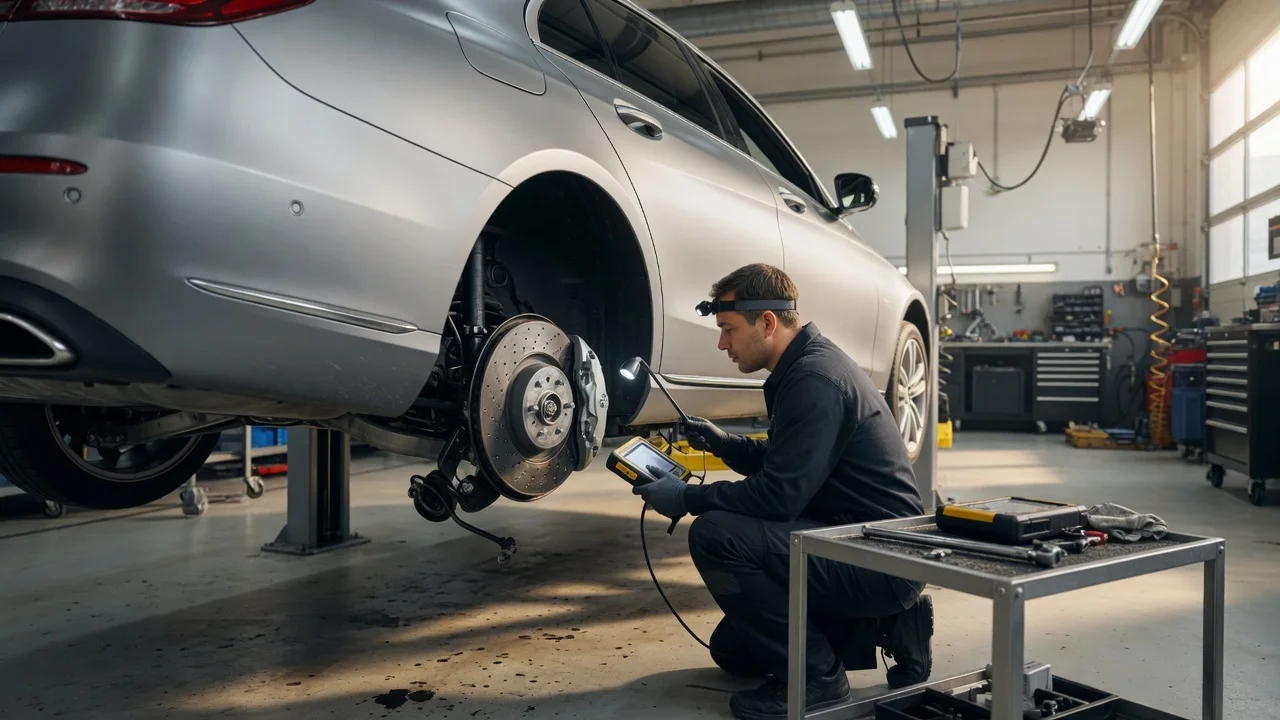
Diagnostic tool: Volvo workshop software, or an aftermarket scan tool that supports Volvo EPB functions, can command the calipers to retract and later reapply. Vehicle-based procedure: some models may offer a way to enter service mode using the vehicle's own controls or menus, without an external tool. Whether this is available, and the exact sequence, varies by model and year. Exiting service mode: after the work is complete, the system has to be taken out of service mode so the calipers reapply and recalibrate. Leaving this step out can leave warnings active or the parking brake unable to work correctly.
Practical precautions
Secure the vehicle with wheel chocks before starting, because the parking brake will not hold the car while it is in service mode. Confirm that the calipers have actually retracted before compressing the pistons or removing the pads. After exiting service mode, check that no parking brake or brake system warnings remain, and test the parking brake before driving. If a fault message appears or the calipers do not respond, a diagnostic check is the safer next step rather than repeating the procedure.
Gaps to check for your specific Volvo
This guide does not include a verified step-by-step button or menu sequence for any particular Volvo model, and it does not list which models or years support entering service mode without a tool. Those details depend on generation and model year, and they are not covered by the information available here. Before starting, check the owner's manual or Volvo service information for your exact vehicle, or confirm that your scan tool lists EPB service functions for that model.
Bottom line
If your Volvo has an electronic parking brake, plan on putting it into service mode before any rear pad or disc work, and taking it back out once the job is done. Whether you can do that through the car itself or need a diagnostic tool depends on the model year, so verify the correct procedure for your vehicle first.