Volvo Check Engine Light: Potential Causes and Next Steps
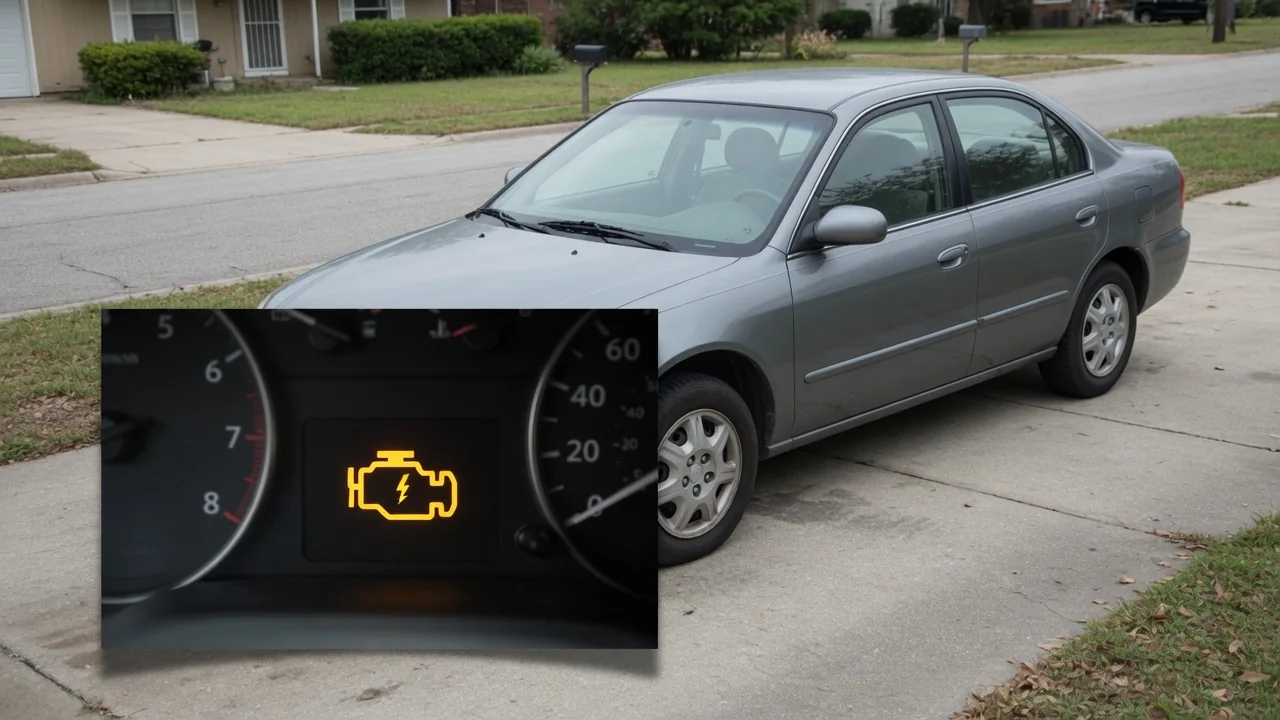
A check engine light on Volvo vehicles is the malfunction indicator lamp that reports a detected engine-management or emissions concern. The warning does not name a failed part, so the same lamp Volvo drivers see can still point to several systems. Interpreting a Volvo check engine light starts with how it behaves, what other messages appear, and what the engine is doing while you arrange informed diagnosis.
What an Illuminated Check Engine Light Means in a Volvo
When a Volvo check engine light comes on, the engine control module has stored a condition related to combustion, fueling, air measurement, or the emissions system. The engine-shaped malfunction indicator lamp is only a flag, not a diagnosis. It cannot tell you whether the issue is a misfire, a fuel-trim deviation, a catalyst monitor concern, or something else. Treating the symbol as proof of a failed sensor or ignition part skips the evidence the control module actually recorded.
Volvo instrument clusters also display service reminders, oil-change notices, and other warning symbols that can look urgent at a glance. The owner's manual for your model year is the reliable way to tell the engine-shaped check engine light from those messages. Engine family, transmission or hybrid layout, and any accompanying text change how the warning should be read, because the same lamp can report different monitored systems on different powertrains. Note the exact message and the vehicle's configuration before assuming a cause.
Symptoms That Require Stopping and Seeking Assistance
A flashing check engine light on a Volvo often means the control module has detected an active engine misfire. Unburned fuel can reach the catalytic converter and raise converter temperature enough to risk damage, so that flashing pattern deserves prompt attention rather than a wait-and-see approach. If the warning arrives with severe shaking, visible smoke, an overheating indication, a strong fuel smell, or a substantial loss of power, pull over when it is safe and seek assistance instead of continuing the trip.
A steady Volvo check engine light does not, by itself, tell you whether continued driving is safe. Driveability, other dashboard warnings, and the guidance in the owner's manual for that model year determine the next step. Even when the car seems to idle and accelerate normally, the stored condition can still involve emissions monitoring or a developing misfire that is not yet obvious. Arrange diagnosis promptly so freeze-frame data and related Volvo diagnostic trouble codes remain available for interpretation.
Potential Causes Behind a Volvo Check Engine Light
Ignition or fueling irregularities can produce misfire-related warnings without proving that a coil, spark plug, or injector has failed. The control module reports a cylinder that did not contribute as expected; the reason may be a spark event, a fuel-delivery issue, or a mechanical contribution that still needs testing. Intake leaks, air-metering faults, and fuel-mixture problems sit in a related group because they all disturb measured airflow or fuel trim. Those categories overlap in symptoms, so a rough idle or a lean or rich trim reading is a starting clue, not a parts list.
Oxygen-sensor feedback and catalyst-monitoring faults can also turn on a Volvo check engine light after a completed drive cycle. A stored oxygen-sensor or catalyst code means the module saw a response or efficiency condition outside its limits, not that the named part must be replaced. On vehicles with a removable fuel cap, an evaporative-emissions leak may be an unseated cap, though other EVAP paths remain possible. Use that explanation only when the vehicle has that sealing arrangement, then confirm the path with diagnosis.
Safe Observations to Record Before a Service Visit
Before a service visit, write down whether the check engine light on Volvo dashboards is steady or flashing, when it first appeared, and any accompanying messages. Note changes in idle quality, acceleration, starting, or fuel smell, and whether other warnings were present at the same time. Those details help a technician match freeze-frame data to the moment the malfunction indicator lamp set. A flashing pattern plus roughness, for example, points diagnosis toward misfire evaluation rather than a purely emissions-monitor concern.
Also record recent refueling, scheduled maintenance, and battery work, along with weather, speed, and load when symptoms occur, without treating those events as the proven cause. If the Volvo has a removable fuel cap, check that it is closed according to the owner's manual only while the vehicle is safely parked with the engine off. Preserve stored Volvo diagnostic trouble codes and warning history. Clearing codes or disconnecting the battery to extinguish the light can erase freeze-frame data that shows the operating conditions when the fault was detected.
How Diagnostic Testing Identifies the Actual Fault
Stored codes, pending codes, and freeze-frame data show the condition the control module detected and the engine speed, load, and temperature at that moment. They identify a monitored event, not a confirmed failed part. Each definition must be verified for the Volvo's model year, engine, and control module before anyone interprets it, especially manufacturer-dependent codes that do not match generic descriptions. A P-code that looks familiar on a generic chart can mean a different circuit or monitor strategy on a particular Volvo powertrain.
A generic reader may retrieve emissions-related codes, yet relevant Volvo-specific information, bidirectional tests, and module data often require a Volvo-capable scan tool. Professional diagnosis then tests the implicated system, such as ignition contribution, fuel trim, air metering, oxygen-sensor response, catalyst monitoring, or evaporative sealing, rather than replacing the first named component. After a repair, verification includes confirming the original condition is gone and that the appropriate monitors can complete. That sequence turns the Volvo check engine light into a documented finding instead of a guess.