Volvo Check Engine Light: Causes and Diagnostic Next Steps
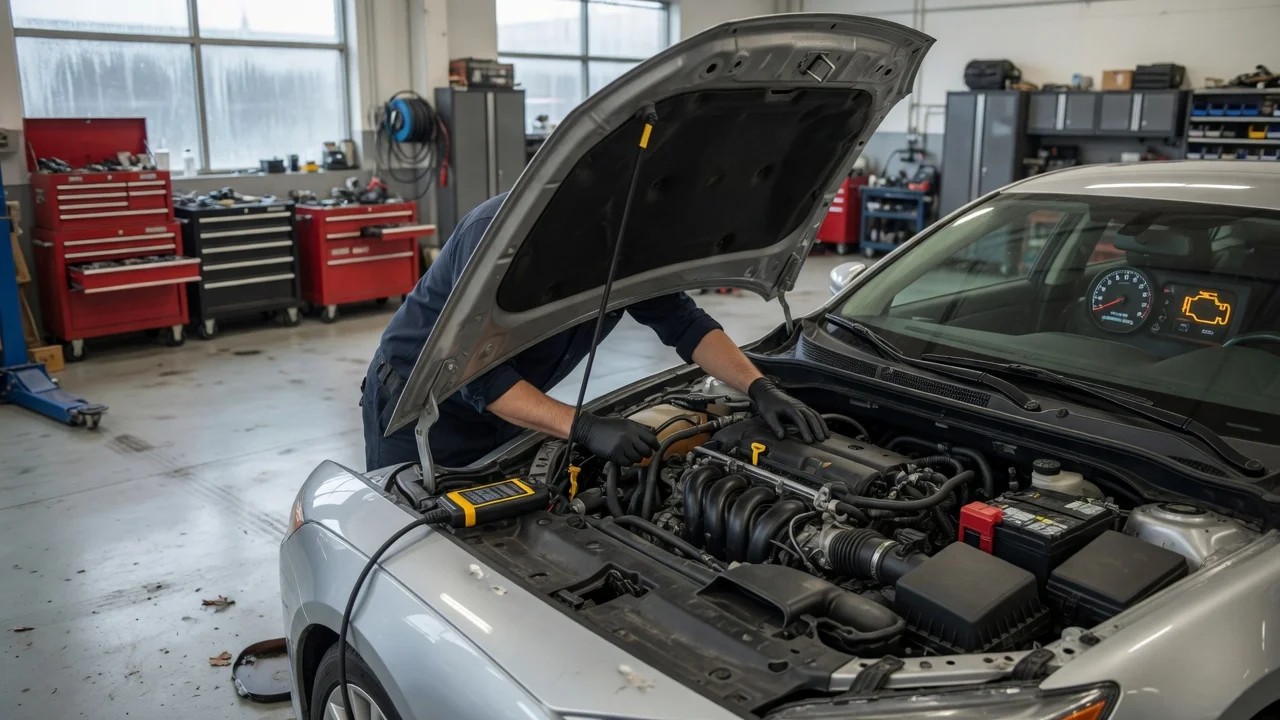
What the Volvo check engine light means
The Volvo check engine light is an emissions and engine-management warning. It appears as an engine-shaped symbol on the instrument panel and indicates that a control module has recorded a fault affecting engine operation, emissions, fueling, ignition, or a related sensor. The light does not identify a failed part by itself; it tells you that a diagnostic trouble code has been stored and should be investigated.
A steadily illuminated check engine light usually means the vehicle can continue to be driven cautiously, but the fault should be checked soon. A flashing check engine light is treated as a more serious warning because it can indicate a misfire severe enough to damage the catalytic converter. In that condition, reduce load and have the vehicle diagnosed promptly.
The exact behavior can vary by Volvo model year, generation, powertrain, trim, and market. Older models and newer SPA-platform vehicles may present warnings differently, so the instrument-panel appearance should be confirmed in the applicable owner's manual.
Start by reading the diagnostic trouble code
The most useful first step is to retrieve the stored diagnostic trouble code. A code is evidence to investigate, not proof that one component has failed. The same code can have several causes, and multiple codes may be present at the same time.
Volvo vehicles use the OBD-II standard for emissions-related diagnostics. The diagnostic connector is normally located under the dashboard on the driver's side, but the exact position varies by model and market. A scan tool or code reader can retrieve current and pending codes.
Steps for reading and beginning diagnosis: • Record all current and pending codes before clearing anything. • Note freeze-frame data such as coolant temperature, engine speed, and load when available. • Research the specific code for the applicable Volvo model, year, and engine. • Inspect the relevant circuit, connector, sensor, or component before replacing a part. • Clear codes only after the fault has been addressed, then drive the vehicle to confirm that the code does not return.
Common Volvo check engine light causes
Many check engine light faults are shared across gasoline and diesel Volvo models, while others are more specific to a particular engine family or generation. A stored code narrows the investigation, but the fault still needs to be confirmed with observable checks.
Loose or missing fuel cap
On many models, a loose, damaged, or missing fuel cap can allow evaporative emissions to escape. The cap should be checked first if it was recently removed. If the cap was not fully tightened, securing it may allow the light to clear after a complete drive cycle, rather than immediately.
Oxygen sensors and air-fuel ratio sensors
Oxygen or air-fuel ratio sensors monitor exhaust content and help the engine control mixture and catalyst efficiency. A faulty sensor can set a check engine light, but the sensor should not be replaced without checking its circuit, heater operation, and live data, since a wiring or exhaust problem can produce a similar code.
Mass airflow sensor
A contaminated or faulty mass airflow sensor can produce incorrect airflow values, affecting fuel trims and driveability. Diagnosis should compare reported airflow with expected values and consider intake leaks or contamination before replacing the sensor.
Ignition coils and spark plugs
On gasoline engines, misfire codes can result from worn spark plugs, a failing ignition coil, or related wiring. The code should be matched to a specific cylinder where available, and the affected component inspected or swapped only as part of a controlled diagnostic test.
Catalytic converter and exhaust system
Catalyst efficiency codes can indicate a failing converter, but exhaust leaks, sensor problems, or an untreated misfire can also be involved. The converter should be evaluated with live data and physical inspection rather than replaced on the code alone.
Evaporative emissions system
Evaporative system codes can point to a leak, purge valve, vent valve, or related hose. Small leaks may require smoke testing or specific test routines to locate. The fuel cap is only one part of this system.
Intake and vacuum leaks
Unmetered air entering the engine can create lean mixture codes and rough running. Cracked hoses, loose clamps, or intake gasket leaks should be considered, especially on older vehicles with aging rubber and plastic components.
Diesel-specific faults
Volvo diesel models can set the check engine light for faults in glow plugs, diesel particulate filter regeneration, exhaust gas recirculation, or fuel-system pressure. These systems require the applicable Volvo diagnostic procedures and should not be treated as identical to gasoline-engine faults.
When to stop driving or seek professional diagnosis
A flashing check engine light, repeated severe misfiring, loss of power, overheating, unusual smoke, or strong fuel odor should be treated as conditions that require immediate attention. Continuing to drive with a severe misfire can damage the catalytic converter and raise repair cost.
If the vehicle is not driveable, shows multiple serious codes, or the cause is not identifiable with available tools, professional Volvo diagnosis is the appropriate next step. Dealer-level or Volvo-specific diagnostic equipment may be needed for some module faults, especially on newer vehicles.
A fault code is a starting point, not a parts list
A common ownership mistake is replacing a part because its name appears in a trouble-code description. A code indicates the circuit or system that detected a problem, and the cause may be a failed sensor, a wiring fault, a connection issue, or a condition elsewhere in the engine. A repeatable diagnosis using the applicable Volvo service information is the most reliable way to avoid replacing the wrong component.
Diagnostic next steps
Begin with the stored code and freeze-frame data, then perform the checks that apply to the indicated system. Record the code, inspect the related wiring and connections, confirm the fault under live data where possible, and replace a component only after the diagnosis supports it. After repair, clear the codes and complete a normal drive cycle to allow the vehicle to run its monitors and confirm that the light remains off.
Where manufacturer-specific procedures, torque values, or test specifications are needed, Volvo service information should be used. Vague faults, intermittent faults, and module-level issues may require professional equipment, and an unsupported guess should not be presented as a confirmed diagnosis.