Volvo 850 Brake Booster Vacuum Hose: Choosing the Correct Part
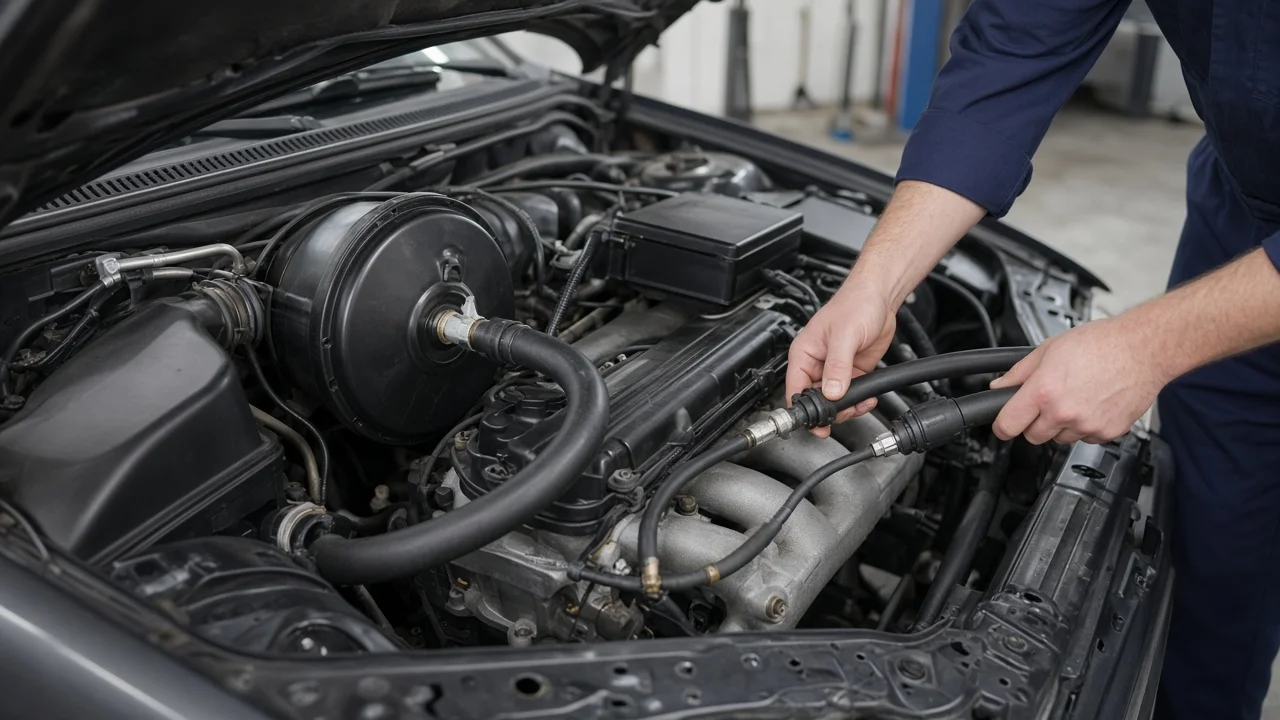
A cracked, collapsed or oil-soaked vacuum line between the intake manifold and the brake booster is a common reason a Volvo 850 develops a hard brake pedal or a hiss near the booster. Choosing a replacement is mostly a fitment exercise, but the check valve, hose construction and engine variant all matter. This guide covers what to confirm before ordering, which features deserve attention, and when the fault is not the hose at all.
Define the job the product must do
The booster uses engine vacuum to multiply the force your foot applies to the master cylinder. The hose delivers that vacuum from the intake manifold, and a one-way check valve keeps vacuum stored in the booster when manifold vacuum drops, such as under hard acceleration or after the engine stops. On turbocharged engines the valve also keeps boost pressure out of the booster. A replacement therefore has to seal at both ends, resist collapsing under vacuum, tolerate engine bay heat and oil vapor, and work with a check valve that holds in one direction only.
Confirm the symptom before buying. Typical signs of a vacuum leak are a firm pedal, especially on the first stops after a cold start, a hiss that changes when you press the pedal, and an idle that stumbles while braking. A simple check: with the engine off, pump the pedal several times to use up stored vacuum, hold light pressure, then start the engine. The pedal should sink slightly as assist returns. If it does not, the supply side is suspect. A pedal that slowly sinks to the floor or a brake warning light points to a hydraulic problem instead; in that case stop driving the car and have it inspected.
Check compatibility
The 850 was built over several model years with naturally aspirated and turbocharged five-cylinder engines, in left- and right-hand-drive versions, and hose routing or check valve arrangements can differ between them. Confirm vehicle fitment using the VIN, model year, engine variant and steering side, then cross-reference the part number in the vehicle's service information or a parts catalog. Treat a generic "fits 850" listing with caution, especially when it lumps the 850 together with later models; check that the exact years and engines are named.
Next, compare the interfaces on your car with the part on offer: the manifold connection, the location of the check valve (inline in the hose or at the booster), the rubber grommet where the line enters the booster shell, and any tee feeding other vacuum consumers. Put the old hose next to the listing photos and compare overall length, bends and end sizes. Do not guess the inside diameter; use the catalog specification or measure the original part, because a loose end will leak and an oversize hose clamped down tightly may still not seal.
Features that affect the choice
Preformed, molded hoses hold their shape around tight bends and are less likely to kink than a straight length of bulk hose. If you use bulk hose, it must be rated for brake booster vacuum service. Heater or fuel hose can look similar but may soften, collapse under vacuum or deteriorate from oil vapor, which defeats the purpose of the repair. Reinforced construction helps a hose keep its bore when the engine produces strong vacuum at idle and on overrun.
Decide whether you want a hose with an integrated check valve or a separate valve. A new valve is sensible on an old car, since a sticking or leaking valve produces the same symptoms as a cracked hose. Install it according to the flow marking, which normally points toward the intake manifold. Labels such as "heavy duty" or "OE quality" are marketing language. More useful evidence includes a cross-reference to the original part number, a stated hose material, a clear fitment table, and whether the valve, grommet or clamps are included.
Limitations and ownership costs
Replacing the hose is usually straightforward with basic hand tools, but do the job properly. Inspect the manifold fitting for cracks, replace the booster grommet if it is hard or loose, and route the new hose away from hot exhaust parts and sharp edges. Afterward, repeat the pedal test and listen for hissing with the engine running. The hose itself is inexpensive compared with other brake work, but a low-grade part that hardens quickly can turn a single repair into a recurring one. If a new hose soon becomes oily, have the crankcase ventilation system checked, because oil contamination shortens the life of rubber vacuum lines.
A new hose only restores vacuum supply. It cannot fix a leaking booster diaphragm, a failing master cylinder, low or contaminated brake fluid, a sticking caliper, contaminated friction material, or brake pads and brake rotors worn past the wear limits in the service information. Those faults bring their own symptoms, such as pulling, noise, vibration or a soft pedal, and they need separate diagnosis. If assist does not return after the hose and valve are replaced, or braking feels unsafe at any point, stop using the car and have the brake system serviced by a professional.
Build a practical shortlist
Before ordering, run each candidate through a short checklist. Is fitment confirmed for your model year, engine variant and steering side, ideally by part number? Does the shape, length and end sizing match the original? Is a check valve included, and if not, is your existing valve known to hold vacuum in one direction only? Is the booster grommet included or available separately? Is the hose material suitable for brake vacuum service? Does the seller describe fitment clearly and accept returns if the part does not match?
Parts typically come from the vehicle maker, from original-equipment suppliers or from aftermarket brands. There is no universal best choice; the strongest candidate is the one with documented fitment for your exact car, an appropriate hose construction and a reliable check valve. Keep the old hose until the new one is installed and the brake assist test passes, so you can compare parts and return a mismatched one.