Volkswagen Jetta Cabin Air Filter Replacement
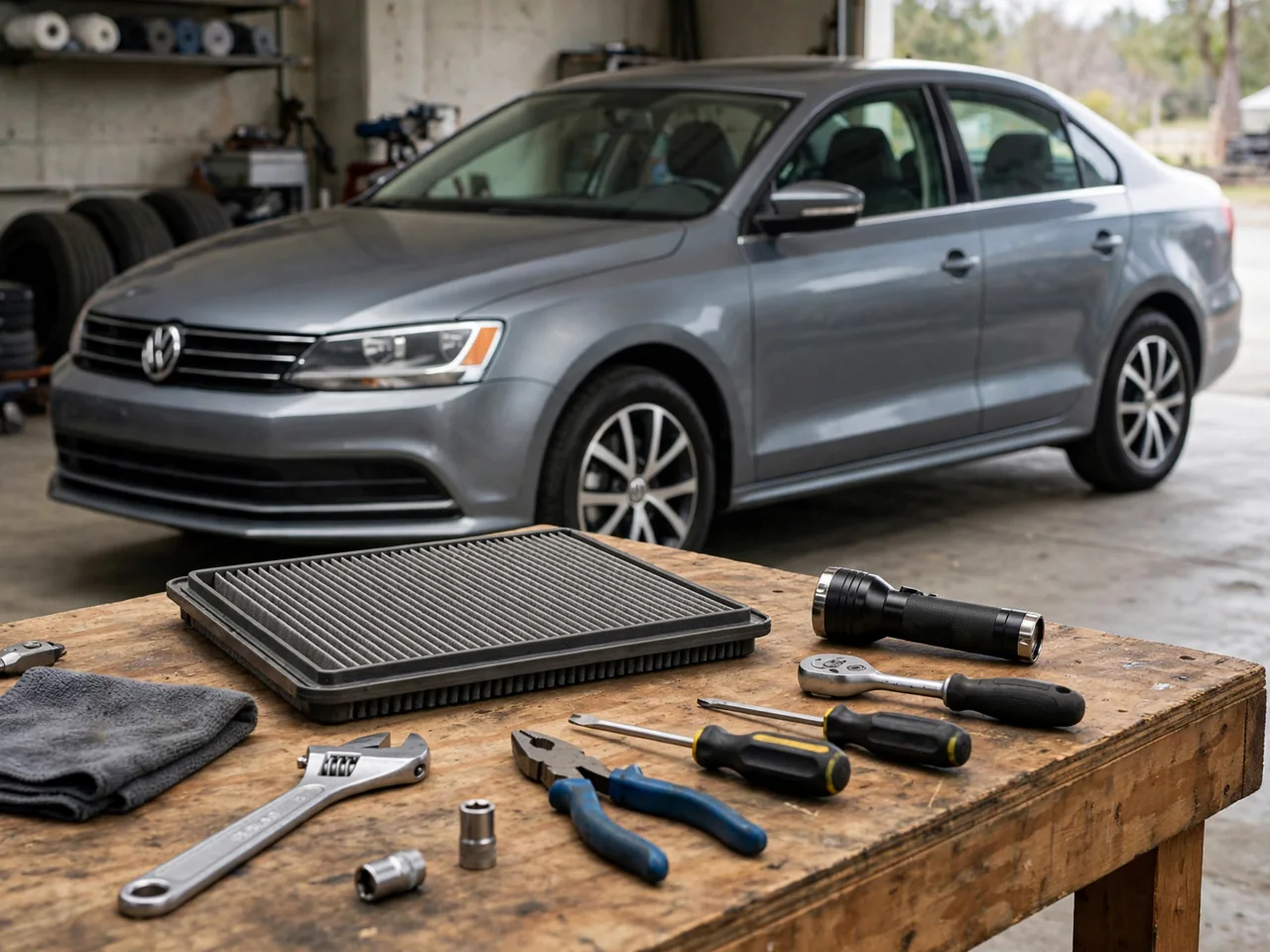
The cabin air filter for a Volkswagen Jetta, also called a passenger compartment filter, cleans air before the HVAC system delivers it to occupants. A VW Jetta cabin air filter change stays simple once the model year is confirmed, the filter housing is identified, and the vehicle's access method is followed. Fitment, safe replacement, and the maintenance schedule then decide whether the media is due, not a generic mileage rumor or a look-alike listing.
What the Jetta Cabin Air Filter Does
The passenger compartment filter sits in the HVAC airflow path so outside air, and often recirculated air, must pass through the media before reaching the vents. As that stream moves through the pleats, the cabin air filter on a Volkswagen Jetta is meant to trap dust, pollen, and other airborne debris that would otherwise ride into the cabin. The filter does not create the airflow; the blower does. It only intercepts particles while air is already being drawn through the ventilation system.
Reduced vent airflow, a musty smell from the ducts, or a filter packed with visible debris are practical reasons to inspect a cabin air filter VW Jetta drivers can reach without guessing at deeper HVAC faults. Those clues are not exclusive to a clogged media pack. Restricted HVAC airflow can also come from a weak blower, blocked intake, or a mis-seated cover, while odors may follow moisture in the evaporator area. Replacing the filter does not diagnose refrigerant problems, blower faults, or water leaks, and those issues still need their own checks.
Confirm the Filter That Fits Your Jetta
Confirm the model year and the rest of the vehicle identity before selecting a Volkswagen Jetta cabin air filter. Jetta generations change housing size, cover design, and how the filter is reached, so a part that looks similar can still sit loosely or fail to seal. Use the owner's literature, a dealer or independent parts catalog, and the VIN when the catalog asks for it. Those sources identify the passenger compartment filter that matches the actual car rather than a look-alike description.
Once a candidate is in hand, compare it with the old element rather than assuming the box is right. Check overall dimensions, frame shape, edge seals, and media type against the removed filter and the housing opening. A particulate filter for a VW Jetta is intended to catch dust and similar solids; activated carbon media adds a carbon layer meant to reduce some odors and gases. That carbon layer does not promise complete odor removal, and a filter that is too thick, too thin, or missing a seal can leak unfiltered air around the pack.
Locate the Filter and Identify the Access Cover
Cabin filter location on a Jetta is not one universal spot. Model year and generation change whether the access cover lives behind a glove compartment component, under a passenger footwell panel, or at another HVAC housing opening, and the fasteners change with that layout. Before you name a panel or start prying, use a verified procedure written for that exact vehicle. A Volkswagen Jetta cabin air filter access method copied from a different generation can send you to the wrong trim and the wrong hardware.
Clear the passenger footwell and glove-box area so you can see the work, then switch the ignition and blower off so the fan cannot pull debris while the housing is open. A flashlight helps you identify the access cover, clips, and any nearby wiring without guessing by feel. If reaching the cabin air filter for Volkswagen Jetta service means disturbing wiring, moving unfamiliar modules, or forcing a panel that does not release with the documented method, stop. Resistance is a sign the procedure, the generation, or both do not match the car in front of you.
Remove and Install the Cabin Air Filter Safely
Release only the fasteners and cover named in the confirmed model-year procedure, and keep those pieces in order so they return to the same positions. Do not improvise extra clips or hidden screws. Before the old element comes out, note its orientation with a photo or a mark so the replacement can follow the same path. Withdraw the used filter gently from the Jetta filter housing so debris does not shower into the open duct. Pulling too quickly can dump dust onto the evaporator side of the case.
Remove only the loose debris you can reach in the accessible housing. Do not shove dirt deeper into the HVAC case, and do not spray cleaner or water into the ventilation system. Confirm airflow direction from the vehicle instructions and any housing markings before the new pack goes in. An airflow direction arrow shows which way the stream should pass through the media; an orientation mark such as UP is a different cue and is not interchangeable with that arrow. Seat the correct filter without crushing its pleats, then secure the cover and reinstall the trim you removed.
Determine When Your Jetta Needs a New Filter
The replacement interval belongs to the maintenance schedule for that exact model year and market, not to a universal mileage or calendar guess. Jetta literature can differ by region and by how the car is equipped, so copy the interval from the book that matches the vehicle. Dusty roads, heavy pollen seasons, or a filter already showing packed debris can justify an earlier look even when the schedule has not yet come due. Inspection is not the same as automatic replacement; it is a chance to see whether the media is still serviceable.
When the element is accessible, look for contamination, moisture, torn media, a collapsed frame, and poor seating in the housing. A damp passenger compartment filter can point to water getting into the HVAC path rather than ordinary dust loading, and a warped or undersize pack can leave a bypass gap even if the media looks clean. After a VW Jetta cabin air filter change, record the replacement date and the odometer reading. Those notes make the next scheduled check easier and keep later service from relying on memory.
Check Airflow and Address Persistent Problems
After the trim is back in place, run the blower through its normal speeds and listen for new rattles or whistling that were not there before. HVAC airflow should feel even at the vents without a sudden change that appeared the moment the cover went on. If weak flow, a whistle, or a rattle shows up immediately after replacing a cabin air filter on a VW Jetta, recheck the cover, the filter seating, and the orientation. A cover left unlatched, a pack installed backward, or a crushed corner can disturb the airstream even when the media itself is new.
Persistent weak airflow, leftover odors, or dampness after a correct replacement mean the filter is no longer the working assumption. Those symptoms can come from a failing blower, a blocked intake, evaporator moisture, or a leak into the housing, none of which a new media pack will fix. An inoperative blower, recurring water intrusion, or damage inside a housing you cannot inspect safely are reasons to stop and seek professional inspection. Continuing to swap filters will not locate a mechanical or leak problem that lives upstream or downstream of the passenger compartment filter.