Volkswagen Jetta (Bora) Timing Belt Replacement: Interval and Cost
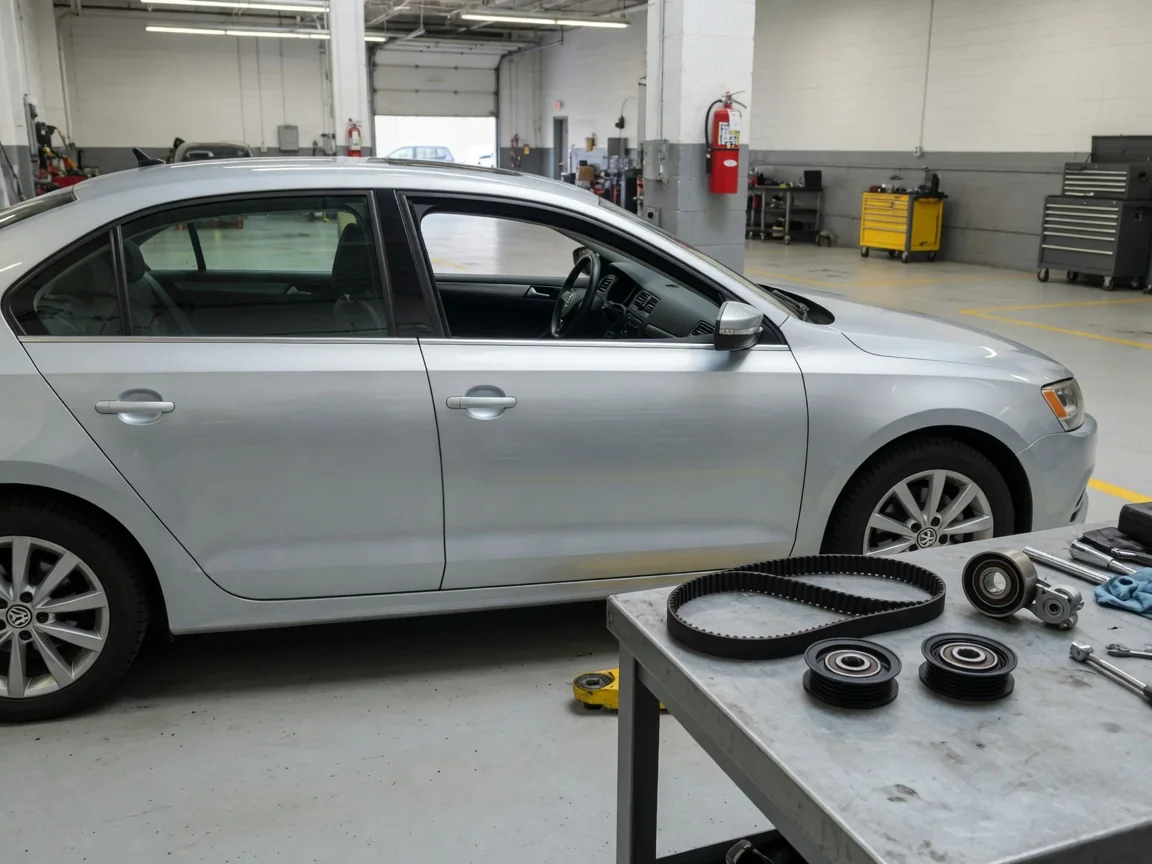
Whether a Volkswagen Jetta or Bora needs a timing belt depends on the engine, not the badge. Some gasoline and diesel applications use a belt and others a chain, so year, market, fuel type, and engine code matter before you budget. Confirming the timing drive, finding the interval, judging missing history, and defining the job are what make VW Jetta timing belt replacement cost a meaningful figure instead of a generic quote.
Confirm Whether Your Jetta or Bora Engine Uses a Timing Belt
The Jetta and Bora names cover many engines across markets and years, so neither badge tells you whether a timing belt is fitted. Whether you are looking at a VW Bora timing belt or a Volkswagen Jetta timing belt, the same facts come first: model year, original market, gasoline or diesel, and the engine code stamped on the block and recorded in the vehicle documents. Belt-driven timing exists on specific documented applications with defined year and market boundaries. Gasoline and diesel Jetta and Bora engines are not all belt-equipped, because chain-driven engines share those nameplates.
A Volkswagen dealer or independent Volkswagen service provider can confirm the timing drive from the VIN together with the engine identification plate, then match that combination to the factory application. Owner manuals and service records that list the engine code are useful supporting evidence, but they still need to match the engine actually installed. A ribbed accessory belt visible at the front of the engine drives the alternator, air-conditioning compressor, or similar equipment. That belt is not the timing belt, and seeing it does not prove a timing belt is present behind the covers.
Find the Replacement Interval for Your Exact Engine
The timing belt interval for a Volkswagen Jetta or Bora is the figure in the maintenance schedule for that engine, model year, and market, not one number for every car wearing those badges. Some schedules list mileage, elapsed time, or both, and the earlier limit governs when both appear. There is no universal age cutoff for every Jetta. If the applicable book states only mileage, that is the documented requirement; if it also states years, calendar time counts even with a low odometer.
A scheduled inspection is not the same as a replacement requirement. Inspection may look for cracks, oil contamination, or noise, yet a belt that still looks acceptable can be near the end of its documented life because rubber ages in heat and under tension. Outward condition therefore cannot establish remaining belt life. When a previous replacement is recorded, the next deadline is calculated from that service date and odometer reading using the same schedule, not from the original in-service date of the car.
What to Do When Timing Belt History Is Missing
Useful service records for Volkswagen Jetta timing belt work show a dated invoice, the mileage at the job, the engine identification, and the parts fitted, such as a timing belt kit with a belt tensioner and idler pulley. Those details let a shop verify that the work matches the engine actually in the car. A seller's verbal assurance, an undated under-hood sticker, or a note that simply says the belt was done leaves the history uncertain, because none of those items prove when the work occurred or which components were replaced.
When records are missing or the applicable replacement deadline has already passed, arrange a professional assessment rather than stretching the interval on hope. A shop can inspect accessible components and compare the engine to the schedule, but that inspection does not safely extend a missed deadline. Timing belt deterioration often gives no clear warning before it fails. After a sudden stall or suspected timing failure, stop further restart attempts and arrange professional assistance, because cranking the engine again can add internal damage if valve timing has already been lost.
What a Jetta Timing Belt Replacement Includes
Professional Volkswagen Jetta timing belt replacement starts by confirming the engine, then gaining access through the covers and related components specified for that layout. The shop replaces the belt and the other items called out for the job, sets camshaft and crankshaft relationship and belt tension to the procedure for that engine, and verifies that the engine starts and runs in time. The procedure is engine-specific; instructions written for one code do not automatically apply to another Jetta or Bora engine sharing the same body.
The belt tensioner maintains specified load on the belt, and idler pulleys guide it around the sprockets. Those parts age with the belt, so a complete timing belt kit often includes them, and the estimate should state which items are in the quoted job. Water pump replacement depends on the pump arrangement, service literature, and condition; not every water pump is driven by the timing belt. Required seals, single-use fasteners, and coolant follow that engine's procedure rather than a generic parts list.
What Determines the Timing Belt Replacement Cost
The cost to replace a timing belt on a VW Jetta is built from parts, labor hours, the shop's labor rate, fluids required by the procedure, shop charges, and tax. Quotes for Volkswagen Jetta timing belt replacement cost therefore move with kit contents and local labor, not with the model name alone. A quote that omits those line items is hard to compare with another shop's figure. The same breakdown applies when the car is badged Bora, because engines overlap across names while the labor book still follows the specific application.
Engine layout and access change the labor hours. Transverse installations with crowded covers, engine mounts, or ancillary components take longer than a layout that leaves the timing covers more open, so two Jettas can produce different labor figures even when both use belts. The quoted scope also changes when the water pump, required hardware, or a repair for an identified leak is added to the job. An accurate expected total for Volkswagen Jetta timing belt replacement needs the engine details, location, and defined scope; round numbers without those facts are not a reliable price.
Check the Estimate and Keep a Useful Service Record
Before you approve VW Jetta timing belt replacement, ask how the shop identified the engine-specific belt and related parts, which components are included, how many labor hours are booked, and what warranty covers parts and workmanship. Request an itemized repair estimate in writing so parts, labor, fluids, and shop charges are visible before work starts. Require authorization before any additional work proceeds, including extra hardware, a water pump that was not in the original quote, or leak repairs found after teardown.
Keep the completion record with the service date, mileage, parts installed, and the schedule used to set the next replacement deadline. That file becomes the next owner's proof and your own reminder when the interval approaches. If new noises, leaks, warning lights, or poor running appear after the job, contact the shop promptly and describe what changed. Towing is appropriate when continued driving may cause damage, such as a coolant leak, a knocking noise from the timing area, or an engine that will not stay in time.