Volkswagen Car Types: A Guide to the Lineup by Body Style and Powertrain
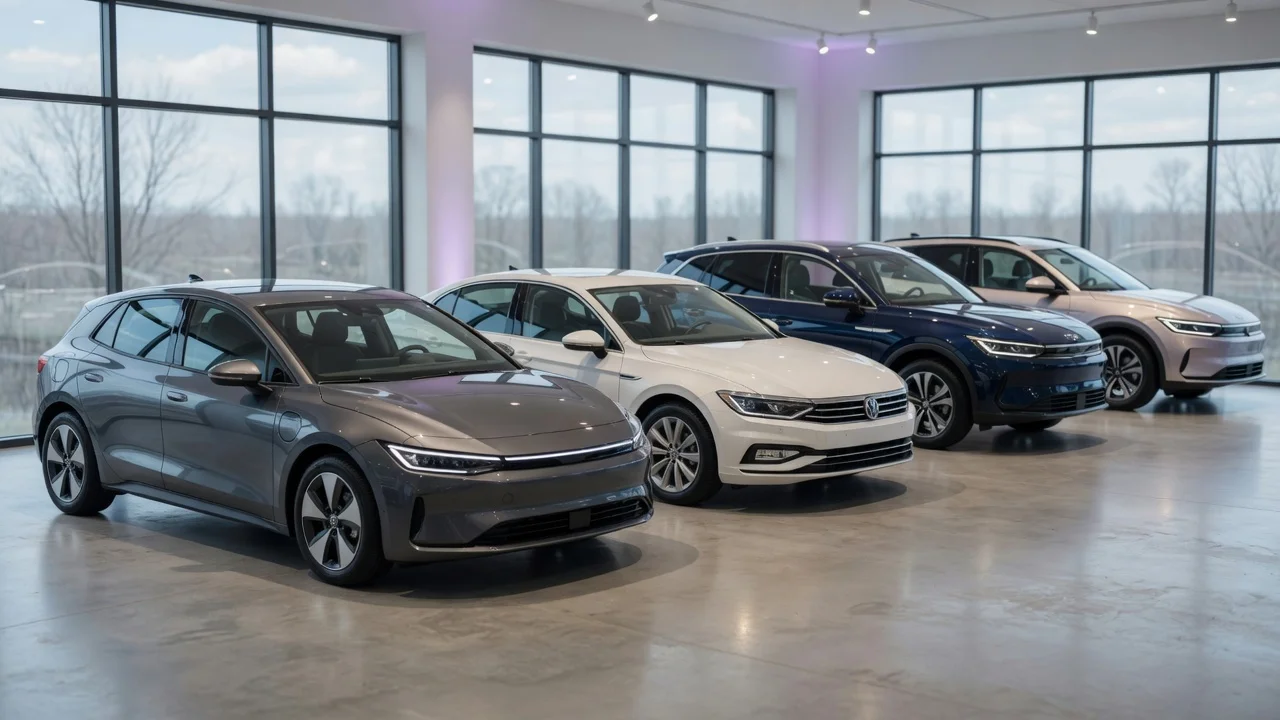
Volkswagen sells hatchbacks, sedans, wagons (called estates in some markets), SUVs and crossovers, a family of battery-electric models branded ID., performance versions of its mainstream cars, and vans and pickups through its commercial vehicles arm. The models offered depend heavily on where you live and which model year you are looking at. A model sold in Europe may be missing, renamed or built differently in North America, China or South America, and several long-running nameplates have been dropped or changed in recent years.
What counts as a Volkswagen
This guide covers vehicles sold under the Volkswagen brand. Volkswagen Group also owns brands such as Audi, Skoda, SEAT, Cupra and Porsche. Those brands often share platforms with Volkswagen models. A platform is the shared set of underlying engineering, such as floor structure, suspension layout and electrical architecture. Volkswagen's main platform for combustion-engine cars has been MQB, and its dedicated electric platform is MEB. Shared platforms explain why some Volkswagens closely resemble group models from other brands, but those cars are not covered here.
Main Volkswagen car types at a glance
Type | Representative models | Notes; Hatchback | Polo, Golf, ID.3 | Polo and ID.3 are mainly sold outside North America; the Golf hatchback's availability differs by market; Sedan | Jetta, Passat (earlier generations), ID.7 | Sedan availability varies widely; the latest European Passat is sold as a wagon only; Wagon / estate | Golf Variant/Estate, Passat Variant, ID.7 Tourer | Mostly a European offering; SUV / crossover | T-Cross, Taigo, T-Roc, Taos, Tiguan, Atlas, Touareg, ID.4, ID.5 | The largest and most market-dependent part of the lineup; Performance | Golf GTI, Golf R, GTX versions of ID. models | Performance trims of existing models rather than separate cars; Van / MPV | Multivan, Transporter, Caddy, ID. Buzz | Commercial and passenger versions exist; Pickup | Amarok | Not offered in every market
Hatchbacks
Hatchbacks are the body style Volkswagen is best known for. A hatchback has a rear door that lifts to open the cargo area instead of a separate trunk lid. The Golf is the brand's best-known model and comes in several generations and powertrains, including petrol, diesel and plug-in hybrid versions in some markets. The smaller Polo sits below it. In North America, the standard Golf hatchback has been withdrawn in recent model years, leaving the performance GTI and Golf R versions. Check current availability for your region.
Sedans
A sedan has a separate, enclosed trunk. The Jetta has served as Volkswagen's compact sedan, particularly in the Americas. The Passat was historically the brand's midsize sedan, but its form now differs by market. The North American Passat sedan was discontinued after the 2022 model year, and the latest European-generation Passat is offered only as a wagon. The Arteon, a fastback-style model positioned above the Passat, has also been discontinued in a number of markets. The electric ID.7 now fills the large-car role in markets where it is sold.
Wagons and estates
A wagon extends the roofline to the rear of the car for a larger cargo area while keeping a car-like driving position. Volkswagen offers wagons mainly in Europe, under names such as Variant, Estate or Tourer depending on the model and market. Examples include the Golf, the Passat and the ID.7. Wagons have largely disappeared from Volkswagen's North American lineup.
SUVs and crossovers
SUVs and crossovers now make up much of Volkswagen's range in many markets. A crossover is an SUV-style vehicle built on a car platform rather than a truck frame, and most Volkswagen SUVs fit this description. The range runs from small models to large three-row family vehicles. The names and specific models differ by region.
Small crossovers: T-Cross, Taigo (a coupe-styled crossover sold as Nivus in some markets) and T-Roc, mainly outside North America; Compact: Taos in North America (related models carry other names elsewhere) and the Tiguan, one of the brand's core global models; Midsize and large: Atlas in North America (sold as Teramont in some markets), with a two-row Cross Sport variant, and the Touareg at the top of the range in markets where it remains on sale; Electric: ID.4 and the coupe-styled ID.5, covered in the next section
Electric ID. models
Volkswagen's battery-electric vehicles carry the ID. prefix, and most are built on the MEB platform. The family spans several body styles: the ID.3 hatchback, the ID.4 and ID.5 SUVs, the ID.7 large sedan and Tourer wagon, and the ID. Buzz, an electric van that draws on the styling of the classic Volkswagen bus. Some ID. models are available in GTX form, which signals a higher-performance, typically dual-motor version. Range, battery size and charging speed vary by model, model year, battery option and market. Confirm those figures against official specifications for the exact version you are considering.
Performance versions
Volkswagen's performance cars are mostly upgraded trims of existing models rather than standalone vehicles. The Golf GTI is the longest-running example. The Golf R sits above it and uses all-wheel drive. Badges such as GTD (a diesel performance trim), GTE (a plug-in hybrid trim) and R-Line (mainly a styling package) appear in some markets. R-Line and similar appearance packages do not necessarily add engine performance.
Vans, MPVs and pickups
Volkswagen Commercial Vehicles sells vans and pickups, some with passenger-focused versions. The Transporter and Caddy cover commercial and passenger van needs. The Multivan is a people-carrier, and the ID. Buzz offers an electric alternative. The California name has been used for campervan versions in some markets. The Amarok is Volkswagen's pickup truck. It is not sold in North America, and its availability elsewhere varies.
How to narrow down the right type
Start with your market: confirm which models are sold new in your country before comparing them; Match body style to use: hatchbacks and small crossovers suit urban driving, while wagons, larger SUVs and vans suit families and cargo; Choose a powertrain: petrol, diesel, hybrid and fully electric options differ by model and region; Check the generation when buying used: features, engines and technology can change significantly between generations of the same nameplate; Treat trim badges carefully: GTI, R and GTX indicate performance versions, while R-Line is largely cosmetic
Limits of this overview
This guide sorts Volkswagen's lineup by type. It does not give dimensions, power outputs, fuel economy, electric range, prices or a definitive list of current models, because these depend on model year, trim and market and were not verified for this article. Volkswagen adds and retires models regularly, so check the official specifications and current lineup in your region before making a decision.