Volkswagen Beetle Brake Warning Light: Causes and Checks
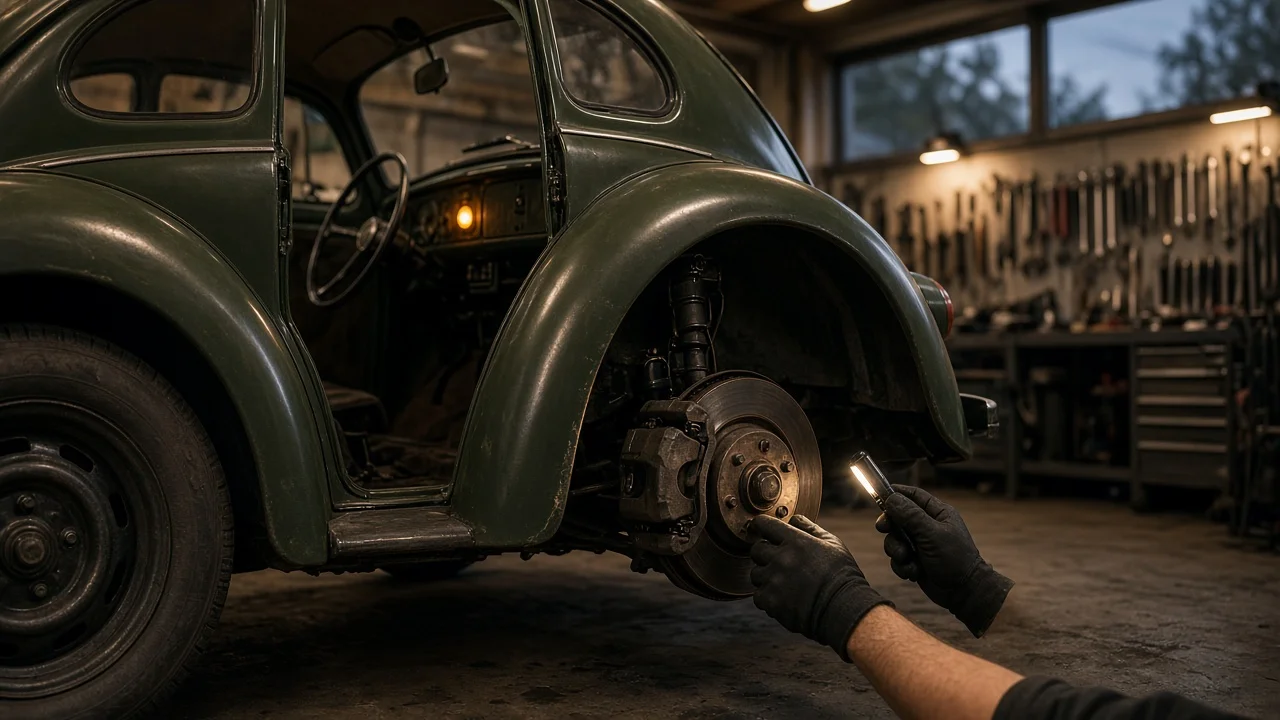
A red brake warning light on a Volkswagen Beetle is a message about the braking system, not a general reminder. Depending on the model year and equipment, it can mean the parking brake is applied, the brake fluid level has dropped, or an electronic braking function has a fault. This guide explains how to narrow down the cause safely, what you can observe yourself, and when the car should stay parked until a qualified technician has inspected it.
Establish the symptoms
Start by noting exactly when the light appears. Does it stay on from the moment you start the engine, flicker in corners or under braking, or come on only after the car has been driven for a while? A lamp that flickers when cornering or stopping often points to fluid moving near the low mark in the reservoir. A lamp that stays on steadily may relate to the parking brake switch, a clearly low fluid level or a system fault. Also record whether any other lamps are lit at the same time, especially the ABS light or a separate brake pad wear indicator where fitted. Check the owner's manual for your model year, because symbols and messages differ between the original air-cooled car, the New Beetle and the later Beetle.
Next, note how the brakes feel. A pedal that is soft, sinks toward the floor, needs pumping or travels further than usual is a far more serious sign than a light alone. Grinding, squealing, pulling to one side, a burning smell or wetness around a wheel are also worth writing down. Finally, think about recent changes: new brake pads or rotors, a fluid change, battery work, or driving over rough roads. Recent work narrows the possibilities considerably.
Distinguish plausible causes
The simplest cause is the parking brake. If the lever is not fully released, or its switch is worn or misadjusted, the lamp can stay lit even when the brake feels free. This explanation is supported if the light changes as you move the lever and the car rolls freely. It is weakened if the lamp ignores the lever position.
Low brake fluid is the next common cause. The reservoir has a level sensor, and the warning triggers when fluid falls below its threshold. The level drops gradually as the friction material on the brake pads wears, because the caliper pistons move outward and more fluid sits in the calipers. A slow fall over many months with worn pads fits that pattern. A sudden drop, visible wetness at a wheel, hose, caliper or the master cylinder, or a soft pedal instead suggests a leak, which is a hydraulic safety problem. A faulty level sensor or damaged connector can also trigger the lamp with a full reservoir.
On Beetles equipped with ABS, the brake warning light can also report problems in the anti-lock system. When the ABS lamp and the brake warning lamp come on together, many Volkswagen models are signaling that electronic brake-force distribution may be unavailable, which affects how braking force is shared between the front and rear axles. Wheel speed sensor faults, wiring damage, low battery voltage and control module faults are possible contributors, and separating them requires a scan tool.
Checks in a useful order
Begin with checks that need no tools. With the car parked on level ground, release the parking brake fully and see whether the lamp goes out with the ignition on. Then, with the engine off, open the hood and find the brake fluid reservoir. Compare the level with the minimum and maximum marks, ideally without opening the cap if the plastic is translucent enough to see through. Look under the car and behind each wheel for fresh fluid, which feels slippery and can damage paint. Note the fluid's color, since very dark fluid is often old, although color alone does not confirm its condition.
If the fluid is low, avoid simply topping it up and forgetting about it. Adding fluid can hide a leak or mask how far the pads have worn. If you add fluid to reach a workshop, use only the type specified on the reservoir cap or in the owner's manual, keep dirt out of the reservoir, and never overfill, because the level will rise again once new pads are fitted.
Further checks need tools, specifications or a technician. Measuring pad and rotor thickness against the manufacturer's wear limits requires removing the wheels and having the correct data for your model and vehicle fitment. Testing the level sensor or parking brake switch involves a meter and wiring diagrams. Reading stored fault codes from the ABS module needs a scan tool that can access Volkswagen brake system data, while pressure testing or bleeding the hydraulic system belongs with a qualified workshop.
Interpret the findings
Each result establishes something specific. A lamp that goes out when the parking brake is fully released points to the lever or its switch, though the switch and its adjustment should still be checked. A full reservoir with the lamp still lit shifts suspicion toward the sensor, the connector or an electronic fault rather than the hydraulics. A low reservoir with no visible leak and visibly worn pads fits normal wear. Only measurement confirms that the pads and rotors are near their limits and that there is no hidden leak, for example at a rear brake component or from the master cylinder into the brake booster.
Avoid replacing parts on a guess. Fitting new pads without checking the rotors, calipers and fluid can leave the original cause in place, and replacing a level sensor will not help if fluid is escaping. When the ABS and brake warning lamps are lit together, the stored fault codes and live sensor data show whether the problem lies in a sensor, wiring, battery voltage or the control unit. Confirm parts by vehicle fitment, using the VIN where possible, because brake components differ by engine, trim and model year.
Urgency and next action
Stop driving and arrange towing or mobile service if the pedal is soft, sinks or needs pumping, if fluid is visibly leaking, if the car pulls sharply or braking distances have clearly increased, or if the lamp came on together with a change in pedal feel. A brake warning combined with an ABS warning also deserves prompt attention, since braking balance may be affected. Nobody can promise how many miles remain safe while a brake warning has not been diagnosed.
When you book the repair, bring the information you collected: model year and engine, when the lamp appears, whether other lamps are lit, the fluid level you saw, any leaks or noises, and recent brake or electrical work. Mention whether anyone has already added fluid. That record helps a technician confirm the cause quickly and quote for the correct parts rather than starting from scratch.