Using Your EV as a Home Battery: V2H, V2L and V2G Explained
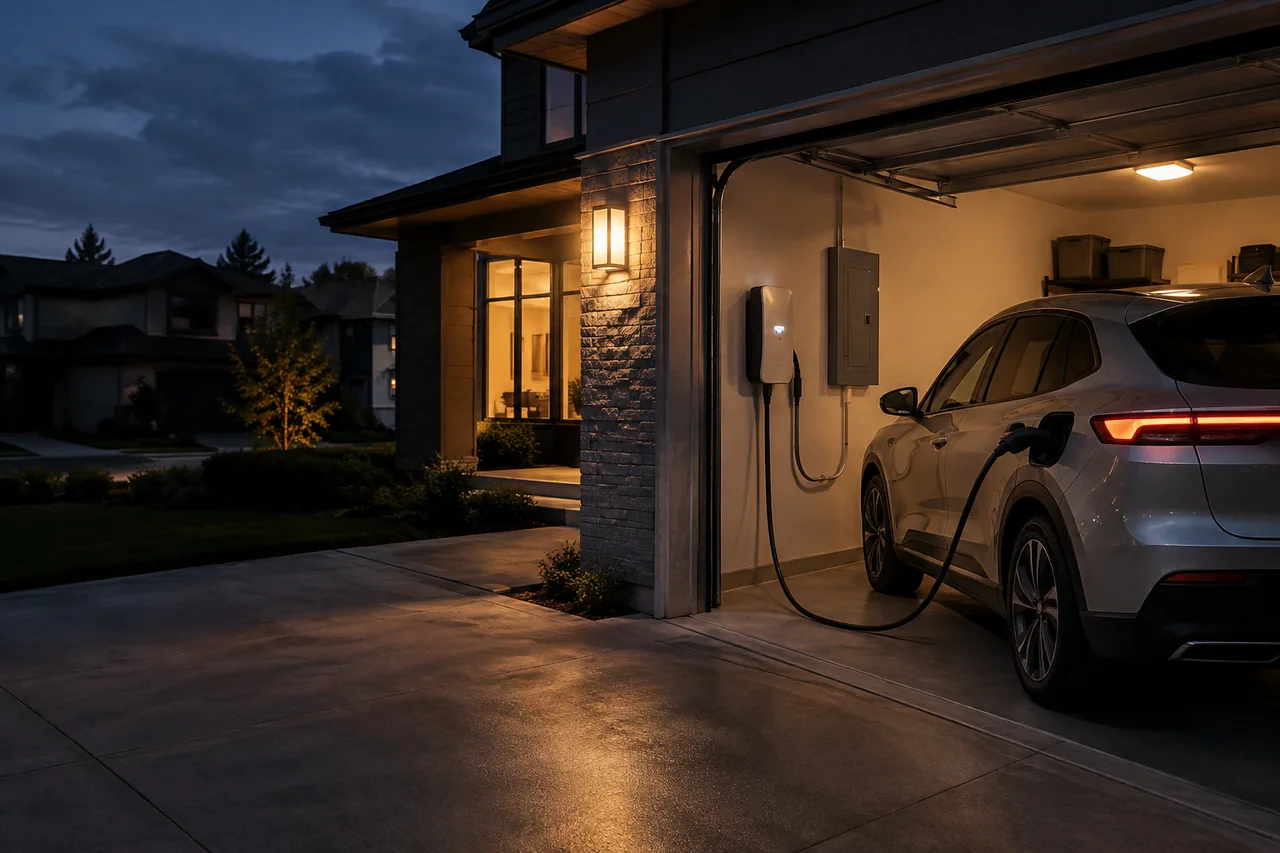
Using an EV as a home battery is emerging as a practical way to get more value from a vehicle's large traction pack. With the right bidirectional hardware, the car can send stored energy back to your house, a few appliances, or even the utility grid. This capability turns an expensive asset that usually sits idle into backup power during an outage and a tool for smarter energy use. However, system support, equipment compatibility, and local approvals determine whether your electric car can actually power your home.
What It Means to Use an EV as a Home Battery
Using an EV as a home battery means reversing the normal flow of electrons from the traction battery through the vehicle's onboard electronics and out to external loads. A standard EV charger only converts grid AC to DC for storage; bidirectional-capable vehicles and chargers can invert that DC back to AC and safely export it. This is not simply running an extension cord from the car. Dedicated control hardware, communication protocols, and isolation safeguards ensure the power is clean enough for household equipment and does not feed back into a de-energized grid.
The key difference from a stationary home battery is that the vehicle serves two masters. A wall-mounted pack is always on site and sized for backup loads, while an EV may be absent when an outage hits and must retain enough range for driving afterward. Owners are often drawn to the idea by the prospect of keeping refrigerators and lights running during blackouts, running tools at a job site, or shifting solar energy stored during the day to evening peak hours. Realizing these benefits depends on more than just owning an EV; it requires explicit bidirectional support and correctly installed equipment.
V2L, V2H and V2G: How Each Bidirectional Mode Works
Vehicle-to-load (V2L) is the simplest form of bidirectional power. It uses a built-in inverter and a standard outlet or an adapter plugged into the charging port to supply 120V or 230V AC directly to devices. The vehicle acts as a portable generator, but no connection is made to home wiring. This is useful for camping, tailgating, or powering a refrigerator during an outage with an extension cord. Because V2L bypasses the grid entirely, it carries no backfeed risk, but power output is limited to the vehicle's onboard inverter rating and only supports loads that can be plugged in directly.
Vehicle-to-home (V2H) takes the next step by connecting the EV through a bidirectional charger and a transfer switch to a home's electrical panel. During an outage, the system isolates the house from the utility, preventing backfeed, and then supplies selected circuits. Vehicle-to-grid (V2G) goes further still, exporting power to the utility under a managed program that may compensate the owner. The technical distinction between AC and DC bidirectional power matters: some systems convert inside the vehicle and output AC, while others send DC to the charger for external inversion. A car that supports V2G does not automatically support V2H, and V2L capability does not imply either grid-connected mode.
Checking Whether Your Vehicle and Charger Support Bidirectional Power
Confirming bidirectional capability is the first step, and it cannot be assumed from battery size, trim level, or even the presence of a particular charge port. The owner's manual and manufacturer documentation should explicitly state whether the vehicle supports V2L, V2H, or V2G, and under what conditions. Some vehicles offer V2L only with a specific adapter, while V2H may require both a software update and a certified bidirectional charger. A dealer or manufacturer customer support line can clarify whether a given build is enabled, but third-party forums are not reliable for safety-critical interconnection features.
The charging connector type, the vehicle's onboard charger and inverter, and the external charger must all be approved to work together. A CCS port does not automatically mean bidirectional power is available; communication protocols and firmware versions can vary by model year and region. Some manufacturers limit V2H to one approved charger brand or a particular home integration ecosystem, and over-the-air updates can add or change functionality after purchase. Before buying any equipment, check the latest manufacturer guidance for your vehicle identification number and region, because acting on outdated information could leave you with incompatible hardware.
How Long an EV Can Power a Home: Capacity, Loads and Reserve Limits
Runtime during an outage is a function of usable battery energy, starting state of charge, and the home's average power draw. A simple estimate divides the kilowatt-hours available by the load in kilowatts. For example, a battery pack with 60 kWh usable and 80% state of charge has 48 kWh available; if the essential circuits draw an average of 1.5 kW, the vehicle could theoretically power them for 32 hours before hitting a 10% reserve. In practice, discharge efficiency losses, inverter consumption, and occasional surge loads reduce this number, but the calculation gives a planning baseline.
Many vehicles and bidirectional chargers cap the maximum discharge rate, often between 3 and 9 kW, and enforce a minimum state of charge to protect the battery and ensure the car can still drive. This limits what you can run simultaneously: a refrigerator, lights, router, and medical device may total under 1 kW, but an electric water heater or air conditioner can demand 4 kW or more alone. During an outage, prioritize refrigeration, lighting, communications, and medical equipment. High-draw loads like electric resistance heating, cooling, or induction cooking will cut runtime dramatically and may exceed the system's peak output, causing the inverter to trip offline.
Battery Wear, Warranty and Safety Considerations
Every cycle used for home backup adds to the battery's cumulative wear, but the long-term impact depends on how the system manages discharge rates, temperature, and depth of discharge. Occasional V2H use at moderate power is generally less stressful than repeated V2G export that may cycle the pack daily. However, some manufacturers' battery warranties explicitly exclude damage from bidirectional use, while others may limit coverage if the battery is cycled beyond a certain number of equivalent full cycles. Reviewing the warranty terms before relying on the vehicle for backup is prudent, and a record of bidirectional operation may be relevant in a warranty claim.
Electrical safety is non-negotiable. Connecting an EV to home wiring without an approved transfer switch or isolation device can backfeed the grid, endangering utility workers and damaging equipment when power is restored. A generator inlet must never be used with a homemade adapter to the vehicle's charge port. Household panel changes, subpanel installation, and automatic transfer switching require a licensed electrician and proper permits; DIY wiring can cause fire or shock. Even simple V2L calls for caution: use outdoor-rated cords sized for the load, keep connectors dry and off the ground, and never exceed the vehicle's outlet rating or daisy-chain multiple power strips.
How to Set Up Vehicle-to-Home Power the Right Way
A safe V2H installation follows a logical sequence: confirm the vehicle's bidirectional capability in writing, select a manufacturer-approved bidirectional charger, and then arrange a site assessment. The assessment should evaluate the existing electrical service, main panel capacity, and where the charger and transfer switch will be located. Starting with the vehicle capability avoids buying equipment that cannot communicate with the car's battery management system. Choosing approved hardware ensures the charger, transfer switch, and vehicle firmware work together as a tested system rather than a field-assembled collection of parts.
A licensed electrician handles the charger wiring, transfer switch or microgrid interconnection device, and any essential loads panel that separates backed-up circuits from the rest of the house. Permits and inspections are typically required because this is a permanent modification to the building's electrical system. For V2G, the utility must approve the interconnection agreement and metering arrangement before any power can be exported. When interviewing installers, ask how they select backup circuits, whether the system switches automatically during an outage, and what monitoring is available for energy flow and battery state of charge. For many owners, V2L provides an immediate, low-commitment backup solution while a full V2H system is planned and permitted.