Using Penetrating Oil to Free a Seized Engine
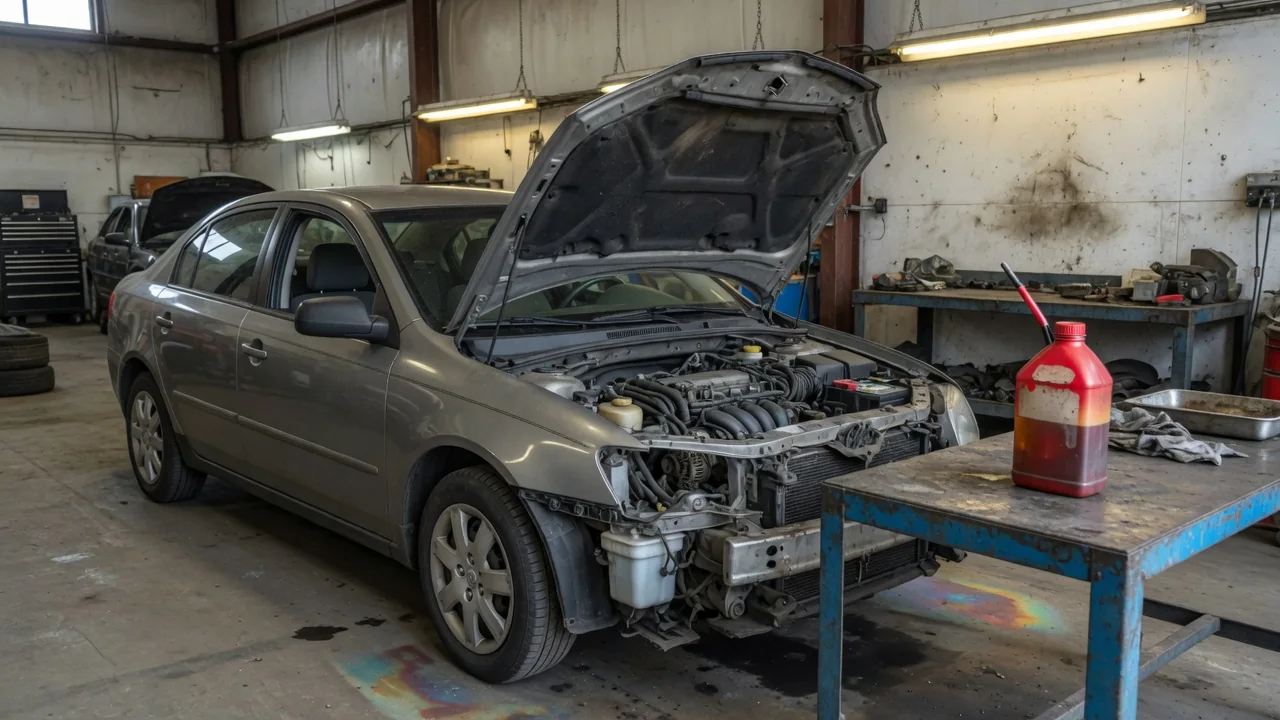
When a vehicle that sat for months or years won't turn over, many owners think of penetrating oil first. Sometimes the problem is corrosion that careful, professionally guided treatment can loosen. Other times the engine is stuck because of hydrolock, oil starvation or broken parts that no product can fix. Knowing which situation you're facing protects your budget and gives the engine its best chance.
When Penetrating Oil May Help a Stuck Engine
Penetrating oil creeps into tight gaps and softens rust and deposits. In a stuck engine, it has the best chance of helping when internal corrosion has bonded the piston rings to the cylinder walls during long storage. That often happens after moisture gets in through an open intake, the exhaust or a spark plug hole. If the sticking is limited to surface rust at those contact points, treating the seized engine with penetrating oil may loosen the bond enough for the crankshaft to move.
The limits matter just as much. Penetrating oil can't rebuild a spun or welded bearing, fix a broken connecting rod, straighten a bent valve or undo warping from severe overheating. Even if treatment frees the rotating assembly, rust may have pitted the cylinder walls and weakened the rings. An engine that turns afterward may still need a teardown, machining or replacement. Treat any release as the start of a diagnosis, not a finished repair.
Establish Why the Engine Will Not Turn
A vehicle that won't crank doesn't necessarily have a seized engine. A weak battery, corroded cables, a failed starter or solenoid, a faulty ignition switch or security system, or a locked-up accessory like an alternator or air conditioning compressor can all stop the engine from turning. Before anyone uses penetrating oil, a technician should rule out these electrical and accessory causes. Treating a healthy engine for seizure wastes time and can create new problems.
The engine's history is the most useful clue you can offer. Write down how long the vehicle was stored, whether it was flooded or driven through deep water, and whether it overheated, lost oil pressure, or knocked or ground before it stopped. Suspected liquid in a cylinder, timing belt or chain damage, oil starvation, or a sudden failure while driving all call for a professional assessment before any treatment. Limit your own checks to noting warning messages, visible leaks and symptoms, and don't keep trying to start the engine.
Assess Penetrating Oil Before Any Treatment
A product labeled penetrating oil isn't automatically safe to use inside an engine. Formulas differ in solvents and additives and in how they affect seals, catalytic converters and engine oil. Confirm suitability from the product's own information and with a qualified technician who knows the engine. Something that frees a rusted exhaust bolt isn't necessarily something you want sitting on the cylinder walls. The wrong choice can contaminate the engine and have to be cleaned out later.
How far the oil can reach and how much corrosion there is matter as much as the product. Penetrating oil only works on surfaces it can reach. Rust near the top of the cylinders is a different problem from corrosion deep in the bottom end or a mechanical jam somewhere else. There is no standard amount, soaking time or guaranteed release time for a seized engine, and some never free up at all. A technician can judge whether conditions favor treatment and decide how, or whether, to attempt it.
Understand What Movement After Treatment Means
If the crankshaft starts to move during a professional assessment, that only shows some mechanical restriction has changed. It doesn't show that the bearings are sound, the piston rings are intact, or the cylinder walls are free of scoring and pitting. Rust may have broken loose into the combustion chamber, and rings that were stuck may now be damaged. Crankshaft movement is encouraging, but it doesn't mean the engine is ready to run.
How the engine moves tells you more. Binding at one point in the rotation, uneven resistance, or clicking, scraping or knocking sounds suggest internal engine damage that needs investigation, not more force. A technician may recommend a borescope inspection, removing components, or condition tests such as compression and leak-down checks. The order of those tests depends on the suspected damage, since some checks only mean something once other risks have been ruled out.
Know When to Stop and Arrange Professional Help
Knowing when to stop can save an engine that might still be rebuilt. Don't keep cranking the starter, tow the vehicle in gear to force the engine to turn, or use extra leverage to overcome resistance. These approaches can bend connecting rods, break rings, or damage the starter and flywheel. Suspected liquid inside the engine, overheating damage, oil starvation, or resistance that doesn't ease are all signs to stop trying to free the engine and let a qualified shop take over.
Any fluid added during treatment must be checked and dealt with by a professional before anyone tries to restart the engine. Trapped liquid can cause hydrolock, and contaminated oil may not lubricate the bearings properly. Give the workshop a clear written record: the failure history, the product used, any known quantities, how long it stayed in the engine, and every attempt to start or free it. That record helps the technician understand what happened and choose the safest next step.