Used Car Pre-Purchase Inspection: What It Is and Why You Need One Before You Buy
Buying a used car means trusting a vehicle you have known for maybe an hour. A pre-purchase inspection shifts that balance by putting a trained, independent set of eyes on the car before you commit. Here is what the inspection involves, why it matters, when and how to arrange it, how to read the results, and what you risk by skipping it.
What a used car pre-purchase inspection actually is
A pre-purchase inspection is an evaluation of one specific used vehicle that you, the buyer, arrange with an independent technician before any money changes hands. It is separate from a state safety or emissions inspection, which only confirms the car meets minimum legal standards. A thorough evaluation typically covers body and frame condition, engine and drivetrain operation, suspension and steering, brakes, tires, electrical systems, and interior wear, giving you a broad picture of how the car has been used and maintained.
Most inspections include a road test and a scan for stored diagnostic trouble codes. Those codes are clues, not verdicts, because the same code can point to different causes depending on the make and model, so they need vehicle-specific interpretation. An inspection is also not a warranty or a promise of future reliability, and it does not replace a vehicle history report, which covers title status and recorded events. Because depth varies by provider, ask exactly what is included before you book.
Why inspecting before you buy matters more than the price tag
Most used cars change hands as-is, meaning whatever is wrong becomes your problem the moment the sale closes. A seller's description, clean photos, and a short test drive can easily miss what only shows up on a lift or to a trained eye: underbody corrosion eating at brake lines, slow fluid leaks, or mismatched paint and uneven panel gaps that hint at prior collision repair. Sellers are not always hiding these things; many simply do not know.
Findings also give you negotiation leverage. A documented list of needed repairs supports a lower price, a request that the seller fix specific items first, or a clean decision to walk away. The inspection protects your safety as much as your wallet, though. Some findings, such as frame damage or questionable structural repairs, should end the conversation rather than lower the price, because no discount makes a structurally compromised car protect its occupants properly in a crash.
When in the buying process to arrange the inspection
The right moment is after you have narrowed your search to one vehicle and done your own walkaround and test drive, but before you sign a purchase agreement or pay anything non-refundable. If a seller wants a deposit to hold the car, get it in writing that the deposit is refundable pending inspection results. Independent shops and mobile inspectors often need a day or more of lead time, so build that into your timeline instead of rushing negotiations.
Expect some pressure. Sellers and dealers may say other buyers are lined up, and that may even be true, but a seller who refuses any inspection is giving you a warning sign worth heeding. This applies to private-party sales and dealer lots alike, including certified pre-owned vehicles. A dealer's certification inspection is performed by the business selling the car, so an independent check still adds a perspective with no stake in the sale.
Who performs the inspection: shop mechanics versus mobile services
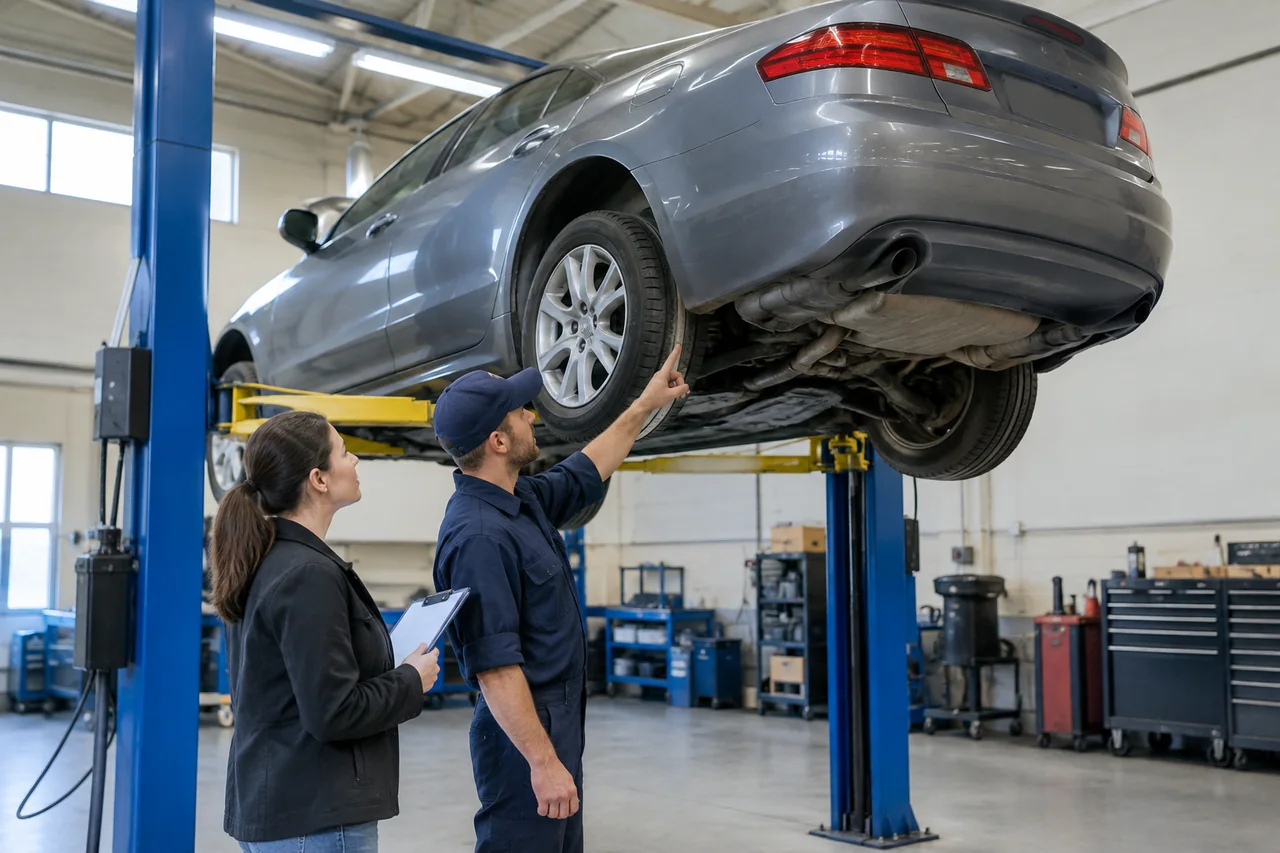
An independent repair shop offers the most complete look. With the car in a service bay, the technician can raise it for a lift inspection of the underbody, suspension, and exhaust, and use full diagnostic equipment. Mobile inspectors travel to the seller's home or the dealer lot, which solves logistics when the seller will not release the car, though checking the underside without a lift is more limited. Ask any mobile service how it handles that gap.
Whichever route you choose, the inspector should have no connection to the seller, and familiarity with the make you are considering is a real advantage. Share the year, make, model, mileage, any known history, and anything odd you noticed on the test drive, such as a pull under braking or a hesitant shift, so those areas get extra attention. Older cars, high-mileage diesels, and modified vehicles may call for someone with specific experience, since a general inspection has limits there.
How to get the car to the inspection
There are three common arrangements: you drive the car to the shop with the seller's permission, the seller drives it there, or a mobile inspector comes to the car. Before anyone takes it on public roads, confirm whose insurance covers the trip there and back, and never drive an uninsured or unregistered vehicle. Most dealers will let the car go to a nearby shop or allow a mobile inspector onto the lot; if they decline outright, weigh that refusal seriously.
Scheduling and coordination fall to you as the buyer. Tell the seller how long the inspection is expected to take so the car is available for the full window and nobody is hovering impatiently while the technician works. Try to be present, or at least reachable by phone. An inspector who can show you a seeping gasket or a worn bushing in person, and answer questions in real time, gives you far more useful context than a written summary alone.
Reading the results and understanding what an inspection cannot tell you
A good report sorts findings into categories: safety concerns, items needing attention soon, cosmetic issues, and normal wear for the car's age and mileage. That structure helps you weigh what you are seeing. Worn brake pads or aging tires are routine maintenance you can budget for or negotiate around. Evidence of flood damage or a bent frame is different, because it changes whether the car should be bought at all. Keep the written report for negotiation and for planning early maintenance if you proceed.
Understand the limits, too. An inspection reflects the car's condition on that day. It cannot predict internal engine or transmission failures without disassembly, and it cannot see everything hidden behind panels or under undercoating. Stored or pending diagnostic codes need interpretation for that specific vehicle, and when one points toward a possibly serious fault, further professional testing before purchase is wiser than guessing how bad the underlying problem might be.
What happens if you skip the inspection
Buying uninspected often means discovering leaks, worn components, or prior damage weeks after the sale, with little or no recourse. In most as-is situations, repair costs are yours, and a seller's verbal assurance that the car never gave trouble is difficult to enforce later. The safety stakes are real as well: undetected brake, steering, tire, or structural problems can put you, your passengers, and other drivers at risk before you ever notice a symptom.
Buyers most often skip inspections when purchasing remotely or when they need a car urgently. Even then, a mobile inspector or remote inspection service can usually reach the vehicle and deliver findings before you commit. Framed honestly, the choice is lopsided: an inspection costs some money and a short delay, while buying blind exposes you to the full financial and safety consequences of whatever the car happens to be hiding.